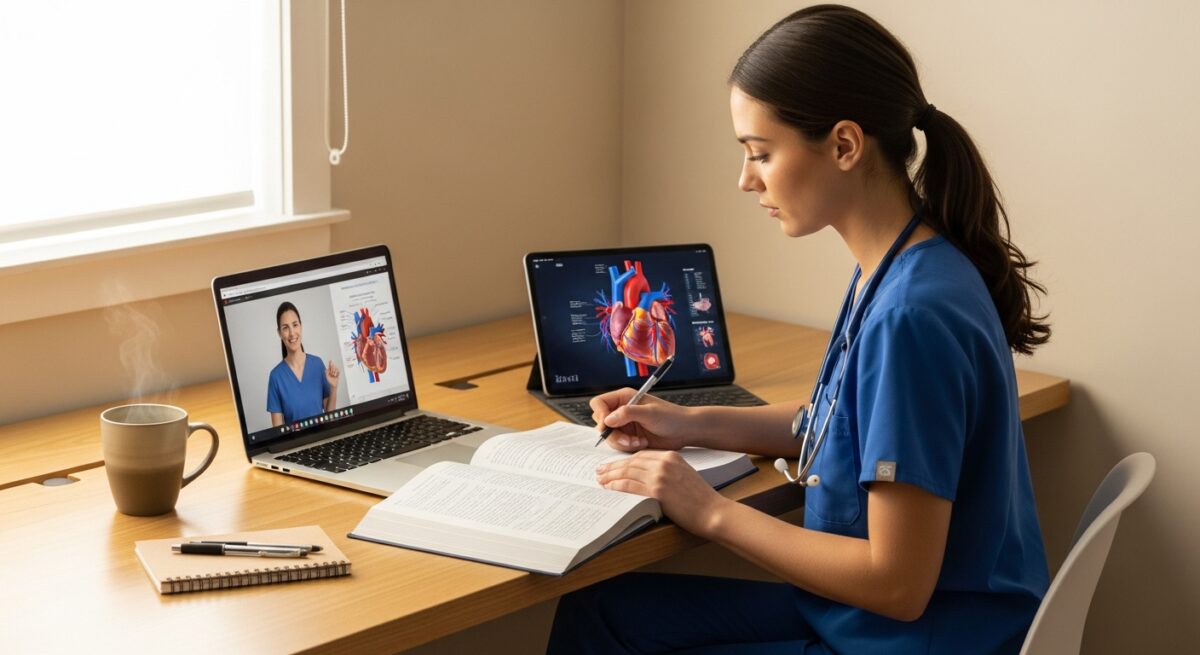
Nursing is one of the most rewarding careers available today, and the demand for registered nurses continues to grow. For working professionals, parents, and career changers, the traditional on-campus route to a nursing degree can feel impossible to fit into an already busy schedule. That is where a Bachelor of Science in Nursing online program becomes a game changer. These programs offer the same rigorous curriculum as campus-based options but with the flexibility to study when and where you need to. Whether you are an RN looking to advance your education or someone entering nursing for the first time, an online BSN degree can open doors to higher pay, leadership roles, and specialized clinical positions. This article will walk you through what to look for, how to apply, and what you can expect from a quality online nursing program.
What Is a Bachelor of Science in Nursing Online Program?
A Bachelor of Science in Nursing online program is a degree pathway that prepares students for registered nurse licensure or advances the credentials of current RNs. These programs deliver coursework through a virtual learning platform, allowing students to complete lectures, assignments, and discussions remotely. Clinical hours are still required, but they are arranged at approved healthcare facilities near the student’s home. This hybrid model combines the convenience of online learning with the hands-on experience that nursing demands.
There are two main types of online BSN programs. The first is the traditional BSN for students who have no prior nursing education. The second is the RN-to-BSN bridge program, designed for licensed RNs who hold an associate degree or diploma and want to earn their bachelor’s. Both formats cover core nursing subjects such as anatomy, pharmacology, patient assessment, community health, and nursing leadership. Graduates are eligible to sit for the NCLEX-RN exam or, in the case of RN-to-BSN students, already hold licensure and focus on advanced theory and management skills.
Why Choose an Online BSN Degree?
Flexibility is the primary reason students choose an online BSN degree. You can log in to class after your shift ends, during your child’s nap time, or on weekends. There is no commute, no rigid class schedule, and no need to relocate. This makes it possible for students who live in rural areas or who have family obligations to pursue a nursing career without uprooting their lives.
Cost is another advantage. Online programs often have lower tuition rates than their on-campus counterparts, and you save money on transportation, parking, and housing. Many schools also offer in-state tuition for online students regardless of where they live. Additionally, employers frequently offer tuition reimbursement for RNs seeking to upgrade their credentials. For those just starting out, federal financial aid and scholarships are widely available for accredited online nursing programs.
Career outcomes are strong. Nurses with a BSN earn higher salaries than those with an associate degree. They also qualify for leadership positions, specialty certifications, and graduate-level education. According to the American Association of Colleges of Nursing, many healthcare employers prefer or require a BSN for promotion. An online BSN degree positions you for long-term career growth without requiring you to pause your current job.
Accreditation: The Non-Negotiable Factor
Before enrolling in any Bachelor of Science in Nursing online program, you must verify its accreditation. Accreditation ensures the program meets national standards for nursing education and that your degree will be recognized by state boards of nursing and employers. Two main accrediting bodies exist: the Commission on Collegiate Nursing Education (CCNE) and the Accreditation Commission for Education in Nursing (ACEN).
Attending a non-accredited program can have serious consequences. You may be ineligible to sit for the NCLEX, your credits may not transfer to other schools, and you could be denied licensure in some states. Always check the program’s accreditation status on the accreditor’s website. Most reputable online programs list their accreditation clearly on their homepage. If you cannot find it, that is a red flag.
Types of Online BSN Programs
Understanding the different formats helps you choose the right path. Here are the most common types:
- Traditional BSN (Pre-Licensure): For students with no nursing background. You complete all general education and nursing prerequisites online, then arrange clinical rotations locally. This path typically takes 3 to 4 years.
- RN-to-BSN (Bridge Program): For licensed RNs with an associate degree or diploma. These programs focus on leadership, community health, and evidence-based practice. Most can be completed in 12 to 24 months of part-time study.
- Accelerated BSN (Second Degree): For students who already hold a bachelor’s degree in another field. These fast-track programs can be completed in 12 to 18 months. They are intensive and require full-time commitment.
- LPN-to-BSN: For licensed practical nurses who want to become RNs and earn a BSN. These programs build on your existing clinical experience and often include credit for prior learning.
Each type has unique admission requirements and time commitments. If you are unsure which fits your situation, reach out to an admissions advisor at a few schools. They can help you map out a plan based on your current credentials and career goals.
What to Look for in a Quality Online BSN Program
Not all online BSN degrees are created equal. Here are key factors to evaluate when comparing programs:
Clinical Placement Support. One of the biggest challenges for online nursing students is finding clinical sites. The best programs have dedicated clinical coordinators who help arrange placements near you. Ask how the school handles this before you apply.
NCLEX Pass Rates. This is a direct measure of how well the program prepares students for licensure. Look for pass rates above 85 percent. Schools with low pass rates may have weak curricula or insufficient support.
Student Support Services. Online learning requires self-discipline, but you should not feel isolated. Good programs offer academic advising, tutoring, technical support, and career counseling. Some even have virtual study groups and online office hours with faculty.
Technology Requirements. Make sure you have a reliable computer and internet connection. Some programs require specific software for simulations or proctored exams. Check the school’s technical requirements before enrolling.
Transfer Credit Policy. If you have previous college credits, ask how many will transfer. Many RN-to-BSN programs accept up to 90 credits, allowing you to finish faster and save money.
Admission Requirements and Application Tips
Admission to a Bachelor of Science in Nursing online program varies by school, but most require the following:

- High school diploma or GED (for pre-licensure programs)
- Official transcripts from all previous institutions
- Minimum GPA (often 2.5 to 3.0)
- Prerequisite courses in biology, chemistry, and math
- Letters of recommendation
- Personal statement or essay
- Valid RN license (for RN-to-BSN programs)
To strengthen your application, start by completing all prerequisites with strong grades. Write a compelling personal statement that explains why you want to become a nurse and how an online format fits your life. If you have healthcare experience, even as a volunteer or aide, highlight it. Some programs also require an interview, so practice talking about your goals and motivation.
For those considering a psychology-related career path alongside nursing, our guide on the Bachelor of Psychology Online Degree: Requirements and Program Structure provides useful context on how online health-related degrees are structured and what to expect.
How Online Nursing Courses Work
Online nursing courses use a learning management system (LMS) such as Canvas or Blackboard. You access lectures, readings, and assignments through the LMS. Some courses are asynchronous, meaning you complete work on your own schedule within weekly deadlines. Others may have live virtual sessions for discussions or skills demonstrations.
Simulation labs are a key component of online nursing education. You use virtual patient scenarios to practice clinical reasoning, assessment, and decision-making. These simulations are often recorded and reviewed by instructors. They do not replace hands-on clinical hours but provide valuable practice in a low-stakes environment.
Clinical rotations are arranged at hospitals, clinics, and community health centers near you. You work under the supervision of a preceptor and complete a set number of hours each semester. Your school’s clinical coordinator ensures the site meets accreditation requirements and that you gain experience in diverse settings such as medical-surgical, pediatrics, and mental health.
Time management is critical. Expect to spend 15 to 20 hours per week on coursework for a typical three-credit class. Clinical rotations add additional hours. Create a dedicated study space and schedule to stay on track.
Financial Aid and Affordability
The cost of a Bachelor of Science in Nursing online program ranges from $10,000 to $60,000 depending on the school and whether you qualify for in-state tuition. While this is a significant investment, financial aid options can reduce the burden.
Start by completing the Free Application for Federal Student Aid (FAFSA). This determines your eligibility for federal grants, loans, and work-study programs. Many online students qualify for Pell Grants, which do not need to be repaid. Additionally, the Health Resources and Services Administration (HRSA) offers scholarships and loan repayment programs for nurses who agree to work in underserved areas.
Employers are another resource. Many hospitals and healthcare systems offer tuition assistance for RNs pursuing a BSN. Some even have partnerships with specific universities that provide discounted tuition. Check with your human resources department before applying. Finally, explore private scholarships from nursing associations such as the American Nurses Association or the National Student Nurses Association.
Frequently Asked Questions
Can I become an RN entirely online?
No, nursing requires hands-on clinical experience. You can complete all didactic coursework online, but you must complete clinical hours at an approved healthcare facility. Most online BSN programs help arrange these placements near you.
How long does it take to complete an online BSN?
For a traditional pre-licensure BSN, expect 3 to 4 years. RN-to-BSN programs typically take 12 to 24 months. Accelerated programs for second-degree students can be finished in 12 to 18 months.
Is an online BSN degree respected by employers?
Yes, as long as the program is accredited. Employers care about your licensure and competence, not whether you studied online or on campus. Many major healthcare systems actively recruit graduates from accredited online programs.
Do online BSN programs require on-campus visits?
Some programs require a short on-campus orientation or intensive skills lab. Others are fully online except for clinical rotations. Check the program’s requirements before applying, especially if you live far from the school.
What is the difference between a BSN and an RN?
RN (Registered Nurse) is a licensure designation. BSN (Bachelor of Science in Nursing) is an academic degree. You can become an RN with an associate degree or diploma, but a BSN provides broader education and better career opportunities.
Start Your Journey Today
Choosing a Bachelor of Science in Nursing online program is a major decision, but it is one of the most impactful steps you can take for your career and your future. The flexibility of online learning makes it possible to earn a degree while balancing work, family, and other responsibilities. By focusing on accreditation, clinical support, and financial aid, you can find a program that fits your needs and sets you up for success.
For further research on how online degrees compare in cost and structure, visit Scholarship.Education for resources on affordable education pathways. Take the next step today. Research programs, reach out to admissions advisors, and apply to the schools that align with your goals. The nursing profession needs dedicated, well-educated professionals, and an online BSN degree can be your pathway to making a difference.