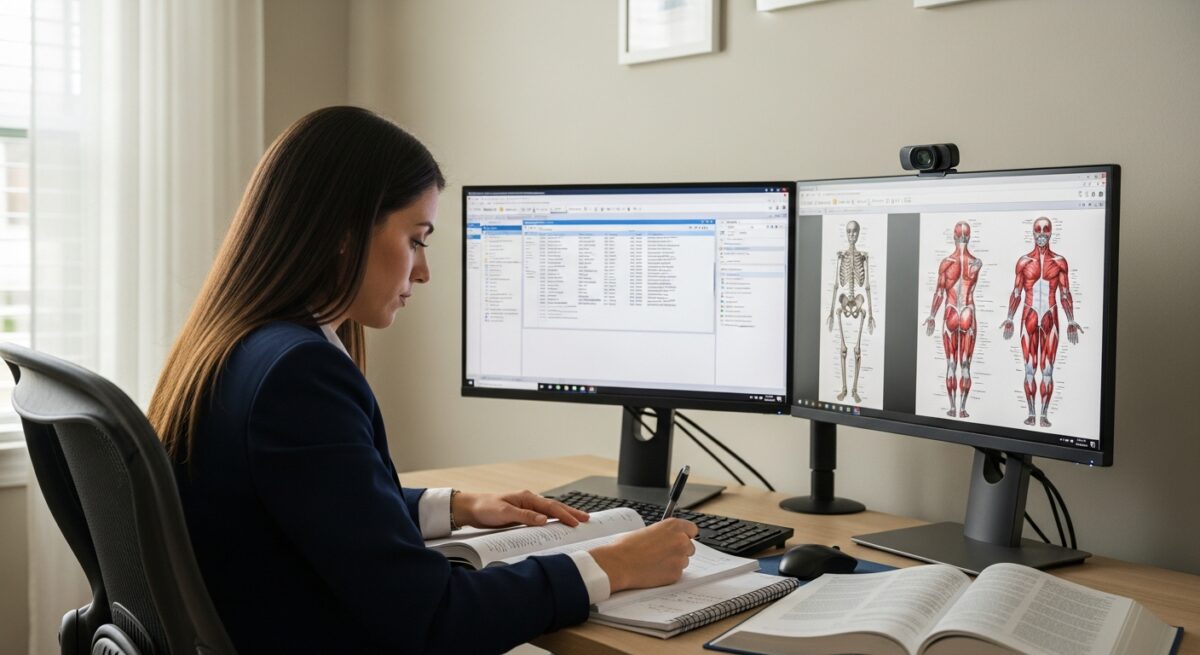
The healthcare industry continues to expand, and with it comes a growing demand for skilled professionals who can manage the administrative backbone of patient care. Medical coding specialists translate diagnoses, procedures, and treatments into standardized codes used for billing and insurance claims. This role offers a stable, well-paying career path that does not require years of medical school or a large upfront investment. For career changers, working professionals, and adult learners seeking flexible education, finding the best online medical coding courses is the first step toward a rewarding new profession. Online programs allow you to study at your own pace, often while maintaining your current job, and can lead to certification in a matter of months.
Choosing the right program, however, requires careful research. Not all courses are created equal. Some focus solely on exam preparation, while others provide a comprehensive foundation in anatomy, medical terminology, and coding systems like ICD-10-CM, CPT, and HCPCS Level II. The best online medical coding courses also include hands-on coding labs, practice exams, and career support to help you transition into the field. In this guide, we will explore what to look for in a program, the top course options available today, how to fund your education affordably, and how to position yourself for success after certification.
Understanding Medical Coding and Its Career Potential
Medical coding is the process of converting healthcare diagnoses, procedures, medical services, and equipment into universal alphanumeric codes. These codes are essential for billing, insurance reimbursement, and maintaining accurate patient records. Coders work in hospitals, physician offices, outpatient clinics, insurance companies, and increasingly, from home as remote employees. The Bureau of Labor Statistics projects that employment for medical records and health information specialists will grow 8 percent from 2023 to 2033, much faster than the average for all occupations. This growth is driven by an aging population and the need for detailed electronic health records.
One of the most attractive aspects of this career is the relatively short training period. While a bachelor’s degree can take four years, many online medical coding programs can be completed in 4 to 12 months. Certifications such as the Certified Professional Coder (CPC) from the AAPC or the Certified Coding Associate (CCA) from AHIMA are highly valued by employers. The median annual wage for medical records and health information specialists was over $48,000 in 2023, with experienced coders earning significantly more. For adult learners juggling work and family, the best online medical coding courses offer the flexibility to gain these credentials without sacrificing their current income.
Key Features of Top Online Medical Coding Courses
When evaluating programs, look for these essential components that separate high-quality training from basic overviews. A strong program will not only prepare you for the certification exam but also give you practical skills that translate directly to the job.
Before enrolling, consider the following criteria to ensure the course aligns with your goals and learning style:
- Accreditation and Industry Recognition: The program should be accredited by a recognized body and prepare you for a certification exam from AAPC or AHIMA. This ensures employers will respect your training.
- Comprehensive Curriculum: Look for courses that cover medical terminology, anatomy and physiology, ICD-10-CM, CPT, HCPCS Level II, and official coding guidelines. A superficial curriculum will leave you unprepared for real-world coding.
- Hands-On Practice: The best courses include real-world coding exercises, mock claims, and practice exams. Some offer access to encoder software or virtual labs to simulate the work environment.
- Instructor Support and Mentorship: Access to experienced instructors for questions and feedback can make a significant difference, especially for students new to the field. Live Q&A sessions or email support are valuable.
- Career Services: Job placement assistance, resume review, and interview coaching can help you land your first coding job after certification. Some programs have employer partnerships.
Programs that check all these boxes tend to have higher pass rates on certification exams and better employment outcomes for graduates. They also provide a smoother transition from student to professional coder. Investing in a course that lacks these features may save money upfront but could cost you more in the long run if you need additional training or struggle to find a job.
Top Online Medical Coding Courses Reviewed
1. AAPC CPC Preparation Course
The AAPC (American Academy of Professional Coders) is the largest medical coding certification body in the United States. Their official CPC preparation course is a gold standard for aspiring coders. The course includes 80 hours of online instruction, access to the ICD-10-CM and CPT code books, and 40 practice exams. Students also receive a free student membership to the AAPC, which provides networking opportunities and discounts on continuing education. The course is self-paced, but most students complete it in 4 to 6 months. The final exam voucher is included in the cost, making this a comprehensive package. Many employers specifically request AAPC certification, so this course is an excellent choice for career-focused learners.
2. AHIMA CCA and CCS Preparation
AHIMA (American Health Information Management Association) offers preparation for the Certified Coding Associate (CCA) and Certified Coding Specialist (CCS) exams. Their online courses are more intensive and are ideal for students who want to work in hospitals or complex healthcare settings. The curriculum places a strong emphasis on inpatient coding and medical record analysis. The courses are instructor-led with weekly assignments and live webinars. While the cost is higher than some alternatives, the depth of training and the prestige of AHIMA credentials can open doors to higher-level positions and salaries. For those seeking the best online medical coding courses with a hospital focus, AHIMA programs are top-tier.
3. CareerStep Medical Coding and Billing Program
CareerStep is a well-known provider of career-focused online training for healthcare roles. Their Medical Coding and Billing program includes both coding and billing fundamentals, making it a good fit for students who want a broad skill set. The program is self-paced and includes a coding simulation lab, a student advisor, and a national externship placement. The externship is a key differentiator, as it provides real-world experience that can be difficult to get otherwise. CareerStep also offers a tuition guarantee: if you do not pass the CPC exam within 12 months of graduation, you can retake the course for free. This program is particularly suited for adult learners who value structured support and a clear pathway to employment.
4. Penn Foster Medical Billing and Coding
Penn Foster offers an affordable, self-paced online Medical Billing and Coding program that is accredited by the DEAC. The curriculum covers ICD-10, CPT, HCPCS, and medical office procedures. Students complete interactive exercises and can download course materials for offline study. The program does not include a certification exam voucher, but it prepares students for the AAPC or AHIMA exams. Penn Foster is a solid choice for budget-conscious learners who are self-disciplined and comfortable studying independently. With monthly payment plans and no fixed start dates, it is one of the most accessible options. However, students should budget separately for exam fees and additional study materials.
5. ed2go Medical Coding with CPC Exam Prep
ed2go partners with accredited colleges and universities to offer online career training programs. Their Medical Coding with CPC Exam Prep course is instructor-facilitated and runs for 12 months of access. The curriculum includes extensive video tutorials, coding exercises, and practice exams. ed2go courses are often offered through local community colleges, which can add credibility and sometimes qualify for financial aid. The program is ideal for students who want the structure of a college-affiliated course but the flexibility of online learning. The instructor support is robust, with weekly discussion boards and direct messaging. This is one of the best online medical coding courses for students who need a balance of guidance and independence.
How to Choose the Right Program for Your Goals
Selecting among these excellent options depends on your personal circumstances, learning preferences, and career ambitions. If you are certain you want to work as a certified coder and value a direct path to the CPC exam, the AAPC course is hard to beat. If you prefer a more comprehensive curriculum that includes billing and an externship, CareerStep may be a better fit. For those on a tight budget, Penn Foster offers a low-cost entry point, while AHIMA courses are best for those targeting hospital-based inpatient roles.

Another important factor is the time you can commit each week. Self-paced programs like Penn Foster and CareerStep allow you to accelerate or slow down as needed. Instructor-led courses like those from AHIMA and ed2go have fixed schedules and deadlines, which can help keep you accountable. Be honest about your ability to stay motivated without external structure. Many students find that a program with regular deadlines and live support leads to better completion rates and exam outcomes. For a deeper look at how these programs operate and what prerequisites you need, check out our detailed guide on How Online Medical Coding Programs Work and Their Requirements.
Financial Aid and Affordable Options
Cost should not be a barrier to entering this field. Many of the best online medical coding courses offer payment plans, scholarships, or employer reimbursement options. The AAPC offers a monthly payment plan for their CPC course, and CareerStep has a low monthly tuition option. Some community colleges and vocational schools offer federal financial aid for eligible students. Additionally, the Workforce Innovation and Opportunity Act (WIOA) provides grants for job training in many states, and medical coding often qualifies. It is worth contacting your local American Job Center to see if you are eligible for funding.
Another option is to explore free or low-cost introductory courses to see if the field suits you before committing to a full program. Websites like Coursera and edX offer medical terminology and coding fundamentals courses for a small fee or free audit. While these will not lead to certification, they can help you build foundational knowledge and confirm your interest. Once you are ready to invest in a certification-track program, compare total costs including tuition, books, exam fees, and any software subscriptions. The most affordable option is not always the best value if it does not adequately prepare you for the exam. Consider the return on investment: a program that costs $2,000 but leads to a $50,000 job is a bargain compared to a $500 course that leaves you unprepared.
For more resources on managing education expenses, visit DegreeOnline.Education, where you can find guides on financial planning and affordable online degree options tailored for working adults.
Preparing for Certification and Your First Job
Completing an online course is a major accomplishment, but the journey does not end there. To become a certified coder, you must pass a national exam. The CPC exam, for example, consists of 100 multiple-choice questions and 10 medical coding scenarios. You are allowed to use official code books during the test, so familiarity with the manuals is crucial. Most programs include practice exams that simulate the real test environment. Aim to take at least three to five full-length practice exams before scheduling your actual exam. Focus on time management and accuracy. Many students find that joining a study group or online forum helps reinforce difficult concepts.
After certification, the next step is finding a job. Update your resume to highlight your training, certification, and any relevant skills such as attention to detail, knowledge of medical terminology, and proficiency with EHR software. Many employers hire entry-level coders on a probationary period where you work under the supervision of an experienced coder. Remote coding jobs are increasingly common, especially for coders with a year or two of experience. Consider applying for roles in physician offices or outpatient clinics, as these settings often hire new graduates. The best online medical coding courses will provide career placement assistance, but you can also use job boards like Indeed or LinkedIn to search for medical coding positions in your area or remote opportunities nationwide.
Frequently Asked Questions
How long does it take to complete an online medical coding course?
Most programs take between 4 and 12 months to complete, depending on whether you study full-time or part-time. Self-paced courses can be completed faster if you dedicate more hours each week. Instructor-led courses typically have a fixed duration of 4 to 6 months.
Do I need a college degree to enroll in these courses?
No. Most online medical coding courses require only a high school diploma or GED. Some advanced programs may recommend basic computer skills and familiarity with medical terminology, but prerequisites are minimal.
Which certification is best for beginners?
The Certified Professional Coder (CPC) from AAPC is the most popular entry-level certification. It is recognized nationwide and covers outpatient coding, which is the most common setting for new coders. The Certified Coding Associate (CCA) from AHIMA is also a good option for those interested in hospital coding.
Can I work from home as a medical coder?
Yes. Many medical coders work remotely, especially after gaining one to two years of experience. Some employers offer remote training and onboarding for entry-level coders. However, some positions may require an initial period of on-site work or a hybrid arrangement. Check job listings carefully for remote availability.
Are online medical coding courses worth the cost?
Yes, for most students. The cost of a comprehensive program ranges from $1,500 to $4,000, which is significantly less than a college degree. With median salaries above $48,000 and strong job growth, the return on investment is typically high. Many students recoup their tuition within the first year of employment.
Choosing the best online medical coding courses requires matching your personal goals, budget, and learning style to the right program. Whether you opt for the industry-leading AAPC course, the comprehensive CareerStep program, or an affordable option like Penn Foster, the key is to commit fully to your studies and take advantage of all the resources offered. Medical coding offers a stable, flexible, and rewarding career that can be launched in under a year. With the right training and certification, you can join the ranks of healthcare professionals who keep the system running smoothly while building a future on your own terms.