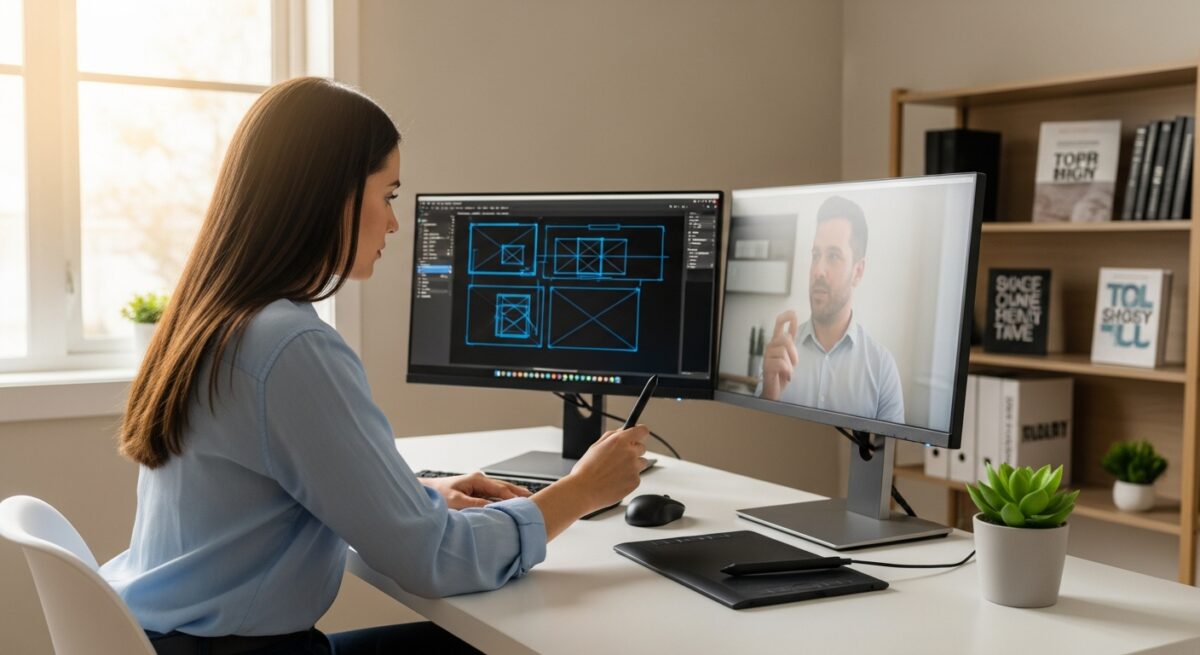
For working designers and career changers alike, the decision to pursue an advanced degree is often a balancing act between professional ambition and real-world commitments. You want to deepen your expertise, unlock leadership roles, and increase your earning potential, but the idea of relocating or quitting your job to attend a traditional campus program feels impractical, even impossible. This is precisely where the flexibility of an online education transforms the landscape. A Master’s in Graphic Design Online Programs offers a rigorous, advanced curriculum delivered in a format that fits into your life, not the other way around. Whether you are aiming to specialize in user experience, art direction, or design strategy, the online route has evolved into a sophisticated, highly credible pathway for professional growth.
This guide serves as your comprehensive roadmap to navigating the world of online graduate study in graphic design. We will explore the key considerations for choosing a program, the curriculum you can expect, the financial realities, and the career outcomes that await. By the end, you will have a clear framework to evaluate your options and take the next confident step toward advancing your career. Remember, the ultimate goal is not just to earn a degree, but to strategically position yourself for a future of creative leadership and innovation.
Why Pursue an Online Master’s Degree in Graphic Design?
The graphic design industry is no longer just about creating visually appealing layouts; it is about solving complex problems through strategic visual communication. As technology evolves and digital platforms multiply, the demand for designers with advanced skills in research, user experience (UX), and design systems has skyrocketed. A master’s degree signals to employers that you possess not only advanced technical proficiency but also the critical thinking, leadership, and strategic vision required to lead projects and teams. It is an investment in moving from a tactical executor to a strategic partner in the business.
Choosing an online format for this advanced study offers unparalleled advantages for the working professional. It eliminates geographical barriers, allowing you to learn from top-tier institutions across the country without the need to relocate. This flexibility means you can maintain your current job, build your portfolio with real-world experience, and apply your new learning immediately. Furthermore, online programs often foster a diverse cohort of professionals from various industries and locations, enriching your network and providing a broader perspective on global design challenges. This blend of academic rigor and practical flexibility makes an online master’s in graphic design a powerful tool for career acceleration.
For those weighing the cost and time commitment, consider the long-term value. While a master’s degree is a significant investment, it often correlates with higher salary brackets and access to senior-level positions. According to industry data, designers with a master’s degree can earn a notable premium over their bachelor’s-level counterparts. Moreover, the skills acquired, particularly in areas like design management and strategic innovation, are directly transferable to leadership roles such as Creative Director or Design Lead. The degree can also open doors to teaching at the university level or to specialized consulting roles, providing a diverse range of career pathways.
What to Look for in an Online Graphic Design Master’s Program
Selecting the right program is a critical decision that requires careful research. Not all online master’s in graphic design programs are created equal. Your focus should be on finding a program that aligns with your career goals, learning style, and budget. The first and most important factor is accreditation. Ensure the institution and the specific program are accredited by a recognized accrediting agency. This validates the quality of education and ensures that your degree will be respected by employers and other academic institutions. Look for programs accredited by bodies like the National Association of Schools of Art and Design (NASAD).
Beyond accreditation, delve into the curriculum. A robust program should offer a blend of theoretical foundations and practical application. Does it cover topics like design research, human-centered design, typography, motion graphics, and design strategy? Are there opportunities for specialization in areas like UX/UI design, data visualization, or brand identity? Also, investigate the faculty. Are they practicing professionals with industry experience, or are they primarily academics? The best programs bring a mix of both, offering you the latest industry insights alongside theoretical rigor. Look for programs that offer synchronous (live) classes that foster real-time interaction, as well as asynchronous materials for flexibility. Finally, review the alumni network and career services. A strong program will have connections to industry leaders and offer support with job placement, portfolio reviews, and networking events.
To help you compare, here are key features to prioritize in your search:
- Accreditation: Verify the program holds recognized national or regional accreditation, ensuring academic quality and degree validity.
- Specialization Tracks: Seek programs that offer concentrations in high-demand areas like UX/UI, design management, or motion graphics to tailor your degree to your career goals.
- Faculty Expertise: Look for a faculty roster that includes active industry professionals who bring current trends and network connections to the virtual classroom.
- Portfolio Development: The program should have a strong focus on building a professional portfolio, culminating in a capstone project that demonstrates your mastery.
- Student Support: Evaluate the availability of academic advising, technical support, and career counseling services specifically designed for online learners.
After evaluating these features, take the next step by reaching out to program advisors. Ask about class sizes, the technology platform used, and the typical profile of a student in the program. This will give you a sense of the community and whether it is a good fit for you. Remember, choosing a master’s program is a partnership; you want to invest in a program that is as committed to your success as you are.
Core Curriculum and Specializations in Online Design Master’s Degrees
The curriculum of an online master’s in graphic design is designed to elevate your thinking from visual problem-solving to strategic design leadership. While specific courses vary by institution, a typical program will include core classes in design theory, research methodologies, and professional practice. These foundational courses ensure that all students, regardless of their undergraduate background, have a common base of knowledge and a sophisticated understanding of design’s role in society and business. You will engage with advanced topics like semiotics, design ethics, and the psychology of visual perception.
As you progress, you will have the opportunity to specialize. Many programs offer tracks or electives that allow you to tailor your degree to your career aspirations. For instance, a specialization in User Experience (UX) Design will delve into user research, interaction design, and usability testing, preparing you for roles in the tech industry. A track in Art Direction might focus on visual storytelling, campaign development, and creative team leadership. Other specializations might include Motion Graphics, Data Visualization, or Design for Social Impact. This flexibility is a key advantage of many online programs, allowing you to build a portfolio that is aligned with your dream job.
The culmination of most master’s programs is a capstone project or thesis. This is your opportunity to tackle a complex, real-world design problem and produce a substantial body of work that demonstrates your expertise. It is a chance to synthesize everything you have learned, from research and strategy to execution and presentation. The capstone is often a key piece of your professional portfolio and can be a powerful talking point in job interviews. Some programs also integrate internship or co-op opportunities, which can provide invaluable practical experience and industry connections. Check if your chosen program offers credit for internships, as this can be a significant career accelerant.
Financial Considerations and Affordability
Investing in a master’s degree is a major financial decision, and it is crucial to have a clear understanding of the costs involved. Tuition for online programs can vary widely, from relatively affordable public university options to premium private institution programs. When comparing costs, it is essential to look beyond the sticker price. Research all associated fees, such as technology fees, library fees, and graduation fees. Also, consider the cost of software and hardware, as you will need a reliable computer and design software like Adobe Creative Cloud. When you factor in savings from commuting, parking, and relocation, online programs can be a more affordable option than traditional on-campus degrees.
Financial aid is available for eligible students, including federal student aid (FAFSA), scholarships, and employer tuition reimbursement programs. Many universities also offer Graduate Assistantships, which may involve assisting with research or teaching and can provide a stipend and tuition waivers, even in online formats. It is imperative to fill out the FAFSA to determine your eligibility for federal loans and grants. Additionally, research scholarships specifically for graduate design students; professional organizations like AIGA (the professional association for design) offer scholarships and awards. Do not hesitate to contact the financial aid office of the programs you are interested in to discuss your specific situation.
To effectively compare the financial impact of different programs, consider this framework:

- Calculate the total tuition cost for the entire program, not just per credit hour.
- Add all mandatory fees (technology, library, activities) to get the true program cost.
- Factor in indirect costs like software subscriptions, a new computer, and high-speed internet.
- Subtract any anticipated scholarships, grants, or employer tuition assistance.
- Compare the net cost of each program side-by-side to see which offers the best value for your investment.
Following these steps will give you a clear, data-driven picture of the investment required. The goal is to find a program that provides a strong return on investment without saddling you with unmanageable debt. For more detailed guidance on comparing costs and avoiding overpaying, our resource on advancing your career with an online master’s degree offers a framework that applies broadly to graduate programs. A strategic approach to financing your education is just as important as choosing the right curriculum.
Career Outcomes and Advancement
Earning your master’s in graphic design online is a direct investment in your career trajectory. Graduates of these programs are prepared for a range of advanced roles that go beyond the traditional graphic designer position. You might step into a role as a Senior UX Designer, leading product design for a tech company. Or, you could become an Art Director, overseeing the visual identity for a major brand or agency. Other potential titles include Creative Director, Design Strategist, Product Designer, or even Director of User Experience. These roles come with greater responsibility, higher salaries, and a seat at the strategic table.
The skills you develop, particularly in design research, systems thinking, and leadership, are highly sought after across industries. Tech companies, design agencies, corporations, non-profits, and government agencies all need professionals who can lead design initiatives and connect creative output to business goals. An online master’s degree, especially from a well-respected program, signals to employers that you have the discipline, advanced knowledge, and strategic mindset to take on these challenges. The portfolio you build during your studies, including your capstone project, serves as tangible proof of your capabilities.
Moreover, the network you build during your online program can be a significant career asset. Your classmates are likely working professionals with diverse experiences and connections. Your professors are often active in the industry and can provide references or introductions. Many programs also have strong alumni networks that you can tap into for mentorship and job opportunities. It is not just what you learn, but who you learn alongside and who you meet, that can shape your career path. By actively participating in your online community, you are building a professional support system that will last long after you graduate.
Is an Online Master’s Right for You?
While the benefits are numerous, it is also important to consider whether online learning is the right fit for your personal learning style and circumstances. Online programs require a high degree of self-discipline, time management, and intrinsic motivation. You will be responsible for keeping up with readings, assignments, and project deadlines without the structure of a physical classroom. Are you comfortable communicating primarily through digital channels, such as discussion forums, video conferencing, and email? If you thrive on in-person interaction and group work, you will need to make a conscious effort to engage with your peers and professors online.
Consider your home and work environment. Do you have a dedicated, quiet space where you can focus on your studies? Can you set aside consistent blocks of time each week for coursework? Be realistic about your current commitments. A master’s program is a significant time investment, typically requiring 15 to 20 hours of study per week. It is a marathon, not a sprint. Successful online students are proactive in seeking help when needed and are excellent at managing their time. If you are organized, self-directed, and committed to your professional growth, the online format can be an ideal way to achieve your goals without putting your life on hold.
Ultimately, deciding to pursue a graduate degree is a personal and professional milestone. It requires a clear-eyed assessment of your goals, your resources, and your readiness. If you are looking for a way to accelerate your career, deepen your expertise, and join a community of like-minded professionals, an online master’s in graphic design can be a transformative experience. It is a commitment, but the potential rewards, both personal and professional, are immense.
Frequently Asked Questions
How long does it take to complete an online master’s in graphic design?
Most programs are designed to be completed in two years of full-time study. However, many online programs offer part-time options, allowing you to extend your studies over three to four years, which is ideal for working professionals. Some accelerated programs can be completed in as little as 18 months.
Will an online degree be viewed as less credible than a traditional on-campus degree?
No. As long as the program is accredited, an online degree holds the same weight and credibility as a degree earned on campus. The curriculum is often identical, and the degree itself does not specify the format of study. What matters most to employers is the quality of the program and the skills you have acquired.
What are the technical requirements for an online design program?
You will need a reliable computer with sufficient processing power and memory to run design software like Adobe Creative Suite. A high-speed internet connection is essential for video lectures and file sharing. Some programs may have specific requirements, such as a certain operating system or a graphics tablet, so it is best to check with the program directly.
Can I work while studying for my master’s online?
Yes, many online students work full-time. The flexible, asynchronous nature of most online courses allows you to study in the evenings and on weekends. However, it requires strong time management and a realistic understanding of your workload. It is crucial to communicate your schedule to your employer and family to set expectations.
What kind of career support is available to online students?
Most reputable online programs offer a full suite of career services, including resume and portfolio reviews, interview preparation, and access to job boards and networking events. Some have dedicated career advisors for online students, ensuring you receive the same level of support as on-campus students.
If you are ready to explore specific programs, we encourage you to use our online degree program directory to compare accredited options and find schools that match your career aspirations. Making an informed choice is the first step toward a rewarding future in design leadership.
Pursuing a Master’s in Graphic Design Online Programs is more than just earning a credential; it is a strategic move to elevate your career, expand your thinking, and join the ranks of design leaders shaping the future. By carefully considering your options, you can find a program that not only fits your life but also transforms it. The journey requires dedication, but the destination is a new level of professional achievement and personal fulfillment.