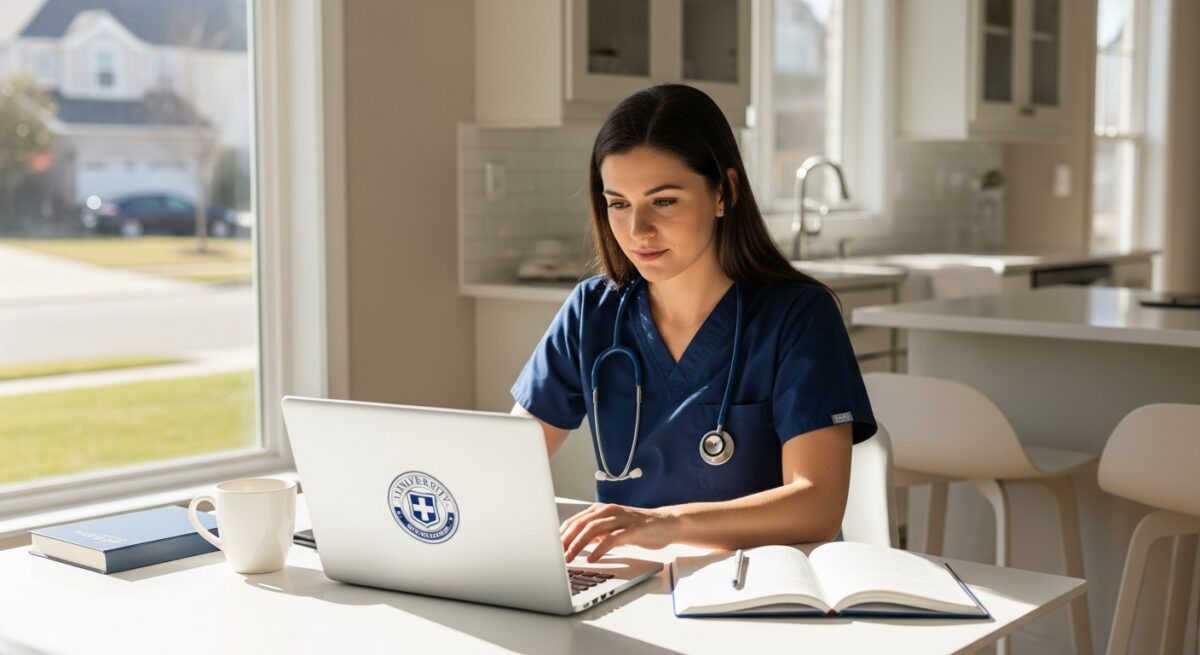
Balancing a demanding nursing career with the goal of advancing your education can feel overwhelming. You want to move into leadership, specialize in a high-demand field, or teach the next generation of nurses, but the thought of attending traditional on-campus classes seems impossible with your current schedule. This is where the flexibility of a Master’s in Nursing Online Degree Programs becomes a game-changer. Online MSN programs are designed specifically for working nurses, offering the chance to earn an advanced degree without sacrificing your current job or family commitments.
Choosing to pursue a master’s in nursing online is more than just a career move; it is an investment in your professional future. These programs are rigorously designed to build on your clinical experience, developing your skills in areas like healthcare policy, evidence-based practice, and organizational leadership. Whether you aspire to be a Nurse Practitioner (NP), a Clinical Nurse Leader (CNL), or a Nurse Educator, an online MSN can provide the credentials and knowledge you need to achieve your goals. This comprehensive guide will walk you through everything from program types and accreditation to costs, admission requirements, and career outcomes, helping you make a fully informed decision.
Why Choose an Online MSN Program?
The primary reason nurses choose online MSN programs is the flexibility they offer. You can access lectures, participate in discussions, and complete assignments from anywhere with a reliable internet connection. This asynchronous learning model allows you to study during off-hours, whether that is early morning, late night, or on your days off. For working professionals, this flexibility is not just a convenience; it is the critical factor that makes advanced education possible. Many programs also offer part-time enrollment options, allowing you to spread your coursework over a longer period to better balance work and study.
Beyond flexibility, online MSN programs often provide a broader range of specializations than local brick-and-mortar institutions. You are not limited by geography, so you can choose a program that perfectly matches your career aspirations, whether it is in psychiatric mental health, family practice, or nursing informatics. Additionally, online learning can be more cost-effective. You save on commuting, parking, and sometimes even on tuition, as some online programs have lower per-credit costs. Furthermore, you can continue working full-time while you study, which means you can maintain your income and avoid taking out large loans for living expenses.
Accreditation and Program Quality
When researching Master’s in Nursing Online Degree Programs, accreditation is the single most important factor to consider. Accreditation ensures that the program meets rigorous academic standards and that your degree will be recognized by employers and state licensing boards. For nursing programs, the two main accrediting bodies are the Commission on Collegiate Nursing Education (CCNE) and the Accreditation Commission for Education in Nursing (ACEN). Graduating from an accredited program is often a prerequisite for certification exams, such as the ANCC or AANP for nurse practitioners, and for many doctoral programs.
Do not confuse accreditation with state approval. While state approval is necessary, it does not carry the same weight as national accreditation. Always verify a program’s accreditation status by checking the accrediting body’s official website. This step will save you from the frustration of discovering that your credits are non-transferable or that you are ineligible for certification after graduation. Investing time in this research is a non-negotiable part of selecting a quality online nursing master’s program.
Core Specializations in Online Master’s in Nursing Programs
Online MSN programs offer a wide array of specializations, each leading to different career paths and certification opportunities. Choosing the right concentration is crucial, as it aligns your education with your professional interests and market demand. Here are some of the most popular and in-demand specializations available:
- Nurse Practitioner (NP): This is one of the most sought-after roles, with specializations in Family (FNP), Adult-Gerontology (AGNP), Pediatric (PNP), and Psychiatric Mental Health (PMHNP). NPs provide primary and acute care, often with a high degree of autonomy.
- Nurse Educator: This track prepares you to teach in nursing schools and clinical settings. You will learn curriculum development, assessment strategies, and educational theory, addressing the critical shortage of nursing faculty.
- Nursing Informatics: This specialization blends nursing science with data science and technology. Informatics nurses help design and implement electronic health records, improve clinical workflows, and use data to enhance patient outcomes.
- Nurse Leadership and Administration: This concentration focuses on healthcare management, financial acumen, and organizational behavior. Graduates often move into roles like Nurse Manager, Director of Nursing, or Chief Nursing Officer.
- Clinical Nurse Leader (CNL): The CNL role is focused on care coordination, outcomes measurement, and quality improvement at the point of care. It is a leadership role directly at the bedside, ensuring patients receive high-quality, evidence-based care.
Each of these specializations will have a core set of MSN courses, such as advanced physiology, pharmacology, and health policy, followed by specialized courses in your chosen area. When reviewing programs, look at the curriculum details to ensure the specialization you choose is offered entirely online or with minimal on-campus residency requirements, which is common for NP programs due to clinical hour needs.
Admission Requirements and Prerequisites
Getting into an online MSN program requires careful preparation. Most programs share a common set of prerequisites, which you should start gathering well in advance. A typical list includes:
- A Bachelor of Science in Nursing (BSN) from an accredited program.
- An active, unencumbered Registered Nurse (RN) license.
- A minimum GPA, usually 3.0 or higher on a 4.0 scale.
- Official transcripts from all post-secondary institutions.
- Letters of recommendation, typically from academic or clinical supervisors.
- A current resume or CV highlighting your nursing experience.
- A personal statement or essay outlining your career goals and reasons for pursuing the MSN.
Some programs may also require a statistics course or a basic computer proficiency test. For NP specializations, you often need one to two years of acute care or relevant clinical experience before applying. It is essential to check the specific requirements for each program you are interested in, as they can vary widely. If you have an Associate Degree in Nursing (ADN), you can still pursue an MSN through a bridge program, often called an RN-to-MSN, which includes BSN-level coursework before transitioning to master’s level classes.
Clinical Requirements for Online Nursing Master’s Programs
A common misconception about online MSN programs is that they are entirely virtual with no hands-on experience. This is not true. Clinical hours are a mandatory component of MSN education, particularly for advanced practice roles like Nurse Practitioners. The difference is that you, the student, are often responsible for finding and coordinating these clinical placements in your local community, with the help and approval of the program’s clinical coordinator. This arrangement allows you to complete your clinical hours at a facility near your home, often with a preceptor who is an experienced NP or CNS.
The number of clinical hours required varies by state and specialty. For instance, NP programs typically require between 500 and 700 clinical hours. The program will provide guidelines on the types of experiences needed and the qualifications required for your preceptor. You will also use a clinical tracking software to log your hours and patient encounters. This process, while requiring initiative and networking on your part, ensures that you gain invaluable real-world experience while still benefiting from the flexibility of online coursework. Be sure to ask prospective programs about their clinical placement support. Some programs have dedicated teams to help you find placements, which can be a significant advantage.

Cost, Financial Aid, and Return on Investment
The cost of an online MSN program can range significantly, from around $20,000 to $70,000 or more, depending on the institution, your residency status, and the specialization. Public universities often offer lower tuition for in-state residents, even for online programs. It is crucial to look beyond the sticker price and calculate the total cost, including fees, technology charges, and clinical placement costs. Before making a decision, compare the return on investment. An MSN degree can lead to a substantial salary increase. For example, a Nurse Practitioner’s median salary is well above that of a registered nurse, often by $30,000 to $50,000 annually. This potential for higher earnings makes the initial investment more palatable for many.
Financial aid is available, and you should not assume you are ineligible. Start by filling out the Free Application for Federal Student Aid (FAFSA) to see if you qualify for federal loans or grants. Many employers also offer tuition reimbursement programs for advanced degrees, as they benefit from having a more skilled workforce. Additionally, there are numerous scholarships and grants specifically for graduate nursing students, often offered by professional organizations like the American Nurses Association or specialty nursing associations. When researching financial options, you might find it helpful to explore resources on choosing affordable online degrees to get a broader perspective on managing educational expenses.
Career Outcomes and Advancement Opportunities
Earning a master’s in nursing online opens doors to a variety of high-level, well-compensated roles. The career path you choose will heavily influence your salary and job duties. For instance, Nurse Practitioners are in high demand, particularly in primary care and mental health settings. They have the authority to diagnose, treat, and prescribe medications in many states. Nurse Educators are essential to address the nursing shortage, and they work in academic institutions or hospital-based education departments. Informatics nurses are becoming increasingly vital as healthcare systems rely more on data and technology.
Leadership roles, such as Nurse Manager or Director of Nursing, involve overseeing nursing staff, managing budgets, and ensuring quality patient care standards. These positions often command six-figure salaries. The U.S. Bureau of Labor Statistics projects excellent job growth for advanced practice registered nurses, nurse anesthetists, and nurse midwives, with much faster than average growth expected over the next decade. This demand is driven by an aging population, an increased focus on preventative care, and the retirement of current nursing leaders. Your MSN will not only make you eligible for these roles but also position you as a leader in the evolving landscape of healthcare.
Frequently Asked Questions
Can I work while completing an online MSN program?
Yes, most online MSN students work full-time while studying. The flexibility of asynchronous coursework allows you to schedule your study time around your work shifts. However, it requires excellent time management and discipline. You should expect to dedicate about 15 to 20 hours per week to your studies, and you may need to reduce your work hours or take a leave of absence during the clinical components of the program.
How long does it take to complete an online master’s in nursing?
The duration varies depending on whether you study full-time or part-time and the number of transfer credits you have. Full-time students can often complete an MSN in about two years. Part-time students may take three to four years. RN-to-MSN bridge programs typically take longer, as they include foundational BSN coursework.
Are online MSN degrees respected by employers?
Absolutely, provided the program is accredited by a recognized body like the CCNE or ACEN. Employers care about the quality of your education and your licensure, not the delivery method. As long as you graduate from an accredited program, your online MSN degree holds the same weight and respect as a traditional on-campus degree.
What are the technical requirements for an online nursing master’s program?
You will need a reliable computer, high-speed internet access, and a webcam for virtual classes and meetings. Most programs use a learning management system (LMS) like Canvas or Blackboard, and you may need to install specific software for proctored exams. You should also have basic proficiency in word processing, email, and internet research.
Your Next Steps Toward an Online MSN
Deciding to pursue a Master’s in Nursing Online Degree Programs is a significant and rewarding step. The flexibility, career advancement potential, and the ability to specialize in a field you are passionate about make this an excellent investment in your future. As you narrow down your choices, remember to prioritize accreditation, examine the curriculum closely, and consider the support services offered, such as academic advising and career counseling. Also, verify that the program’s clinical placement assistance aligns with your needs, as this can be a major stressor.
Finally, be proactive in your research. Reach out to program advisors, connect with current students or alumni, and take advantage of resources like scholarship.education to find funding opportunities. With careful planning and dedication, you can successfully earn your MSN online and unlock a new chapter of professional achievement and leadership in nursing. The journey is challenging, but the personal and professional rewards are immense, leading to a fulfilling career where you can make a profound impact on patient care and the future of healthcare.