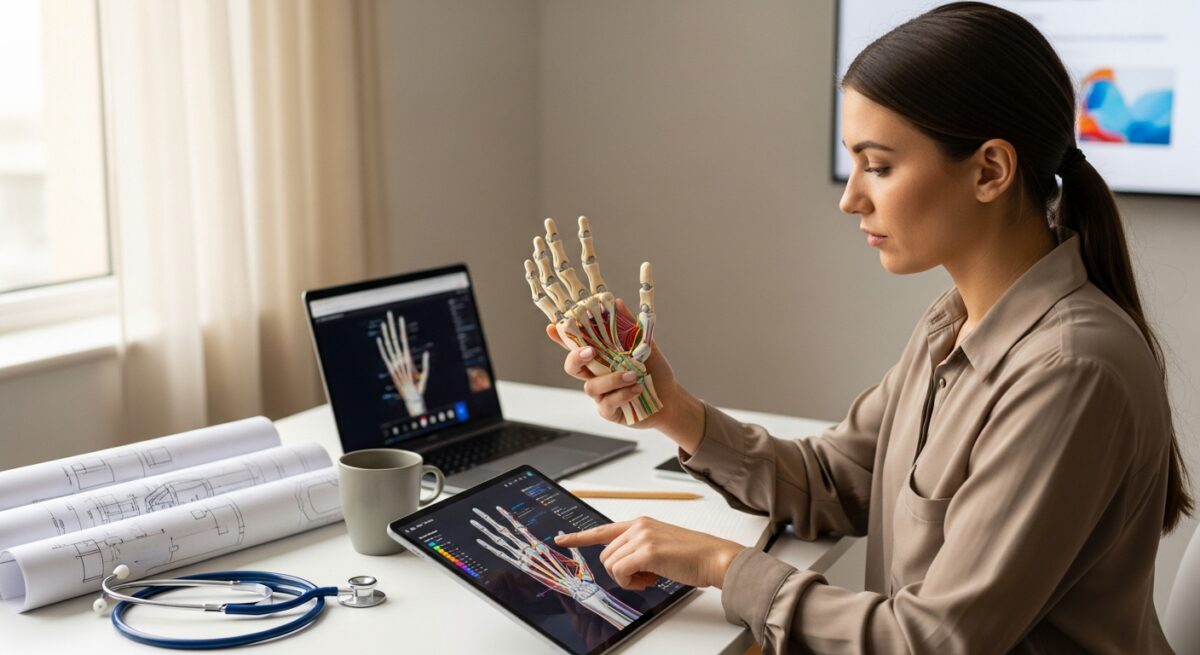
Biomedical engineering sits at the crossroads of medicine, biology, and engineering, creating devices, prosthetics, imaging systems, and therapies that save lives. For working professionals and career changers, earning a degree in this field once meant relocating or quitting a job. That is no longer the case. Online biomedical engineering degree programs now offer the same rigorous curriculum as campus-based options, with the flexibility to study around your schedule. Whether you are aiming for a bachelor’s to enter the field or a master’s to specialize, the digital classroom has opened doors that were previously locked.
This guide explores what online biomedical engineering education really looks like, how to choose a program that holds value, what you can expect to learn, and how to finance your degree without drowning in debt. You will also find answers to common questions about accreditation, lab requirements, and career outcomes. By the end, you will have a clear roadmap for deciding if an online biomedical engineering degree is the right move for your future.
Why Online Biomedical Engineering Degrees Are Gaining Popularity
The demand for biomedical engineers is projected to grow faster than the average for all occupations, driven by an aging population and rapid advances in medical technology. Hospitals, research labs, and device manufacturers need professionals who can design and improve everything from artificial joints to robotic surgical tools. However, traditional on-campus programs can be inaccessible for those who live far from a university or who cannot pause their careers. Online programs eliminate these barriers.
Flexibility is the most obvious advantage. You can watch lectures after work, participate in discussion boards on weekends, and complete assignments when your schedule allows. For parents, caregivers, or military personnel, this flexibility can be the difference between earning a degree and putting it off indefinitely. Additionally, many online programs allow you to continue working full-time, meaning you can apply what you learn immediately in your current role and avoid a gap in your resume.
Another factor is cost. Online programs often have lower tuition rates than their residential counterparts, and you save on commuting, housing, and campus fees. Many universities also offer in-state tuition to online students regardless of where they live, making out-of-state education more affordable. When you compare the total cost of an online degree to a traditional one, the savings can be substantial, sometimes tens of thousands of dollars.
However, online learning is not for everyone. It requires strong self-discipline, time management, and the ability to learn independently. You will not have a professor physically present to clarify a concept during a lecture, but you will have access to virtual office hours, email, and discussion forums. If you thrive in a self-directed environment, online education can be a perfect fit. If you need constant structure, you may need to build your own routines to stay on track.
Accreditation: The Non-Negotiable First Check
Before you apply to any online biomedical engineering degree program, verify that it holds proper accreditation. Accreditation ensures that the program meets established quality standards and that your degree will be recognized by employers and other institutions. For engineering programs specifically, look for accreditation from ABET (Accreditation Board for Engineering and Technology). ABET accredits programs in applied science, computing, engineering, and technology. An ABET-accredited degree is often a requirement for professional engineering licensure and is highly valued by graduate schools.
Regional accreditation is also essential. This accreditation applies to the entire university, not just the engineering department. It assures that the institution as a whole meets standards for faculty, student support, and financial stability. Most reputable online programs hold both regional and ABET accreditation, but you must verify. A quick search on the university’s website or the ABET database will give you the answer.
Beware of unaccredited programs that promise fast degrees or suspiciously low tuition. These programs may not be recognized by employers, and credits may not transfer. Your time and money are too valuable to risk on a degree that holds no currency. Always check accreditation status before you even request more information.
What to Expect in an Online Biomedical Engineering Curriculum
Online biomedical engineering degree programs typically require 120 to 130 credit hours for a bachelor’s and 30 to 45 for a master’s. The curriculum blends foundational engineering principles with biological sciences. Core courses usually include:
- Biomechanics and fluid dynamics
- Biomaterials and tissue engineering
- Medical imaging and signal processing
- Biomedical instrumentation and sensors
- Systems physiology and modeling
These courses are delivered through a mix of recorded lectures, live virtual sessions, and interactive simulations. You will often be required to complete individual and group projects, which may involve using software like MATLAB or COMSOL to model biological systems. Some programs include virtual labs that simulate experiments, giving you hands-on experience without a physical lab. However, you should know that some lab components may require an on-campus intensive or the use of a lab kit at home.
For master’s programs, you can often choose a specialization such as bioinformatics, neural engineering, or orthopaedic biomechanics. Theses or capstone projects are common, and they allow you to tackle real-world problems. For example, you might design a wearable sensor for monitoring glucose levels or develop a model to predict the stress on a knee implant. These projects not only deepen your expertise but also build a portfolio that impresses employers.
Hands-On Learning Without a Campus
One common concern about online engineering degrees is the lack of hands-on lab experience. Accredited programs address this in several ways. Many send you a lab kit at the start of each course, containing sensors, microcontrollers, and other components. You run experiments at home, collect data, and write reports just as you would in a physical lab. Others use virtual lab platforms that simulate complex equipment, from electron microscopes to patient monitors.
Some programs also offer optional weekend lab intensives on campus. If you live near the university, you can attend these sessions to work with specialized equipment like 3D printers or cadaver specimens. If not, you can complete the same work using remote-controlled labs, where you operate equipment through an online interface. These options ensure that you develop practical skills, even from a distance.
Choosing the Right Online Biomedical Engineering Program for You
With hundreds of online programs available, choosing the right one can feel overwhelming. Start by clarifying your career goals. Are you looking for an entry-level bachelor’s degree to start your career, or a master’s to move into leadership or research? Do you want a general degree or a specialization? Your answers will narrow your options considerably.
Next, evaluate the program’s structure. Look at the course list and ask whether the topics align with your interests. Check the faculty bios to see if they have real-world experience in the industry or research. Read student reviews and testimonials to gauge the quality of instruction and support. Also, consider the program’s duration and pacing. Some programs are designed to be completed in as little as 18 months, while others allow up to five years. Choose a timeline that fits your life.

Cost is a major factor, but do not let it be the only one. A more expensive program may offer better career services, stronger industry connections, or a more prestigious name. Conversely, a cheaper program might provide the same education but fewer networking opportunities. Weigh the return on investment carefully. Remember that you can also use financial aid, scholarships, and employer tuition reimbursement to offset costs.
Career Paths and Salary Expectations
Graduates of online biomedical engineering degree programs find work in hospitals, medical device companies, pharmaceutical firms, and research institutions. Common job titles include biomedical engineer, clinical engineer, quality engineer, and product development engineer. The work ranges from designing surgical robots to maintaining hospital equipment. The U.S. Bureau of Labor Statistics reports a median annual wage of over $100,000 for biomedical engineers, with the top earners in the industry exceeding $150,000.
Specializing can boost your earning potential. For example, a master’s degree in neural engineering can lead to roles in brain-computer interface development, a field that is attracting significant investment. Bioinformatics specialists who can analyze genomic data are also in high demand. As healthcare technology evolves, new roles will continue to emerge, making biomedical engineering a resilient and rewarding career choice.
For those already working in a related field, such as nursing or mechanical engineering, an online biomedical engineering master’s can be a strategic career pivot. You will gain the technical skills needed to design medical solutions while leveraging your existing clinical or engineering knowledge. This combination is highly valuable to employers, and it can open doors to leadership positions in product management or regulatory affairs.
Financial Aid and Affordability Strategies
The cost of an online biomedical engineering degree varies widely, from $300 per credit hour at public universities to over $1,000 at private institutions. Before you commit, research the total cost of the program, including fees for technology, lab kits, and books. Many programs advertise a low per-credit rate but add mandatory fees that increase the total. Always calculate the full cost.
You have several avenues for financial assistance. Fill out the Free Application for Federal Student Aid (FAFSA) to see if you qualify for federal grants, loans, or work-study. Many online students are eligible for federal aid, even if they study part-time. Scholarships are also available from professional organizations like the Biomedical Engineering Society (BMES) and from individual universities. Some employers offer tuition reimbursement, especially if the degree is relevant to your job. If you are a veteran, you may be able to use GI Bill benefits for online programs.
If you are exploring online education for the first time, you might also be interested in our guide on best online medical coding courses for career changers. While medical coding is a different field, the same principles of selecting an accredited, affordable program apply. That guide can help you compare program features and costs, which is useful regardless of your chosen healthcare pathway.
Frequently Asked Questions
Can I complete an online biomedical engineering degree entirely at home?
Yes, most programs allow you to complete the majority of coursework online. Lab components may require home lab kits or virtual simulations, and some programs offer optional on-campus intensives. You should check the program requirements before enrolling to ensure you are comfortable with the lab format.
Is an online biomedical engineering degree as respected as an on-campus degree?
Employers and graduate schools generally regard degrees from accredited programs equally, whether they are earned online or on campus. The key is accreditation. An ABET-accredited online program signals that you have met the same rigorous standards as a traditional program. The diploma itself does not indicate the delivery method.
What are the admission requirements for online biomedical engineering programs?
For a bachelor’s program, you typically need a high school diploma or GED and satisfactory scores on standardized tests like the SAT or ACT. Some programs may require prerequisite coursework in math and science. For a master’s program, you need a bachelor’s degree in engineering, biology, or a related field, along with letters of recommendation and a statement of purpose. Some programs also require GRE scores, though many have waived this requirement.
How long does it take to finish an online degree?
A bachelor’s degree typically takes four years of full-time study, but online programs often allow you to accelerate by taking more credits per term. Part-time study can extend the timeline to five or six years. Master’s programs usually take two years of full-time study, with part-time options available.
Will I need to travel for any part of the program?
Most online programs do not require travel. However, if the program includes an on-campus residency or lab intensive, you will need to plan for that. Always read the program details carefully to understand any travel obligations.
Final Thoughts
Online biomedical engineering degree programs offer a practical, flexible route into a high-demand, high-paying field. They allow you to learn from anywhere, often at a lower cost, without sacrificing the quality of your education. The key is to choose an accredited program that fits your career goals and learning style. Whether you are just starting out or looking to advance, the digital classroom can be your launchpad to a career that improves lives.
Take the next step today: research programs, reach out to admissions advisors, and compare your options. Your future in biomedical engineering is closer than you think. Learn more