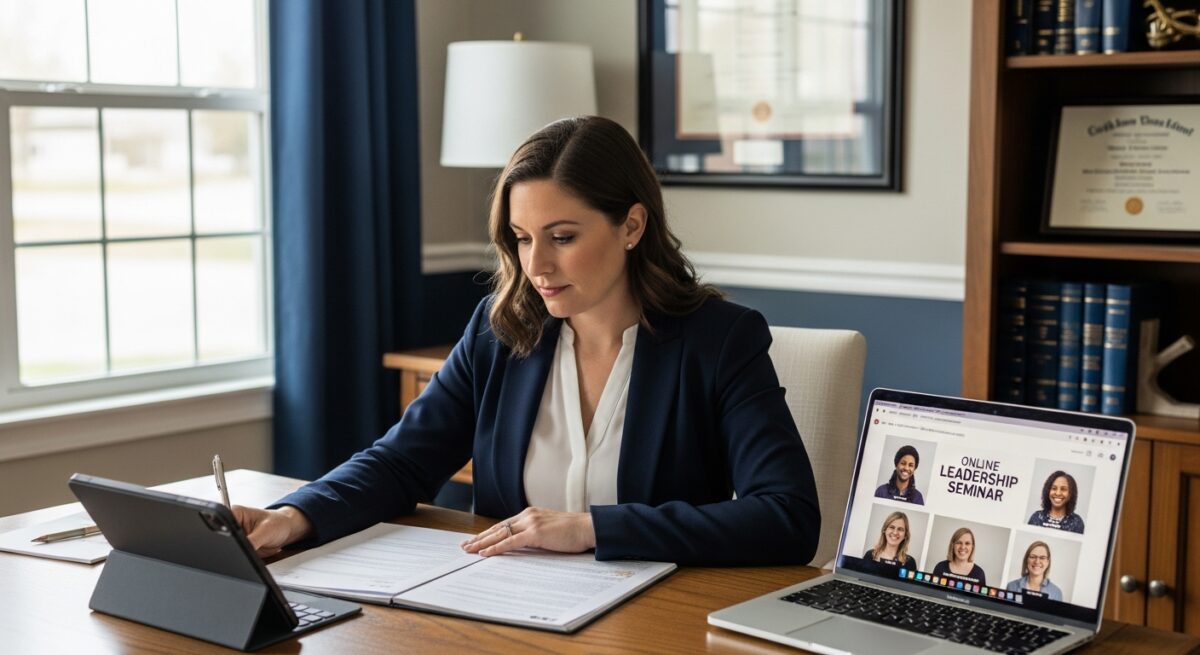
Gone are the days when earning a degree required a physical relocation or a rigid schedule that clashed with work and family life. Today, web-based academic studies represent a profound shift in the educational landscape, offering a legitimate, flexible, and often rigorous path to a degree. This transformation is more than just a technological convenience; it’s a reimagining of who can access higher education and how they can achieve their goals. Whether you’re a working professional seeking advancement, a parent managing a household, or someone in a remote location, these programs dismantle traditional barriers, placing the classroom in your pocket and the lecture on your schedule.
The Core Framework of Web-Based Learning
Web-based academic studies, often used interchangeably with online degrees or distance learning, refer to accredited academic programs where the majority of coursework, interaction, and assessment occurs via the internet. Unlike earlier correspondence courses, modern web-based programs are built on sophisticated Learning Management Systems (LMS) like Canvas, Blackboard, or Moodle. These platforms serve as the virtual campus, hosting lectures, discussion forums, assignment submissions, gradebooks, and library resources in one integrated environment. The pedagogy has evolved to emphasize not just content delivery, but community building and active learning. Students engage in synchronous sessions via video conferencing, participate in threaded discussions that can be more thoughtful than in-class comments, and collaborate on projects using cloud-based tools. This framework creates a dynamic educational experience that prioritizes flexibility without sacrificing depth or interaction.
Benefits and Advantages of the Virtual Classroom
The appeal of web-based academic studies is multifaceted, extending far beyond simple convenience. For many, the primary advantage is the unparalleled flexibility. You can access course materials, watch lectures, and contribute to discussions at times that suit your personal and professional obligations, whether that’s early in the morning, during a lunch break, or late at night. This elasticity makes it possible to pursue advanced education without pressing pause on your career. A working nurse can pursue a Master’s in Health Administration, or a retail manager can earn their online business administration degree while maintaining their full-time role and income.
Furthermore, this model offers significant geographical freedom. Students are no longer limited to institutions within commuting distance. You can choose a program based on its specialization, faculty expertise, or accreditation reputation, regardless of its physical location. This democratizes access to top-tier education. The financial benefits are also notable. While tuition rates vary, students often save on substantial ancillary costs such as commuting, campus parking fees, and relocation expenses. The ability to continue earning a salary while studying also mitigates the overall financial burden of pursuing a degree.
Addressing Common Concerns and Challenges
Despite the clear benefits, prospective students often have valid concerns. The most frequent is the question of legitimacy and quality. It is crucial to verify that the institution and the specific program hold proper regional accreditation, the gold standard in U.S. higher education. An accredited web-based degree holds the same weight as its on-campus counterpart. Another common worry is the lack of social interaction. While different, interaction in online programs is intentionally structured. Instructors foster community through required discussions, group projects, and virtual office hours. Many students find the online environment allows for more thoughtful, written participation from a diverse cohort of peers. Self-discipline and time management are indeed critical challenges. Success requires proactive organization, clear scheduling of study blocks, and strong personal accountability. Institutions often provide resources like online tutoring, writing centers, and success coaches to support students in developing these skills.
Choosing the Right Program for Your Goals
Selecting a web-based academic program requires careful, deliberate research. The process should begin with a clear alignment between the program and your career objectives. If you aim to become a certified teacher, ensure the Degree in Elementary Education program leads to licensure in your state. For those in public safety, an online degree in emergency management should have a curriculum vetted by industry professionals.
Beyond career alignment, several key factors demand scrutiny. Always confirm accreditation status first. Investigate the structure of the program: Is it asynchronous (work on your own schedule) or synchronous (required login times), or a blend? What is the typical weekly time commitment? Research the faculty’s credentials and their involvement in the online courses. Examine the technological requirements and support services. Finally, speak with an admissions counselor and, if possible, a current student or alumnus to gain insider perspective.
The Future of Digital Education
The trajectory of web-based academic studies points toward even greater personalization, immersion, and integration with professional skills. Adaptive learning technologies are beginning to tailor content and pacing to individual student performance, creating a more customized educational journey. While still emerging, virtual and augmented reality hold potential for creating immersive learning simulations, particularly valuable in fields like healthcare, engineering, and history. Furthermore, there is a growing emphasis on bundling industry-recognized micro-credentials or digital badges with degree programs, allowing students to demonstrate specific, job-ready competencies alongside their traditional diploma. This evolution ensures that web-based studies will continue to be not just an alternative, but a leading and innovative mode of higher education.
Web-based academic studies have moved from the periphery to the mainstream of higher education. They offer a viable, respected, and adaptable pathway for achieving academic and professional advancement. By carefully selecting an accredited program that matches your goals and committing to the disciplined engagement it requires, you can leverage this modern educational model to transform your future, all from the learning environment you choose.