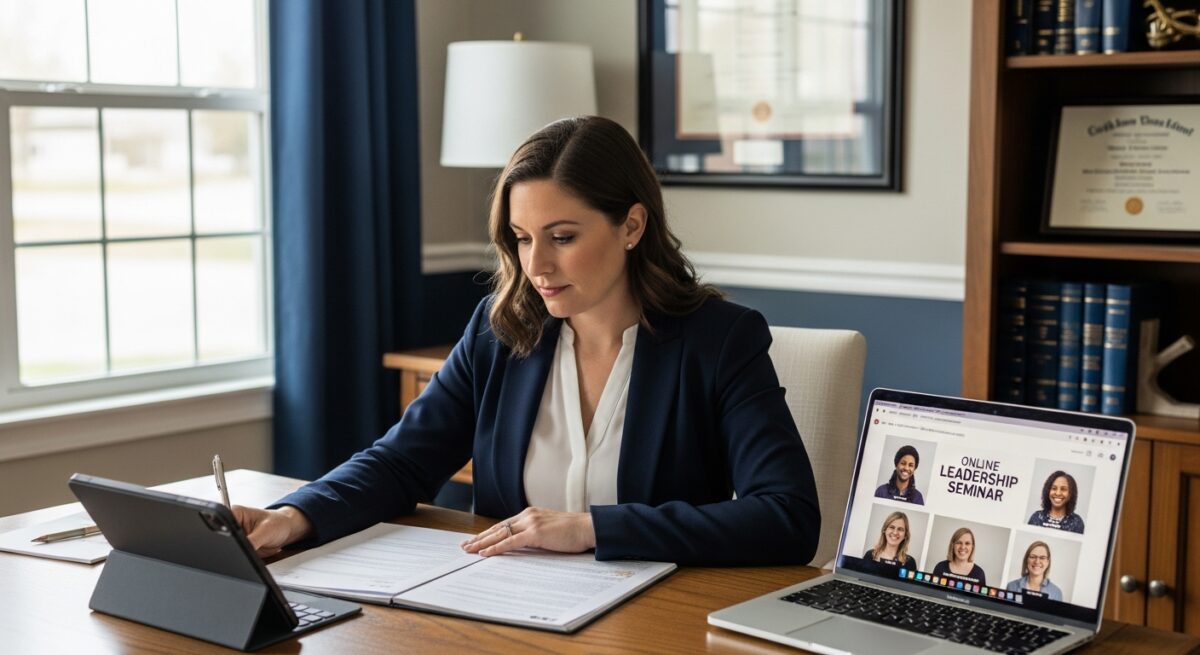
Imagine earning a respected degree, advancing your career, or pivoting to a new field without ever setting foot on a traditional campus. This is the empowering reality offered by modern distance study programs. Once considered an alternative path, online education has evolved into a sophisticated, mainstream, and highly effective method of learning. It breaks down geographical and logistical barriers, allowing working professionals, parents, military personnel, and lifelong learners to pursue their academic goals with unprecedented flexibility. Whether you seek a bachelor’s, master’s, or a professional certificate, distance learning provides a viable and rigorous pathway to success, integrating seamlessly into the busiest of lives.
What Defines a Modern Distance Study Program?
Today’s distance study programs are a far cry from the simple correspondence courses of the past. They represent a dynamic ecosystem of digital learning, leveraging technology to create interactive, engaging, and supportive educational environments. At their core, these programs deliver accredited curriculum and instruction to students who are not physically present in a classroom. The hallmark is asynchronous learning, where students access lectures, readings, assignments, and discussions on their own schedule within set weekly deadlines. However, many programs also incorporate synchronous elements, such as live virtual seminars or group project meetings, to foster community and real-time interaction.
The technology platform, typically a Learning Management System (LMS) like Canvas or Blackboard, serves as the virtual campus. Here, students navigate their courses, submit work, take exams, and collaborate with peers and instructors. This digital hub is supplemented by a rich array of resources: streaming video lectures, interactive simulations, digital libraries, and online tutoring centers. The pedagogical approach is deliberately designed for the remote learner, emphasizing clear communication, structured modules, and multiple forms of assessment to ensure comprehension and engagement from a distance.
Key Benefits of Pursuing an Online Degree
The decision to enroll in a distance study program is often driven by a powerful combination of practical and personal advantages. The most celebrated benefit is, without doubt, flexibility. Students can learn from anywhere with an internet connection, fitting coursework around work shifts, family commitments, or personal obligations. This autonomy cultivates essential skills in time management, self-discipline, and personal responsibility, traits highly valued by employers.
Beyond schedule control, these programs offer significant geographical freedom. You are not limited to institutions within commuting distance; you can choose a program based solely on its academic reputation, specialization, or cost, regardless of its physical location. This often leads to discovering niche programs perfectly aligned with your career goals. Furthermore, the online format can be more inclusive, providing a comfortable learning environment for those who may be hesitant to participate in a traditional classroom setting. The ability to review recorded lectures and carefully compose discussion posts can enhance the learning experience for many.
To maximize these benefits, a successful online student typically exhibits a few key characteristics:
- Self-Motivation: The drive to log in and complete work without direct supervision.
- Effective Time Management: The ability to block out dedicated study time and stick to a personal schedule.
- Technical Proficiency: Comfort with basic computer skills, software, and navigating online platforms.
- Proactive Communication: Willingness to reach out to instructors and peers with questions or for collaboration.
- A Dedicated Study Space: A quiet, organized area free from distractions to foster focus.
Navigating Accreditation and Program Quality
Not all distance study programs are created equal, and the single most critical factor in ensuring the value of your degree is accreditation. Accreditation is a validation process conducted by independent agencies to verify that an institution meets established standards of quality and rigor. A degree from an accredited institution is essential for the transfer of credits, eligibility for federal financial aid, and recognition by employers and other universities.
When researching programs, prioritize those accredited by reputable regional accrediting bodies, which are the gold standard for academic institutions. You should also look for programmatic accreditation for specific fields, such as business (AACSB), nursing (CCNE), or education (CAEP), which signals that the curriculum meets industry-specific professional standards. Always verify accreditation status directly on the institution’s website or through the U.S. Department of Education’s database before applying.
Evaluating quality goes beyond accreditation seals. Investigate the program’s structure: Who teaches the courses? Are they the same faculty who teach on-campus? Examine student support services tailored for online learners, including academic advising, tech support, career services, and library access. Read student reviews and alumni testimonials to gauge satisfaction and career outcomes. A high-quality program will be transparent about its graduation rates, student retention, and the resources dedicated to its online cohort.
Choosing the Right Program for Your Goals
With thousands of distance study programs available, selecting the right one requires a strategic approach. Begin by clearly defining your objective. Are you seeking career advancement in your current field, a complete career change, or personal enrichment? Your goal will dictate the level of degree (e.g., certificate, bachelor’s, master’s) and the specific major or concentration you need.
Next, conduct thorough research. Use reliable aggregators and school websites to compare programs. Pay close attention to the curriculum: does it cover the contemporary skills and knowledge required in your target industry? For instance, someone interested in leadership might explore online business administration degrees, while an aspiring educator could look into a Degree in Elementary Education. Consider the delivery model: is it fully asynchronous, or does it require scheduled live sessions? Evaluate the total cost, including tuition, fees, and any required campus residencies, and explore financial aid options. Finally, assess the admissions requirements to ensure your qualifications align, and don’t hesitate to contact an admissions counselor with specific questions about the program’s fit for your life and aspirations.
The Future of Learning Is Connected and Flexible
The trajectory of distance education points toward even greater integration, personalization, and technological innovation. We are moving beyond simply replicating the classroom online toward creating truly immersive and adaptive learning experiences. Micro-credentialing and stackable certificates are allowing professionals to build skills incrementally. Asynchronous and synchronous elements will continue to blend, offering optimal flexibility alongside valuable real-time collaboration. The distinction between “online” and “traditional” education will further blur, with most institutions offering a spectrum of hybrid options.
Distance study programs have firmly established themselves as a legitimate, powerful, and often preferable mode of higher education. They democratize access to knowledge and opportunity, empowering individuals to write their own educational narratives. By carefully selecting an accredited program that matches your goals and committing to the journey, you can earn a meaningful credential that opens doors, all while maintaining control over your time and your life. The classroom is now wherever you are.