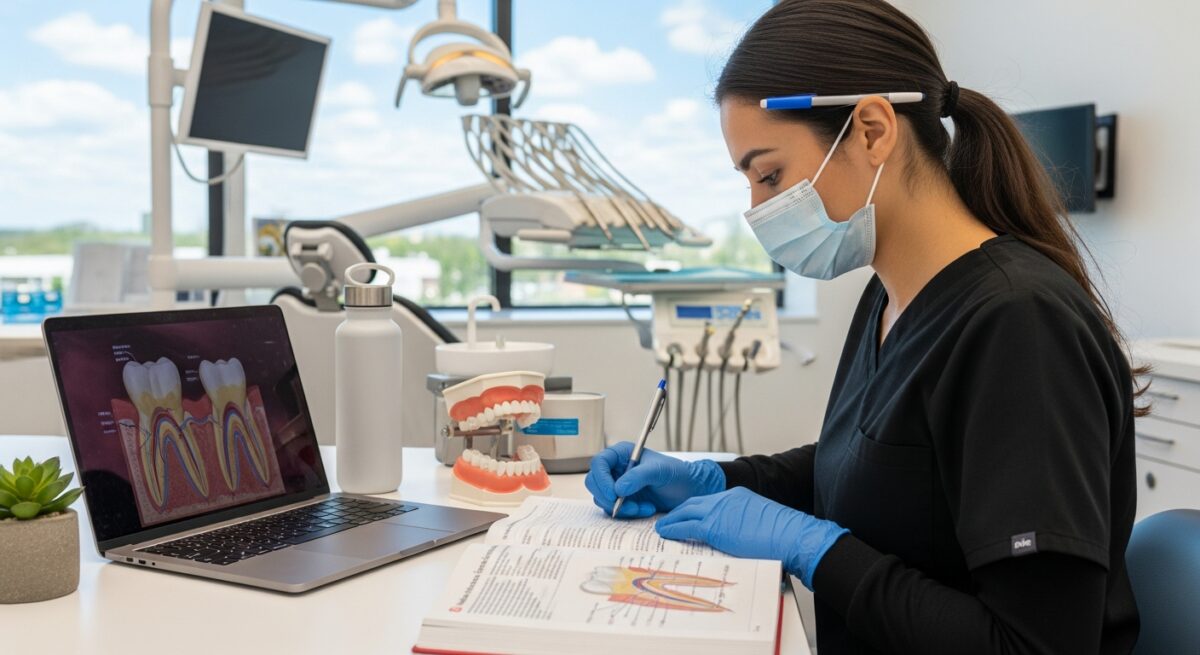
The healthcare field offers many rewarding career paths, and dental assisting stands out as a role that combines patient care with technical skill. For those seeking a flexible entry point, dental assistant programs online provide a practical pathway to this profession. These programs allow students to complete coursework from home while preparing for clinical responsibilities. This guide explores how online training works, what to expect from a dental assistant course online, and how to choose the right dental assistant school online for your goals.
Understanding Online Dental Assistant Training
Online dental assistant education has evolved significantly. Early versions of distance learning for dental assistants relied on mailed textbooks and VHS tapes. Today, accredited programs use interactive modules, video demonstrations, and virtual simulations to teach the clinical and administrative skills required in a dental office. Students learn about dental anatomy, infection control, radiography, chairside assisting, and practice management through a structured digital curriculum.
A typical dental assistant course online blends self-paced theory with hands-on requirements. Most programs require students to complete a certain number of clinical hours at a local dental practice or through a supervised externship. This hybrid model ensures that graduates possess both the knowledge and the practical competence needed to assist dentists effectively. For working adults or parents, this flexibility removes the barrier of rigid class schedules.
Key Components of a Quality Online Program
Not all dental assistant programs online are created equal. When evaluating options, consider these essential features that distinguish a strong program from a weak one. First, verify accreditation from the Commission on Dental Accreditation (CODA) or a recognized regional accrediting body. Accreditation ensures that the curriculum meets industry standards and that credits may transfer to further education if desired.
Second, examine the clinical externship component. A quality program will help arrange a placement at a nearby dental office where you can apply your learning under supervision. This real-world experience is invaluable for building confidence and making professional connections. Third, review the technology platform. A user-friendly learning management system with mobile access, discussion forums, and live support makes studying more manageable.
Fourth, consider the faculty. Programs that employ experienced dental professionals as instructors offer richer mentorship. You benefit from their practical insights and industry contacts. Finally, look at graduation rates and job placement statistics. Programs that track these metrics demonstrate accountability and commitment to student success.
Curriculum Breakdown for Online Dental Assistant Programs
Most dental assistant school online curricula cover similar core topics, though the order and depth may vary. Typical subjects include:
- Dental terminology and anatomy: Understanding tooth structure, oral diseases, and medical terminology used in dental records.
- Infection control and safety: OSHA standards, sterilization techniques, and proper handling of hazardous materials.
- Radiography: Techniques for taking and processing dental X-rays, including digital radiography and radiation safety.
- Chairside assisting: Four-handed dentistry, instrument transfer, patient positioning, and procedure preparation.
- Dental materials: Knowledge of composites, cements, impression materials, and their proper mixing and handling.
- Practice management: Scheduling, insurance billing, patient communication, and electronic health records.
After mastering these subjects through online modules, students move to the clinical externship phase. This hands-on component typically spans 100 to 200 hours and solidifies the skills learned in the virtual classroom. Many employers prefer hiring candidates who have completed an externship because they require less on-the-job training.
How Long Does Online Training Take?
One advantage of dental assistant programs online is the accelerated timeline. Certificate programs can be completed in 9 to 12 months of full-time study. Part-time options extend to 18 months or longer, depending on your pace. Some programs offer accelerated tracks that finish in as few as 6 months for students who can dedicate significant time each week.
Compared to traditional on-campus programs, online training often allows you to start sooner. Many schools have multiple start dates throughout the year rather than a single fall semester intake. This flexibility means you can begin your education when it fits your schedule, not when the academic calendar dictates.
Cost and Financial Considerations
Tuition for a dental assistant course online varies widely. Community college programs may cost between $1,000 and $5,000. Private career schools and online-only institutions often charge $3,000 to $10,000. While this may seem like a significant investment, consider the return. According to the Bureau of Labor Statistics, dental assistants earned a median annual wage of over $44,000 in 2024. Entry-level positions often start around $35,000, with experienced assistants earning above $50,000.
Financial aid options exist for many programs. Federal Pell Grants, student loans, and scholarships may be available if the school is accredited and participates in federal aid programs. Some employers also offer tuition reimbursement for employees pursuing dental assisting credentials. Before enrolling, ask the admissions office about payment plans, military benefits, and any discounts for upfront payment.
Licensing and Certification Requirements
After completing a dental assistant school online, you must meet your state’s licensing or certification requirements. Most states require passing the Certified Dental Assistant (CDA) exam offered by the Dental Assisting National Board (DANB). Some states have additional requirements, such as a state jurisprudence exam or a separate radiography certification.
Online programs that include a clinical externship typically prepare you for the CDA exam. However, confirm with your program that their curriculum aligns with DANB’s requirements. Some states allow on-the-job training as an alternative to formal education, but completing an accredited program makes you more competitive and often leads to higher starting pay.
Choosing the Right Program for You
Selecting the best dental assistant programs online requires careful research. Start by listing accredited programs that serve your state. Contact each school’s admissions department and ask specific questions about externship placement, job placement rates, and instructor qualifications. Request to speak with a current student or recent graduate if possible.
Consider your learning style. Do you prefer structured weekly assignments with deadlines, or do you thrive with self-paced study? Some programs offer a cohort model where you progress through the curriculum with a group of peers. Others allow you to complete modules at your own speed within a semester window. Choose the format that matches your discipline and schedule.
Also evaluate the technology requirements. You will need a reliable computer, high-speed internet, and sometimes specific software. Ensure you can meet these technical prerequisites before enrolling. Many schools offer a free trial or demo of their learning platform so you can test compatibility.
Career Outlook and Advancement Opportunities
The demand for dental assistants remains strong. The Bureau of Labor Statistics projects 8% growth from 2023 to 2033, faster than the average for all occupations. An aging population retaining more natural teeth, along with increased focus on preventive dental care, drives this demand. Dental assistants work in general and specialty practices, public health clinics, and dental schools.
After gaining experience, dental assistants can advance to roles such as lead assistant, office manager, or dental sales representative. Some pursue further education to become dental hygienists or dentists. Online training provides a foundation that supports these long-term career goals. For those interested in broader educational pathways, school-level degree guidance can help you explore options beyond certificate programs.
Frequently Asked Questions
Can I become a dental assistant completely online?
No, not entirely. While the didactic portion can be completed online, state regulations and employer expectations require hands-on clinical experience. Accredited programs include an in-person externship or lab component to ensure you develop practical skills.
Is a dental assistant course online cheaper than traditional school?
Often, yes. Online programs typically have lower tuition because they avoid costs associated with physical classrooms and facilities. However, compare total costs including textbooks, software fees, and externship expenses before deciding.
How do I find a clinical externship site?
Most reputable dental assistant programs online have partnerships with local dental offices. The school’s externship coordinator helps place you at a suitable site. If you already work in a dental office, some programs allow you to complete hours at your current workplace.
Will employers respect an online dental assistant certificate?
Yes, provided the program is accredited. Employers care more about your competency and certification than the delivery method. Passing the CDA exam and demonstrating strong clinical skills during the interview matters most.
What if I need to pause my studies?
Many online programs offer flexible leave policies. Contact the school before enrolling to understand their withdrawal and re-enrollment procedures. Some institutions allow students to pause for up to a year without losing completed credits.
For more information about this topic, school-level degree guidance provides additional details.
Final Thoughts on Online Dental Assistant Training
Dental assistant programs online offer a flexible, affordable path to a stable healthcare career. By choosing an accredited program with strong clinical support, you gain the skills and credentials needed to enter the workforce quickly. Whether you are changing careers or starting fresh, online training accommodates your life while preparing you for meaningful work in a growing field. Take the time to research options, ask the right questions, and commit to a program that aligns with your professional aspirations.