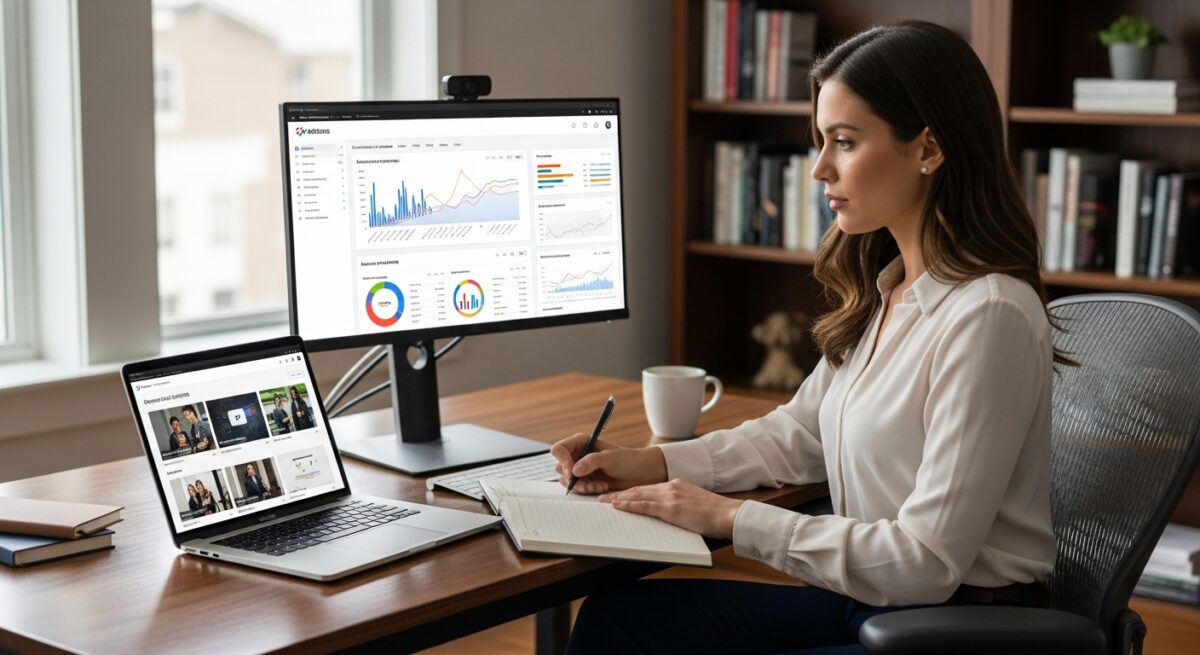
Balancing a demanding career with the goal of earning an advanced degree can feel like an impossible puzzle. For experienced professionals seeking to move into senior leadership roles without pressing pause on their income or momentum, the solution often lies in a flexible, rigorous, and highly respected option: an Executive MBA (EMBA) delivered online. These programs are specifically designed for seasoned managers and executives who want to deepen their strategic thinking, expand their professional network, and earn a prestigious credential without relocating or attending traditional classroom sessions. By combining the convenience of digital learning with the collaborative intensity of an executive cohort, these degrees offer a transformative pathway for those ready to lead at the highest level.
What Defines an Executive MBA Online Program?
An Executive MBA differs fundamentally from a traditional Master of Business Administration. While a standard MBA often caters to early- or mid-career professionals looking to build foundational business skills, an EMBA targets individuals with significant work experience, typically seven to ten years or more, including substantial managerial responsibility. The curriculum emphasizes high-level strategic decision-making, global business perspectives, and leadership development rather than core functional fundamentals. When delivered online, the program retains this executive focus while offering the ultimate flexibility for busy professionals who cannot commit to a fixed on-campus schedule.
Online executive MBA programs are not simply recorded lectures of an on-campus course. They are sophisticated, interactive ecosystems that leverage technology to create a dynamic learning environment. Participants engage in live virtual classes, collaborative projects with peers from diverse industries, and asynchronous coursework that fits around their work and personal commitments. The technology used, from advanced video conferencing to dedicated online learning platforms, is designed to foster the same depth of discussion and networking that occurs in a physical classroom. The result is a rigorous academic experience that respects the professional obligations of its students.
Key Benefits for the Working Professional
The primary advantage of an online Executive MBA is its inherent flexibility. Professionals can continue earning their salary, applying their learning in real-time to their current roles, and avoiding the career interruption that often comes with a full-time residential program. This direct application of knowledge is a powerful accelerator, allowing students to test new strategies and frameworks immediately within their organizations, which can lead to promotions and increased responsibility even before graduation.
Beyond flexibility, these programs offer a unique networking opportunity. The cohort model is a hallmark of EMBA programs, and online versions are no different. Students connect with a selective group of high-caliber peers from around the world, each bringing a wealth of experience from different sectors. This network becomes a lifelong professional asset, providing diverse perspectives, potential business partners, and future career opportunities. Additionally, the curriculum is intensely practical, focusing on real-world business challenges rather than theoretical exercises, ensuring that graduates are ready to lead from day one.
Comparing Online and On-Campus Executive MBAs
Choosing between an online and an on-campus EMBA often comes down to personal circumstance and learning style. An on-campus program offers the traditional, immersive experience with face-to-face interaction and a structured schedule, which can be ideal for those who thrive on in-person collaboration and have the ability to travel or relocate. However, it demands a significant time commitment for commuting and mandatory residencies. An online program, conversely, eliminates geographic barriers and offers asynchronous learning components, allowing professionals to study when and where it is most convenient. The trade-off is the need for self-discipline and the potential for fewer spontaneous, in-person interactions, though many online programs now include short, intensive on-campus residencies to build community. For most working professionals with family obligations and demanding travel schedules, the online format provides the necessary balance without sacrificing academic quality.
What to Look for in a Quality Online Executive MBA
Not all online EMBA programs are created equal. When evaluating options, prospective students should prioritize several critical factors to ensure they choose a program that delivers real value and is respected by employers.
Accreditation is non-negotiable. Look for programs accredited by the Association to Advance Collegiate Schools of Business (AACSB), the Association of MBAs (AMBA), or the European Quality Improvement System (EQUIS). These accreditations signal that the program meets rigorous international standards for faculty, curriculum, and student support. A degree from an accredited program carries significant weight with employers and ensures the education is of high quality.
Faculty credentials and engagement matter. The best online programs feature the same distinguished faculty who teach on campus. They are not just content providers; they are active researchers and consultants who bring real-world insights into the virtual classroom. In our guide on online programs offered by A&M University, we explain how faculty interaction is a key differentiator. Look for programs where professors lead live sessions, provide personalized feedback, and are accessible outside of class.
Cohort quality and networking opportunities are essential. An EMBA is as much about who you learn with as what you learn. Investigate the average years of work experience, industry diversity, and the professional backgrounds of admitted students. A strong cohort of ambitious, accomplished peers will elevate your learning experience and expand your professional network. Many programs facilitate this through virtual team projects, discussion forums, and annual in-person residencies.
Technology and support services should be robust. The online learning platform must be intuitive, reliable, and feature-rich, supporting seamless video, breakout rooms, and collaborative tools. Furthermore, the program should offer dedicated technical support, career coaching, academic advising, and library access specifically tailored for online students. These support structures are critical for success in a demanding program.
Typical Curriculum and Learning Experience
The curriculum of an online Executive MBA is designed to develop a strategic, global mindset. Core courses typically cover advanced topics in:
- Strategic Leadership and Organizational Behavior
- Global Economics and Market Dynamics
- Financial Analysis and Corporate Strategy
- Marketing Strategy in a Digital World
- Data-Driven Decision Making and Analytics
- Innovation and Change Management
These core courses are often followed by electives that allow students to specialize in areas such as finance, entrepreneurship, healthcare management, or technology leadership. The learning experience is heavily case-based, requiring students to analyze complex business situations, debate solutions, and defend their recommendations. A capstone project is also a common feature, where students tackle a real strategic challenge within their own organization or a partner company. This project serves as a culminating demonstration of the skills learned throughout the program.

Admissions Requirements and Application Process
Admission to an online EMBA program is competitive and mirrors the selectivity of top on-campus programs. While specific requirements vary, most schools look for the following:
- A bachelor’s degree from an accredited institution.
- A minimum of 7-10 years of professional work experience, with significant managerial or leadership responsibilities.
- Current employment in a role that allows for practical application of learning.
- Strong GMAT or GRE scores, though some programs offer waivers based on experience and prior academic performance.
- Professional letters of recommendation.
- A compelling personal statement outlining career goals and reasons for pursuing an EMBA.
- An interview with the admissions committee.
The application process is designed to assess not only academic potential but also leadership capacity, professional achievement, and the ability to contribute to a collaborative cohort. Candidates should prepare to articulate a clear vision for how the EMBA will help them achieve their next career milestone. Many programs also require a current resume and may ask for a video essay or a written response to a business dilemma.
Career Outcomes and Return on Investment
The decision to pursue an Executive MBA is a significant financial and time investment, but the return can be substantial. Graduates of top online EMBA programs consistently report significant career advancements, including promotions to C-suite roles, transitions into new industries, and substantial salary increases. According to data from the Executive MBA Council, graduates typically see a significant boost in compensation within three to five years of graduation, often exceeding 20-30% above their pre-program salary.
Beyond salary, the value extends to enhanced leadership capabilities, a stronger professional network, and increased confidence in navigating complex business challenges. For employers, sponsoring an employee through an online EMBA can be a strategic investment in retaining top talent and building a pipeline of future leaders. The skills acquired, such as strategic thinking, financial acumen, and global perspective, are directly applicable to driving organizational growth. The 1 year executive mba online format is particularly attractive for those seeking a rapid career pivot without a long-term academic commitment, offering an accelerated path to senior leadership. Many professionals specifically search for an executive MBA online to find a program that aligns with their fast-paced lifestyle and immediate career goals.
Frequently Asked Questions
How long does an online Executive MBA typically take to complete?
Most online EMBA programs are designed to be completed in 18 to 24 months while working full-time. Some accelerated options, such as a 1 year executive mba online, exist for highly motivated professionals, but these require an intense commitment and often a more rigid schedule. The part-time, cohort-based model of a standard EMBA is the most common and sustainable for working professionals.
Is an online Executive MBA respected by employers?
Yes, when earned from an accredited, reputable university, an online EMBA is highly respected by employers. The key is the brand of the institution and the rigor of the program. Employers value the discipline, time management, and advanced strategic thinking that completing such a program demonstrates. The online delivery method is now widely accepted, especially post-pandemic, as a legitimate and effective way to earn an advanced degree.
Can I network effectively in an online EMBA program?
Absolutely. Top online programs invest heavily in building a strong community. Through live virtual classes, breakout sessions, group projects, online forums, and mandatory in-person residencies or immersions, students form deep professional bonds with their peers. The cohort model ensures you work closely with the same group of executives throughout the program, fostering relationships that often last a lifetime.
What is the difference between an online MBA and an online Executive MBA?
The primary difference is the target audience and curriculum focus. A traditional online MBA is designed for early- to mid-career professionals with 3-5 years of experience, focusing on building a broad foundation in business functions. An online EMBA is for seasoned executives with 7-10+ years of experience, emphasizing strategic leadership, global management, and high-level decision-making. The EMBA cohort is also more experienced, which enriches the peer learning dynamic.
Do I need to take the GMAT or GRE for an online EMBA?
Many online EMBA programs require the GMAT or GRE, but an increasing number offer waivers based on significant work experience, a strong academic record, or professional certifications like a CPA or CFA. Some programs also accept the Executive Assessment (EA), a shorter test designed specifically for experienced professionals. It is best to check the specific requirements of each program you are considering.
For those ready to take the next step, exploring the available options through a trusted resource can simplify the process. You can research and compare various accredited online programs and featured colleges, such as Grand Canyon University and South University, to find the best fit for your career aspirations. The journey to earning an executive MBA online begins with informed research and a clear understanding of your professional goals. Find more information about degree options to help you make an educated decision.
Making the Decision to Apply
Choosing to pursue an online Executive MBA is a major career decision that requires careful consideration of your personal and professional priorities. It demands a significant commitment of time, energy, and financial resources. However, for the experienced professional who is ready to accelerate their career, expand their strategic capabilities, and join a powerful network of leaders, the rewards are immense. The key is to select a program that not only offers flexibility and academic excellence but also aligns with your specific industry, learning style, and long-term vision. By taking the time to research and compare programs, you can find the perfect fit to unlock your next level of leadership success.