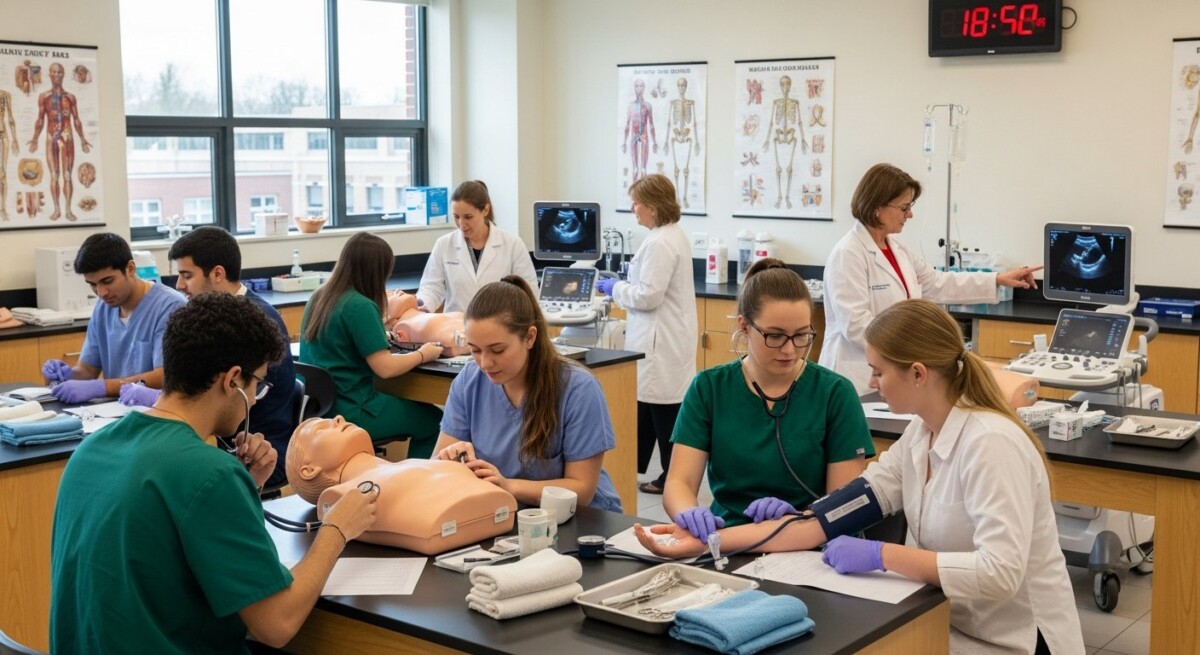
In today’s dynamic healthcare landscape, the demand for skilled, compassionate professionals has never been higher. For many aspiring individuals, the journey into this vital field begins not with a four-year commitment, but with a focused, practical, and accessible educational pathway: healthcare associate studies. These foundational programs offer a direct route to meaningful employment in a variety of clinical and administrative settings, providing the essential knowledge and hands-on skills that form the backbone of patient care and medical operations. Whether you are drawn to direct patient interaction, diagnostic technology, or the administrative systems that keep healthcare facilities running, an associate degree in a healthcare discipline can serve as your launchpad. This comprehensive exploration will guide you through the what, why, and how of healthcare associate studies, illuminating the career doors they open and the strategic steps you can take to build a rewarding future in health services.
Understanding Healthcare Associate Degrees
Healthcare associate studies encompass a wide array of two-year degree programs offered by community colleges, technical schools, and online institutions. These programs are designed to be career-focused, blending general education courses with specialized, technical training in a specific healthcare field. The core objective is to prepare graduates for immediate entry into the workforce, often in roles that are in high demand and require state licensure or national certification. Unlike a broad bachelor’s degree, an associate program in healthcare is intensely practical. Students spend significant time in labs, simulation centers, and clinical rotations, mastering the precise skills they will use daily on the job. This model of education is particularly effective for fields where procedural competency and applied knowledge are paramount.
The structure of these programs is typically efficient. Within approximately 60 to 70 credit hours, students complete a curriculum that covers anatomy, physiology, medical terminology, ethics, and specialized courses for their chosen track. This concentrated approach allows learners to enter the healthcare workforce much faster than through a traditional four-year path, making it an ideal choice for career changers, military veterans, and recent high school graduates seeking a stable and fulfilling profession without prolonged debt accumulation. The credential earned is usually an Associate of Science (A.S.) or an Associate of Applied Science (A.A.S.), both of which are widely recognized by employers and licensing bodies across the United States.
Popular and In-Demand Career Tracks
The versatility of healthcare associate studies is one of its greatest strengths. Programs are tailored to meet the specific manpower needs of the modern medical system. Some of the most sought-after and stable career paths accessible with an associate degree include nursing, radiologic technology, surgical technology, dental hygiene, and medical assisting. Each track leads to distinct professional responsibilities and settings. For instance, an Associate Degree in Nursing (ADN) prepares graduates to become Registered Nurses (RNs), eligible to sit for the NCLEX-RN exam. These professionals provide direct patient care in hospitals, clinics, and long-term care facilities, forming the largest segment of the healthcare workforce.
Meanwhile, a program in Radiologic Technology trains students to operate X-ray, computed tomography (CT), and magnetic resonance imaging (MRI) equipment, working closely with radiologists to diagnose injuries and diseases. Surgical Technologists, another critical role, complete associate programs to learn how to prepare operating rooms, sterilize instruments, and assist surgeons during procedures. The focused nature of this education is similar to pathways in other fields, such as the targeted training found in design associate studies, which prepare students for immediate roles in creative industries. In healthcare, this direct alignment between curriculum and career competency ensures graduates are job-ready from day one, addressing critical staffing shortages in communities nationwide.
The Tangible Benefits of This Educational Path
Choosing to pursue healthcare associate studies offers a compelling value proposition with multiple concrete advantages. First and foremost is the relatively short time to completion. With most programs designed for two years of full-time study, students can transition from the classroom to a professional, often well-compensated, role in a short timeframe. This accelerated entry into the workforce allows individuals to start earning a salary, gaining experience, and building seniority years before their peers in bachelor’s programs graduate. Furthermore, the cost of an associate degree is significantly lower than a four-year degree, resulting in substantially less student loan debt. This financial accessibility opens the doors of the healthcare profession to a broader, more diverse population of learners.
The return on investment is frequently excellent. Many healthcare occupations requiring an associate degree offer strong median wages that outpace the national average for all occupations. For example, according to the U.S. Bureau of Labor Statistics, Radiologic Technologists, Dental Hygienists, and Registered Nurses all enjoy median annual wages that provide a solid middle-class livelihood. Beyond financial metrics, these careers offer immense intrinsic reward through the act of helping others and contributing to community health. Job security is another paramount benefit, as demographic trends (like an aging population) and ongoing medical advancements ensure sustained demand for these skilled roles for the foreseeable future.
Key Advantages at a Glance
Consider these primary benefits of embarking on healthcare associate studies:
- Faster Career Entry: Begin working in your chosen field in as little as two years.
- Lower Educational Cost: Reduce tuition expenses and potential debt compared to four-year degrees.
- High Demand & Job Security: Enter a sector with strong growth projections and resilience to economic downturns.
- Hands-On, Practical Training: Focus on learning the exact skills employers need, with extensive clinical experience.
- A Clear Pathway to Advancement: Use the associate degree as a stepping stone to a bachelor’s or master’s degree later, often while working.
This combination of practical, financial, and professional benefits makes associate-level healthcare education a strategically sound choice for many. It provides a foundation that is both immediately employable and academically transferable, offering flexibility for future growth.
Selecting the Right Program and Specialization
With numerous options available, selecting the right healthcare associate program requires careful research and self-assessment. The first step is to identify your core interests and strengths. Are you drawn to direct, hands-on patient care, or do you prefer working with technology and diagnostic equipment? Do you thrive in fast-paced, high-stakes environments like an operating room, or do you excel in patient education and ongoing care management? Answering these questions will help narrow the field to specializations that align with your personality and professional goals. Once you have a target career in mind, the next critical factor is program accreditation.
Accreditation is non-negotiable in healthcare education. It is the seal of approval from an independent agency that evaluates whether a program meets rigorous quality standards. For students, attending an accredited program is essential for eligibility to sit for licensure or certification exams, for transferring credits to a four-year institution, and for being considered by most employers. Always verify a program’s accreditation status with the relevant specialized accrediting body (for example, the Accreditation Commission for Education in Nursing for nursing programs or the Commission on Dental Accreditation for dental hygiene). Additionally, investigate the program’s pass rates on licensure exams, its clinical partnership network, and its job placement rates for graduates. These metrics are strong indicators of program quality and effectiveness.
Navigating Admissions and Succeeding as a Student
Admission to competitive healthcare associate programs often involves prerequisites beyond a standard college application. Common requirements include completion of specific high school or college-level courses in biology, chemistry, and algebra, along with a minimum GPA. Many programs also require entrance exams like the TEAS (Test of Essential Academic Skills) for nursing or conduct background checks, drug screenings, and immunization verifications due to the clinical nature of the training. Preparing for these requirements well in advance is key. Prospective students should reach out to program advisors early to understand the complete checklist and timeline.
Succeeding in a healthcare curriculum demands dedication and effective strategy. The coursework is science-intensive and fast-paced. Developing strong study habits, forming study groups, and actively utilizing instructor office hours are crucial. The clinical or externship component is equally important, this is where theoretical knowledge is applied in real-world settings. Approach these experiences with professionalism, curiosity, and a strong work ethic, as they often serve as extended job interviews and can lead directly to employment offers. Time management is also critical, especially for students who are balancing studies with work or family responsibilities. Many schools offer robust support services, including tutoring, counseling, and career advising, which students should not hesitate to use.
Career Trajectory and Lifelong Learning
Earning an associate degree in healthcare is often the beginning, not the end, of one’s educational journey. The field of medicine is characterized by continuous advancement, and lifelong learning is a professional necessity. For many, the associate degree serves as a perfect foundation for later academic advancement. A common pathway is for a Registered Nurse with an ADN to enroll in an RN-to-BSN (Bachelor of Science in Nursing) completion program, which can frequently be done online while continuing to work. Similarly, a radiologic technologist may pursue a bachelor’s degree in radiation therapy or healthcare administration to move into supervisory, educational, or specialized clinical roles.
This concept of “stackable credentials” is a powerful aspect of career development in healthcare. Professionals can build upon their initial associate degree with additional certifications, bachelor’s degrees, and even graduate degrees over time, each step potentially opening doors to higher pay, greater responsibility, and new specializations. The initial investment in healthcare associate studies provides not just a job, but a durable and flexible career platform. It allows individuals to enter the field quickly, gain invaluable experience, and then strategically decide on their next move, whether it’s deepening clinical expertise, moving into management, or specializing in a cutting-edge area of medicine.
Frequently Asked Questions
What is the difference between a certificate and an associate degree in healthcare?
A certificate program is typically shorter (often less than a year) and focuses exclusively on technical skills for a specific role, like a medical assistant or phlebotomist certificate. An associate degree is a broader, two-year academic credential that includes general education courses (English, math) alongside the technical training, providing a more comprehensive foundation and is usually required for licensed roles like RN or Radiologic Technologist.
Can I complete healthcare associate studies entirely online?
While the didactic (classroom) portions of many programs are offered online, the clinical or hands-on lab components cannot be completed virtually. Most “online” associate degrees in healthcare are hybrid models, where you take theory courses online but must complete in-person clinical rotations at approved local facilities. Always verify the clinical requirements before enrolling.
How important is program accreditation for my future?
Extremely important. Graduating from an accredited program is almost always mandatory to be eligible for state licensure or national certification exams. Furthermore, credits from an accredited program are more likely to transfer if you pursue a bachelor’s degree later, and employers strongly prefer graduates from accredited institutions.
What financial aid is available for these programs?
Students in accredited healthcare associate programs are eligible for federal financial aid, including Pell Grants and student loans. Many states offer grant programs for high-demand healthcare fields. Additionally, hospitals and healthcare systems often provide tuition reimbursement or scholarship programs for students who commit to working for them after graduation.
Are healthcare associate degree holders in demand?
Yes, demand is high and projected to grow. The U.S. Bureau of Labor Statistics consistently projects occupations like nurse, radiologic technologist, and surgical technologist to grow much faster than the average for all occupations, driven by an aging population and increased access to healthcare services.
Embarking on healthcare associate studies is a decision that marries practical ambition with profound purpose. It represents a focused investment in oneself that yields not only personal and financial returns but also contributes directly to the well-being of communities. By providing the essential skills needed in clinics, hospitals, and labs across the country, these programs empower individuals to build stable, respected, and rewarding careers at the heart of human service. For anyone considering a future in healthcare, this pathway offers a proven, efficient, and impactful route to making a real difference.