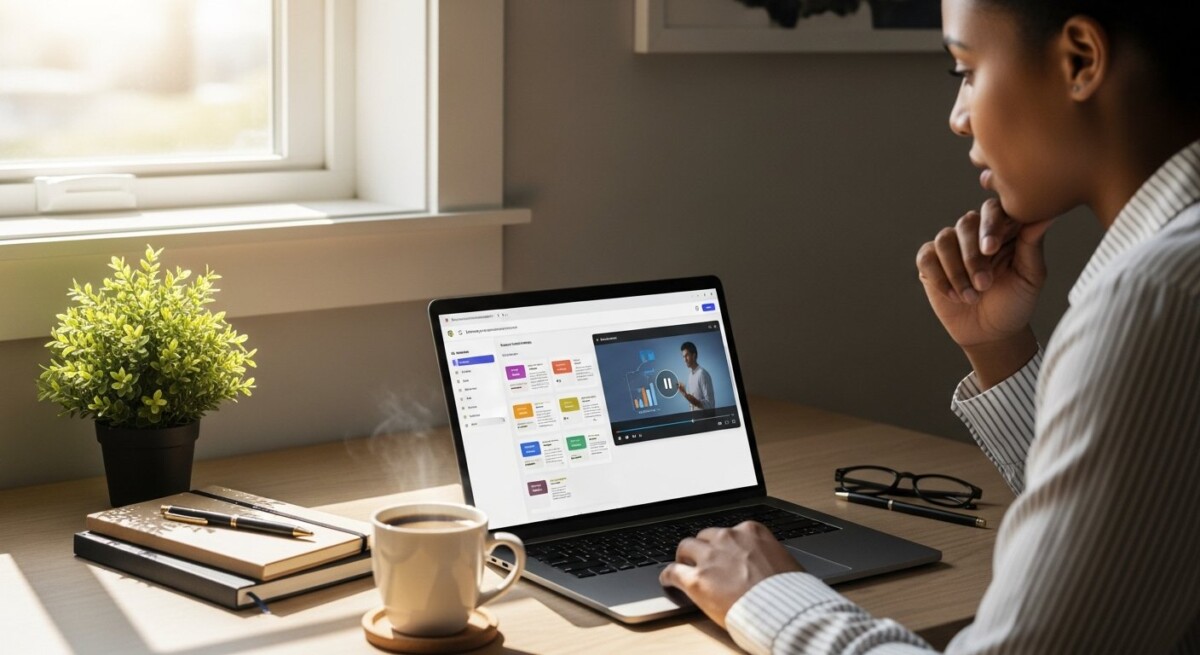
You are considering an online degree, but the process seems shrouded in mystery. How do classes actually function without a physical classroom? Can you truly interact with professors and peers? Is the workload manageable alongside a job? These are common and valid questions for anyone exploring higher education in the digital age. The reality is that online degrees have evolved into sophisticated, interactive, and rigorous academic pathways that mirror the quality of their on-campus counterparts, but with a crucial layer of flexibility. Understanding the mechanics, from the technology platform to the daily student experience, is the first step in determining if this mode of learning aligns with your goals and lifestyle. This guide demystifies the entire ecosystem, providing a clear, step-by-step look at how online degrees work from admission to graduation.
The Core Technology: The Learning Management System
Every accredited online degree program operates through a centralized digital platform called a Learning Management System, or LMS. Think of the LMS as your virtual campus. This is the website you log into daily to access everything for your courses. Popular platforms include Canvas, Blackboard, Moodle, and D2L Brightspace. While each has a slightly different interface, their core functions are remarkably similar. The LMS is where the administrative and academic components of how do online degrees work converge seamlessly.
Upon logging in, you are typically greeted with a dashboard that lists all your enrolled courses. Clicking into a course reveals a structured, organized space. Here, you will find the course syllabus, weekly modules or units, lecture materials, assignment instructions, discussion forums, and gradebooks. Professors upload video lectures, which may be pre-recorded or sometimes streamed live. Reading materials are often provided as downloadable PDFs or links to digital libraries. Crucially, the LMS also houses communication tools, such as announcement boards, direct messaging systems, and sometimes integrated video conferencing tools like Zoom or Microsoft Teams for live sessions. This centralized hub eliminates the need for physical handouts and provides a consistent, accessible location for all your learning resources, available 24/7 from any internet-connected device.
The Structure of Online Learning: Asynchronous vs. Synchronous
Online degrees primarily utilize two formats for delivering instruction: asynchronous and synchronous. Most programs use a blend of both, but understanding the distinction is key to knowing how online degrees work for your schedule.
Asynchronous learning is the hallmark of flexibility. In this format, there are no scheduled live class meetings. Instead, instructors provide all learning materials, lectures, assignments, and discussion prompts at the beginning of each week or module. You complete the work on your own schedule within set deadlines, such as submitting a paper by Sunday night or posting in a discussion forum by Wednesday. This model is ideal for working professionals, parents, or anyone with irregular hours, as it allows you to study early in the morning, late at night, or on weekends. It requires strong self-discipline and time management skills, as you are responsible for pacing your learning.
Synchronous learning, in contrast, involves real-time, scheduled online meetings. Using video conferencing software, you and your classmates log in at a specific time each week for a live lecture, seminar, or group project session. This format provides more immediate interaction with the instructor and peers, closely mimicking a traditional classroom feel. It fosters community and allows for spontaneous discussion and Q&A. However, it demands that you be available at those specific times, which can be a challenge across different time zones. When evaluating programs, check the course descriptions to see which format, or mix, is used. For those managing full-time employment, a program heavy in asynchronous work, perhaps with optional synchronous sessions, often provides the best balance. Our dedicated resource on balancing work and study with online degrees explores this critical scheduling dynamic in greater detail.
A Typical Week in an Online Degree Program
To truly grasp how online degrees work, it helps to walk through a typical week for a student. Let’s assume you are taking two graduate-level courses in an asynchronous-dominant program.
On Monday morning, you log into the LMS. You navigate to your first course and see that a new module for the week has opened. You review the learning objectives and see the following tasks: watch three recorded lecture videos (totaling 90 minutes), read two academic journal articles, contribute to the weekly discussion thread by Wednesday, and submit a short analysis paper by Sunday. You might start by watching one lecture during your lunch break. On Tuesday evening, you read one of the articles and draft your initial discussion post, which you submit. The discussion forum is not a one-time post; it’s an ongoing conversation. By Thursday, you return to read classmates’ posts and are required to respond substantively to at least two of them, fostering peer-to-peer learning. On Saturday, you dedicate a block of time to write your analysis paper, using the feedback from the discussion to refine your ideas, and submit it through the LMS’s assignment dropbox. Meanwhile, in your second course, you might have a group project. You coordinate with teammates via email or a shared document, dividing tasks and scheduling a brief video call to sync up. Throughout the week, you might email your professor with a question or check the gradebook for feedback on last week’s assignment.
The rhythm is consistent but self-directed. A successful online student proactively plans their week, blocks out dedicated study time, and engages consistently with the course materials and community. It is a misconception that online learning is isolated or easier; the workload is equivalent to an on-campus program, requiring the same level of critical thinking, research, and academic rigor.
Interaction, Assessment, and Academic Integrity
A pivotal question about how online degrees work centers on interaction and validation of learning. How do you connect with others, and how is your work evaluated in a remote setting?
Faculty and Peer Interaction
Interaction in online degrees is intentional and structured. Communication with professors happens through several channels: email, LMS messaging, discussion forums, and scheduled virtual office hours. Rather than raising your hand in class, you might post a question in a dedicated “Q&A” forum for the course, where the professor responds for all to see. Virtual office hours, held via video call, provide opportunities for one-on-one guidance. Peer interaction is often built into the curriculum through discussion boards and collaborative group projects. These designed interactions build a learning community and develop professional skills in digital communication and remote collaboration.
Assignments and Assessments
Assessments in online programs are diverse and designed to measure learning outcomes effectively. Common formats include:
- Written Assignments: Research papers, case studies, essays, and reflective journals submitted through the LMS.
- Discussions: Graded on the quality, timeliness, and depth of your initial posts and responses to classmates.
- Exams and Quizzes: These are often administered through the LMS with time limits. They may use question banks to randomize items for each student.
- Projects and Presentations: You might create a business plan, a digital portfolio, a research poster, or even record a video presentation to demonstrate your mastery.
- Participation: Active engagement in live sessions, forums, or peer review activities often constitutes part of your grade.
Upholding Academic Integrity
Universities take academic integrity seriously in online formats. To ensure work is your own, programs employ several tools and strategies. Proctored exams may use software that monitors you via your webcam, locks down your browser to prevent searching, and records your screen. Assignments are routinely checked against massive databases for plagiarism using tools like Turnitin. Some programs use “authentic assessment” design, where assignments are personalized, applied to real-world contexts, or structured as multi-stage projects that are difficult to outsource. The expectation of original work and ethical conduct is identical to that of a campus-based program.
Critical Considerations Before You Enroll
Understanding how online degrees work mechanically is only half the battle. You must also evaluate key external factors that define a program’s value and legitimacy.
Accreditation is Non-Negotiable. This is the most critical factor. Accreditation is a quality assurance process where an independent agency evaluates a school or program against set standards. Regional accreditation (from agencies like the Higher Learning Commission) is the gold standard for U.S. institutions and is essential for your degree to be recognized by employers, other universities, and for federal financial aid. Always verify a program’s accreditation status directly on the accrediting body’s website or the U.S. Department of Education’s database. Never trust a degree from an unaccredited institution.
Technology Requirements. You will need reliable, high-speed internet and a computer that meets the university’s specifications. This often includes a webcam, microphone, and up-to-date operating system. You may also need specific software, though many schools provide student licenses for essential programs.
Financial Aid and Support Services. Legitimate online degrees are eligible for the same federal financial aid (loans, grants) as on-campus programs, provided the school is accredited. You fill out the FAFSA just as you would for a traditional program. Furthermore, reputable online programs offer robust student support, including access to online librarians, tutoring centers, writing labs, career services, and technical help desks. These services are vital for your success and are a mark of a quality program. For comprehensive insights into navigating these choices, seeking clear online degree guidance from established educational resources is a prudent step in your planning process.
Frequently Asked Questions
Q: Do employers respect online degrees?
A: Yes, overwhelmingly so, provided the degree is from a regionally accredited, reputable institution. The stigma has largely disappeared, especially as major traditional universities now offer online programs. Employers typically focus on the accreditation and the name of the granting university, not the delivery format.
Q: How long does it take to complete an online degree?
A: The timeline mirrors that of on-campus programs: typically four years for a bachelor’s, two years for a master’s. However, many online programs are designed for acceleration, offering multiple start dates per year and allowing you to take more courses per term if you can handle the workload, potentially shortening the time to graduation.
Q: Will my diploma say “online”?
A: No. The diploma awarded is identical to that given to on-campus graduates. It states the degree earned (e.g., Bachelor of Science in Business Administration) and the name of the university, with no mention of the online delivery method.
Q: Can I transfer credits from a community college to an online bachelor’s program?
A> In most cases, yes. Accredited online universities often have generous transfer policies. You will need to submit official transcripts for evaluation, and the receiving school will determine which credits apply to your chosen degree program.
Q: Is an online degree right for my personality?
A> Online degrees work best for self-motivated, disciplined, and organized individuals who are comfortable with technology and proactive in communication. If you reliably meet deadlines without constant supervision and are comfortable seeking help when needed, you can thrive in an online environment.
The journey of earning a degree online is a structured, engaging, and demanding academic endeavor that opens doors without requiring you to upend your life. By leveraging sophisticated technology and intentional pedagogical design, accredited programs deliver a rigorous education that fits around your existing commitments. The key to success lies in understanding the commitment, choosing a reputable program, and cultivating the self-discipline to engage consistently. With this comprehensive view of how online degrees work, you are now equipped to make an informed decision and take the next confident step toward advancing your education and career on your own terms.