As online education has matured from a niche alternative to a mainstream academic pathway, one question has persistently challenged its credibility: how can institutions guarantee that the student enrolled is the one completing the exams? The answer, for a growing number of respected universities, lies in sophisticated remote proctoring technology. Online colleges with remote proctoring have turned a potential weakness into a strength, deploying a combination of software, artificial intelligence, and human oversight to create secure testing environments that uphold academic standards from anywhere in the world. This system is not just about surveillance, it is about building a framework of trust that allows degrees earned online to carry the same weight as their traditional counterparts.
The Technology Behind Remote Proctoring
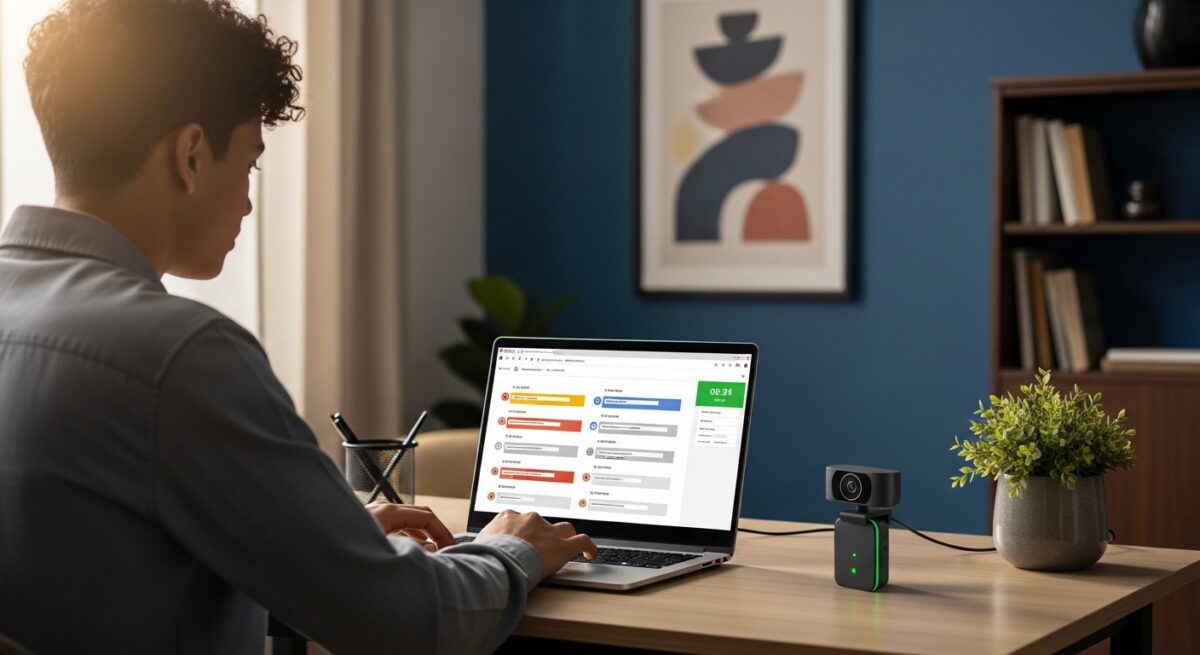
Remote proctoring, often called online proctoring, refers to the use of technology to monitor a student during an exam taken outside a physical testing center. The goal is to verify identity and ensure the test-taker adheres to predefined academic integrity rules. The technology suite employed by leading online colleges is multifaceted, designed to be both robust and minimally invasive to respect the student’s testing experience. At its core, the system requires access to the student’s computer webcam, microphone, and sometimes screen-sharing software. Before the exam begins, the student completes a multi-step authentication process. This typically involves showing a government-issued photo ID to the camera, and the software may perform a facial recognition check against the ID photo or a pre-submitted student photo. The student might also be asked to perform a 360-degree room scan with their webcam to show their testing environment, ensuring no unauthorized materials or people are present.
During the exam, the proctoring software operates continuously. AI algorithms analyze the video and audio feed in real-time, flagging behaviors that could indicate potential academic dishonesty. These behaviors include the student’s face moving out of the camera frame, detecting a second face in the room, unusual eye movements that might suggest looking at a secondary screen or notes, and specific sounds like voices or keyboard typing patterns associated with searching for answers. It is crucial to understand that in most reputable systems, the AI does not automatically fail a student. Instead, it flags these moments for later review by a human proctor. This human-in-the-loop model is essential for context, as a flagged movement could be a student stretching, thinking, or looking away from stress, not cheating. After the exam, a certified proctor reviews all flagged incidents along with a recording of the entire session, makes a determination, and submits a report to the institution.
Benefits for Students and Institutions
The adoption of remote proctoring by online colleges delivers significant advantages for all stakeholders, fundamentally enhancing the flexibility and credibility of digital education. For students, the most apparent benefit is unparalleled geographical freedom. They can schedule and take high-stakes exams from their home, a local library, or even while traveling (military personnel are a key beneficiary), eliminating the cost, time, and stress associated with traveling to a physical testing center. This aligns perfectly with the core promise of online education: accessibility. Furthermore, it often allows for more flexible scheduling within a defined exam window, accommodating different time zones and personal responsibilities.
For educational institutions, the benefits are equally compelling. Remote proctoring provides a scalable, consistent method to protect the value of their academic credentials. By implementing a rigorous proctoring standard, colleges can confidently assure accrediting bodies, employers, and the academic community that their online degrees meet the same rigorous standards as on-campus programs. This is vital for maintaining institutional reputation and the market value of the degrees they confer. It also reduces the administrative and logistical burden of managing physical test centers. The technology creates an auditable trail of evidence for any academic integrity cases, moving decisions from subjective suspicion to documented review.
The symbiotic relationship between these benefits creates a stronger ecosystem for online learning. When students trust that their effort is being evaluated fairly and institutions trust that outcomes are valid, the entire model gains legitimacy. This trust encourages more prestigious universities to launch online programs, which in turn expands quality options for learners. For those navigating this landscape, seeking clear online degree guidance can help identify programs that balance rigorous proctoring with a supportive learning environment.
Choosing the Right Program With Proctoring in Mind
When researching online colleges with remote proctoring, prospective students should evaluate the proctoring policy as a key component of the program, not just an afterthought. A transparent and student-centered proctoring approach is a hallmark of a well-designed online program. Start by investigating the specific proctoring software the college uses (common providers include ProctorU, Examity, Proctorio, and Honorlock). Visit the software provider’s website and the college’s student support pages to understand the technical requirements. These often include a detailed list of compatible operating systems, browser versions, webcam specifications, and internet speed minimums. Running a system check well before your first exam is critical.
Next, delve into the institution’s stated policies. Look for clear answers to the following questions in the student handbook or academic integrity code: What is the process for identity verification? What behaviors specifically constitute a violation during a proctored exam? What are the student’s rights regarding the review of flagged footage? How does the appeal process work if a proctoring violation is alleged? A reputable program will have these policies documented and accessible. Furthermore, consider the human element. Does the program offer practice exams using the proctoring software to alleviate anxiety? Is there IT support specifically for proctoring issues? The goal is to find a program that uses technology to ensure integrity without creating an atmosphere of oppressive surveillance.
Here are key factors to assess when comparing online colleges with remote proctoring systems:
- Technical Requirements and Support: Ensure your equipment meets specs and 24/7 tech support is available for exam-related issues.
- Proctoring Model: Determine if proctoring is live (a proctor watches in real-time), automated (AI records for later review), or a recorded review blend.
- Data Privacy and Security: Review the college’s and proctor’s privacy policies to understand how your biometric data (face, voice) and recording are stored and protected.
- Cost Transparency: Clarify if proctoring fees are included in tuition or charged per exam, and if there are any costs for required equipment.
- Accommodations for Disabilities: Confirm the process for requesting and implementing approved testing accommodations within the remote proctoring framework.
Taking these steps will help you select a program where the proctoring system feels like a fair tool for validation rather than an obstacle to your success. Understanding these systems is part of a broader strategy for inclusive education, a topic explored in depth in our guide on accessible online colleges for all students.
Addressing Privacy and Accessibility Concerns
No discussion of remote proctoring is complete without addressing the legitimate concerns raised about student privacy and equitable access. Critics argue that the technology can be overly intrusive, collecting sensitive biometric data and creating a “big brother” testing environment that induces anxiety and may disadvantage some students. The key for ethical online colleges is to implement proctoring with principles of minimal necessary data collection and clear purpose limitation. Students should be informed exactly what data is collected (e.g., video, audio, screen activity), how long it is retained, who has access to it, and how it is securely destroyed. Reputable institutions partner with proctoring services that are compliant with data protection regulations like FERPA in the U.S. and GDPR internationally.
Accessibility is another critical frontier. Standard proctoring procedures, like room scans and fixed camera angles, can present barriers for students with physical disabilities. Likewise, AI that flags atypical eye movements or physical tics could wrongly flag students with certain neurological or medical conditions. Leading online colleges address this by having a robust, well-publicized process for students to request accommodations through the disability services office. Approved accommodations might include alternative methods for room scans, permission for assistive technology, adjusted AI flagging sensitivity, or the use of a human proctor trained in accessibility. The institution’s commitment to accessibility should be evident in its proctoring policy documentation.
Frequently Asked Questions
What happens if my internet disconnects during a remotely proctored exam?
Most proctoring platforms have protocols for short disconnections. Typically, the exam timer will pause, and you will have a limited window to reconnect and resume. The incident will be flagged for review. Always contact your instructor and IT support immediately.
Can I use a virtual machine or a work computer for a proctored exam?
Almost always, no. Proctoring software requires direct access to your computer’s operating system and hardware to prevent virtualization and ensure no unauthorized programs are running. Work computers often have security firewalls and administrative blocks that will conflict with the proctoring software. Always use a personal computer that meets all technical requirements.
Are there any subjects or exam types where remote proctoring is not effective?
Remote proctoring is highly effective for traditional text-based exams, multiple-choice, and essays. It can be challenging for exams requiring complex physical apparatus, lab work, or extensive handwritten calculations (though digital tablets can sometimes bridge this gap). In such cases, programs may use alternative assessments like projects, case studies, or supervised in-person practical exams.
How do proctors ensure I’m not using notes on a second monitor or device?
The initial room scan is designed to identify all monitors in your workspace. You will usually be required to show that secondary monitors are disconnected or turned off. During the exam, the AI and proctor monitor your eye gaze. A persistent pattern of looking away from the primary screen to a specific spot in the room (where a hidden device might be) is a common red flag that will be reviewed.
Is remote proctoring required for every exam in an online degree program?
Not necessarily. Policies vary by institution and course. Some programs may only use proctoring for major midterms and finals, while others may use it for all graded tests. Some courses may forgo proctored exams entirely in favor of other assessment methods like research papers, discussion participation, and portfolio projects. Always check the syllabus for each course.
The evolution of remote proctoring represents a pivotal development in the journey of online education toward full legitimacy. By solving the fundamental challenge of secure assessment, online colleges with remote proctoring have removed a major barrier to acceptance for students, employers, and academia at large. The technology, when implemented thoughtfully and ethically, serves as a bridge, connecting the flexibility learners demand with the academic rigor that defines a meaningful education. As you explore programs, view a transparent and fair proctoring policy not as a hurdle, but as a sign of an institution’s commitment to upholding the value of the degree you will work so hard to earn.