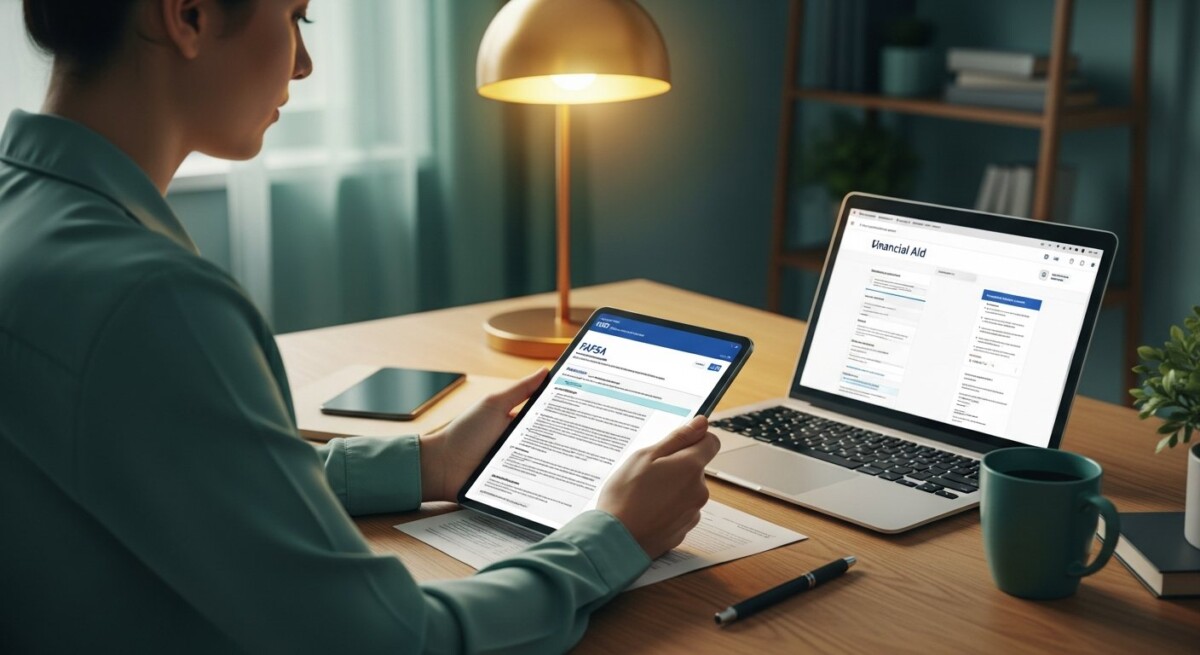
Pursuing an online degree in 2025 can be a transformative step for your career and personal growth. But before you enroll, you need to understand how to pay for it. Many adult learners assume that online programs are either too expensive or ineligible for financial support. That assumption is outdated. Federal aid, institutional scholarships, and employer tuition assistance are all available to distance learners. The key is knowing exactly how to apply for financial aid as an online student in 2025 so you can access the funds you deserve without delay or confusion.
Understanding Your Financial Aid Eligibility as an Online Student
The first step in the process is confirming your eligibility. The U.S. Department of Education treats accredited online programs the same as on-campus programs for federal financial aid purposes. This means that if you are enrolled at least half-time in a degree-granting online program at an accredited institution, you can qualify for Pell Grants, Direct Subsidized and Unsubsidized Loans, and even work-study opportunities in some cases.
However, there are a few specific conditions you must meet. You must be a U.S. citizen or eligible non-citizen, have a valid Social Security number, and maintain satisfactory academic progress. You also need a high school diploma or equivalent. One critical detail for online students: your school must be accredited by an agency recognized by the Department of Education. If you are considering a program, verify its accreditation status before you apply. Without accreditation, you will not qualify for federal aid. In our guide on how to secure financial aid for your online degree program, we explain how to verify accreditation and avoid common pitfalls.
Step-by-Step: How to Apply for Financial Aid as an Online Student in 2025
The application process for financial aid is largely the same whether you study online or on campus. But online students must pay extra attention to timelines and documentation because they may not have a financial aid office on site. Here is a clear roadmap to follow.
Step 1: Complete the FAFSA
The Free Application for Federal Student Aid (FAFSA) is the single most important form you will fill out. It determines your eligibility for federal grants, loans, and work-study. For the 2025-2026 academic year, the FAFSA opened on October 1, 2024. Submit it as early as possible because some aid is awarded on a first-come, first-served basis. You will need your tax returns, W-2s, and records of untaxed income. If you are a dependent student, your parents will need to provide their information as well.
When completing the FAFSA, list the online school you plan to attend. You can list up to ten schools. The Department of Education will send your financial information to each school, and the school will use it to calculate your aid package. Remember that the FAFSA is free. Never pay to submit it.
Step 2: Review Your Student Aid Report (SAR)
After you submit the FAFSA, you will receive a Student Aid Report (SAR) within a few days to three weeks. This report summarizes the information you provided and includes your Expected Family Contribution (EFC) or, starting in 2024-2025, your Student Aid Index (SAI). Review the SAR carefully for errors. Even a small mistake, such as a misspelled name or incorrect Social Security number, can delay your aid. If you find an error, log back into the FAFSA portal and make corrections.
Step 3: Apply for Institutional Aid and Scholarships
Federal aid is only one piece of the puzzle. Many online universities offer their own scholarships, grants, and payment plans. Visit your school’s financial aid website and look for a dedicated page for online students. Some schools offer merit-based scholarships for high GPAs, need-based grants, or discounts for active-duty military and veterans. You may need to submit a separate application or a personal statement. Deadlines for institutional aid often fall earlier than federal deadlines, so check them now.
Step 4: Explore Employer Tuition Assistance
If you are currently employed, ask your human resources department about tuition reimbursement or assistance programs. Many companies in 2025 offer up to $5,250 per year in tax-free educational benefits. Some employers will even pay for books and fees. To take advantage of this, you typically need to be enrolled in a degree program related to your current role or a future role within the company. Submit your employer’s benefit forms alongside your FAFSA to maximize your funding.
Key Documents and Information You Will Need
Before you begin the application process, gather the following items. Having them ready will make the FAFSA and scholarship applications go smoothly.
- Your Social Security number or Alien Registration number
- Federal tax returns (yours and your spouse’s or parents’, if applicable)
- Records of untaxed income (child support, veterans benefits, etc.)
- Bank statements and investment records
- Your school’s federal school code (found on the school’s website or the FAFSA site)
Keep digital copies of these documents in a secure folder. You may need to refer to them during verification, a process where the school confirms the information on your FAFSA. If you are selected for verification, respond promptly to avoid losing your aid.
Common Mistakes Online Students Make When Applying for Aid
Even experienced students can stumble during the financial aid process. Here are the most frequent errors and how to avoid them.
First, many students assume that online programs are not eligible for federal aid. This is false as long as the school is accredited and the program leads to a degree. Second, some students miss the priority deadline. Each school sets its own deadline for institutional aid, and missing it can mean losing thousands of dollars in free money. Third, students sometimes forget to reapply every year. The FAFSA must be submitted annually. Set a calendar reminder for October 1 each year to submit your renewal.
Another common mistake is ignoring the terms of your loans. If you accept federal loans, you must complete entrance counseling and sign a Master Promissory Note (MPN). These are online forms that explain your rights and responsibilities. Skipping them can delay your loan disbursement. Finally, do not overlook state-based aid. Some states offer grants to residents who attend online schools, even if the school is located in another state. Research your state’s higher education agency website for opportunities.
Maximizing Your Aid Package: Grants, Loans, and Scholarships
Once you receive your financial aid offer, you will see a combination of grants, loans, and possibly work-study. Grants (like the Pell Grant) are free money that you do not need to repay. Loans must be repaid with interest. Scholarships are also free money, but they often have specific eligibility criteria.
To maximize your package, accept grants and scholarships first. Then, if you need additional funds, consider federal Direct Subsidized Loans, which do not accrue interest while you are enrolled at least half-time. Unsubsidized loans accrue interest from the moment they are disbursed, so use them sparingly. If you still need more money, you can explore private student loans, but compare interest rates and repayment terms carefully. Remember that private loans are not eligible for federal forgiveness programs.
One strategy many online students use is to combine federal aid with employer tuition assistance and a monthly payment plan. This approach can reduce or eliminate the need for loans altogether. Contact your school’s bursar office to set up a payment plan that spreads tuition across several months.
Frequently Asked Questions
Can I get financial aid for a fully online degree program?
Yes. If you are enrolled at least half-time in an accredited online degree program, you can qualify for federal financial aid, including Pell Grants and Direct Loans. The same rules apply as for on-campus students.
Do I need to complete the FAFSA every year?
Yes. The FAFSA is valid for one academic year only. You must submit a new FAFSA each year to remain eligible for aid. Set a reminder for October 1 to submit your renewal application.
What if my online school is not accredited?
If your school is not accredited by a U.S. Department of Education-recognized agency, you will not qualify for federal financial aid. You may still be able to receive private loans or employer assistance, but proceed with caution. Unaccredited programs may not transfer credits and could limit your career options.
Can international students get financial aid for online programs?
International students are generally not eligible for U.S. federal student aid. However, some online universities offer institutional scholarships or payment plans for international learners. Check with your school’s financial aid office for options.
How long does it take to receive financial aid after applying?
After you submit the FAFSA, your school will receive your information within one to three weeks. The school then packages your aid and sends you an award letter. Funds are typically disbursed at the beginning of each semester, usually within 10 days of the start of classes.
Navigating financial aid as an online student in 2025 is entirely manageable when you follow a clear process. Start with the FAFSA, gather your documents, explore institutional scholarships, and ask your employer about tuition benefits. By taking these steps early, you can focus on what truly matters: succeeding in your online degree program and advancing your career. For more detailed guidance on choosing the right school and program, explore the resources available at CollegeDegree.school to compare accredited options and find the best fit for your goals.