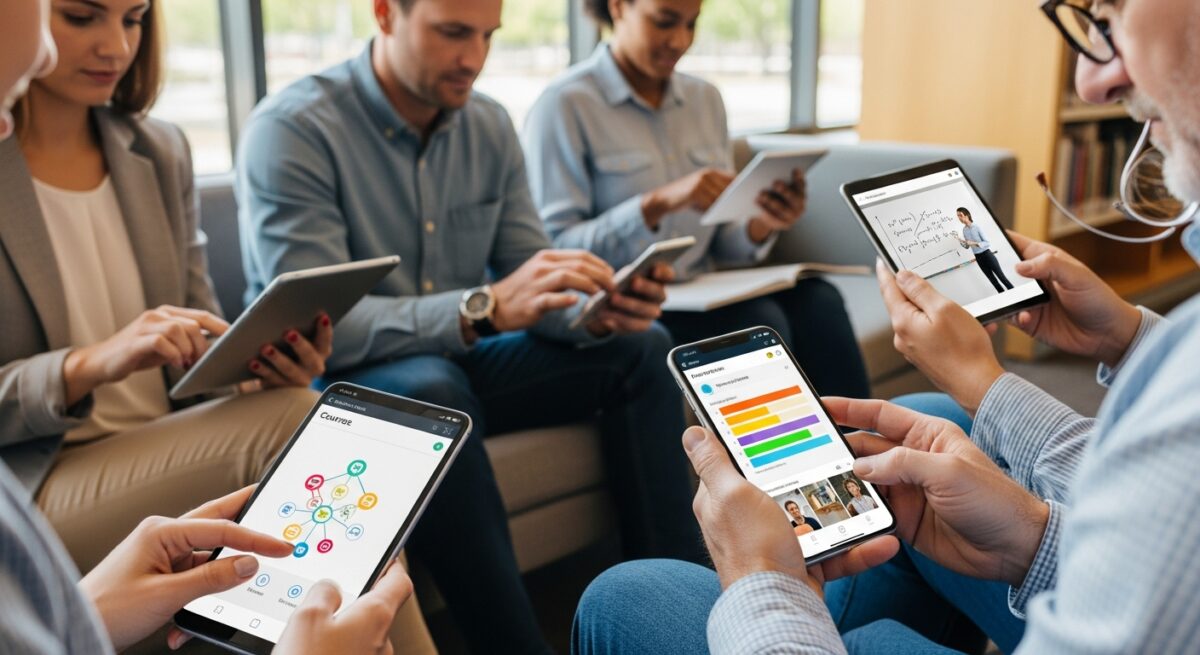
Imagine completing a course discussion post during your morning commute, reviewing lecture notes on your lunch break, and submitting an assignment from your smartphone while waiting for an appointment. This is not the future of education, it is the present reality for millions of students who rely on mobile friendly online degree platforms. The shift toward mobile-first learning is not merely a convenience, it is a fundamental transformation in how higher education is delivered and consumed. For working professionals, parents, and anyone balancing multiple responsibilities, the ability to access coursework seamlessly across devices is no longer a luxury but a critical requirement. The most effective online degrees with mobile friendly platforms are designed from the ground up for the small screen, ensuring that the quality of the educational experience is never compromised by the device used to access it.
The Essential Features of a Truly Mobile Optimized Platform
A mobile friendly online degree platform goes far beyond a website that simply shrinks to fit a phone screen. It represents a holistic design philosophy that prioritizes the on-the-go learner. The core of this experience is a responsive learning management system (LMS) that intuitively adapts its layout, navigation, and content delivery based on the device. This means touch-friendly buttons, easily readable text without zooming, and streamlined menus that make finding courses, grades, and assignments effortless. Video lectures must be optimized for mobile data consumption with adjustable streaming quality, while interactive elements like quizzes and discussion forums need to function flawlessly without requiring Flash or other outdated plugins.
Beyond basic functionality, superior platforms integrate mobile-specific features that enhance learning. Push notifications for deadline reminders, new forum posts, or instructor announcements keep students engaged without requiring them to constantly log in. Offline functionality is another game-changer, allowing students to download readings, lecture slides, and even video content for access during flights, commutes through areas with poor connectivity, or any situation without reliable internet. The synchronization must be seamless, automatically updating submissions and progress once a connection is restored. This level of thoughtful design ensures that learning can happen in the interstitial moments of a busy life, turning downtime into productive study time.
When evaluating online degrees with mobile friendly platforms, prospective students should look for these key characteristics. A checklist of non-negotiable features provides a clear framework for comparison.
- A fully responsive interface that is intuitive and easy to navigate on a 6-inch screen.
- Robust offline access for core learning materials and the ability to work offline.
- Integrated mobile apps (iOS and Android) available through official app stores, not just a mobile browser site.
- Touch-optimized interaction for activities like dragging and dropping, highlighting text, and taking notes.
- Seamless synchronization of data and progress across all devices (phone, tablet, desktop).
The presence of a dedicated, well-rated mobile app is often the strongest indicator of an institution’s commitment to mobile learning. These apps should offer a native experience that leverages device capabilities, such as speech-to-text for note-taking or camera integration for scanning documents. The absence of these features can create significant friction, forcing students to wait until they are at a desktop computer to complete simple tasks, which defeats the purpose of flexible, mobile-centric education.
How Mobile Design Influences Program Selection and Success
The mobility of a learning platform directly impacts a student’s ability to succeed, especially in accelerated or demanding programs. When coursework is accessible anywhere, consistency improves. Students are less likely to fall behind because they can maintain momentum during travel, between work shifts, or in other small windows of time. This constant connection fosters a stronger sense of community and engagement. Being able to quickly respond to a classmate’s discussion post from a phone encourages more dynamic interaction compared to a model that requires scheduled, desktop-only sessions. For subjects requiring collaboration, mobile-friendly shared document editing and communication tools (like integrated Slack or Teams functionalities) are essential.
Furthermore, the choice of a program with a superior mobile platform is a strategic decision for career-focused individuals. It demonstrates that the institution is forward-thinking and invested in student-centric technology. This alignment with modern digital workflows is itself a valuable skill. Navigating a well-designed mobile learning environment mirrors the use of enterprise collaboration tools in today’s workplace. When researching options, students should prioritize platforms that offer a frictionless experience. A valuable step in this research is consulting comprehensive online education resources that compare the technological infrastructure of different universities and colleges. These resources can provide independent insights into which institutions are leading in mobile accessibility and digital learning support.
The impact on completion rates cannot be overstated. Life events, work demands, and family obligations are the most common reasons for dropout in online programs. A rigid platform that tethers the learner to a desk creates a single point of failure. In contrast, a resilient, mobile-first platform provides multiple avenues for engagement. If a student’s laptop fails, they can continue via tablet. If they have to spend a day at a family member’s home, they can study from their phone. This flexibility builds resilience into the educational journey, directly combating the isolation and logistical hurdles that often derail progress. Therefore, evaluating the mobile experience is as crucial as evaluating the curriculum or faculty qualifications.
Evaluating Accreditation and Quality in a Mobile Context
A critical mistake is to assume that a sleek mobile interface equates to academic quality. The foremost consideration for any online degree must remain regional accreditation. Accreditation ensures that the institution meets rigorous standards for academic excellence, faculty credentials, and student support services. These services must extend fully into the mobile realm. A program’s accreditation status is independent of its delivery method, but a quality institution will ensure its accredited programs are supported by robust technology. When researching, verify that the accrediting body is recognized by the U.S. Department of Education or the Council for Higher Education Accreditation (CHEA).
The mobile platform should be the conduit for these high-quality services, not a separate entity. This means student advising, library access, tutoring, and technical support should all be accessible through the mobile interface. Can a student schedule an appointment with an advisor via a mobile portal? Can they access full-text academic journals through the library’s mobile database? Can they stream a tutoring session on their phone? If support services are only available via desktop during business hours, the program is not fully embracing the needs of the mobile learner. The integration of these resources is what separates a truly supportive program from one that simply offers lectures on a small screen.
Prospective students must perform due diligence. Before enrolling, they should:
- Request a guest login or demo access to the mobile platform from the admissions department.
- Test core functions: watching a video, submitting a mock assignment, posting in a discussion forum.
- Contact technical support via mobile to assess response time and helpfulness.
- Read student reviews specifically mentioning the mobile app or mobile learning experience.
- Confirm that all promised student services are documented as accessible through mobile channels.
This hands-on evaluation reveals the true user experience beyond marketing claims. It is also wise to inquire about the institution’s roadmap for technology updates. A platform that is regularly updated based on user feedback indicates a living, supported system, not a static product. In the fast-evolving digital landscape, commitment to continuous improvement is a key marker of quality for online degrees with mobile friendly platforms.
The Future of Mobile Learning and Micro-Credentials
The evolution of mobile friendly online degree platforms is closely tied to the growth of modular and stackable credentials. Micro-credentials, digital badges, and certificates are ideally suited for mobile consumption and management. Platforms are increasingly incorporating digital wallet features, allowing students to instantly display and share earned badges with employers or on professional networks like LinkedIn directly from their phones. This creates a continuous loop of learning, credentialing, and career advancement all facilitated through a mobile device. The line between formal degree programs and professional development is blurring, with mobile platforms serving as the unifying hub.
Furthermore, adaptive learning technologies, powered by AI, are becoming more prevalent and effective in a mobile format. These systems can analyze a student’s performance on practice quizzes taken on their phone during a coffee break and then serve up personalized review materials or suggest focusing on weak areas. This kind of just-in-time, personalized learning is exponentially more powerful when it is untethered from a desktop. The future points toward platforms that not only deliver content but also act as intelligent learning companions, providing nudges, resources, and support tailored to the individual’s progress and schedule, all through the device that is always with them.
For institutions, the investment in a superior mobile platform is an investment in broadening access and equity. It removes barriers for students in rural areas with limited broadband (but strong cellular networks), for individuals with disabilities who may rely on specific mobile assistive technologies, and for those whose lives do not accommodate traditional study schedules. As 5G networks expand and mobile devices grow more capable, the potential for rich, interactive, and immersive learning experiences (like augmented reality labs or virtual field trips) on mobile devices will only increase. The leading online degree programs today are those building the infrastructure to capitalize on that future.
Frequently Asked Questions
Q: Is the mobile experience identical to the desktop experience for online degrees?
A: Not necessarily identical, but it should be equivalently robust. The best platforms offer a “mobile-first” design where the core functionalities are optimized for mobile, sometimes with a simplified or rearranged interface for smaller screens. The key is that all essential tasks, accessing content, submitting work, participating in discussions, and getting support, can be completed effectively on a mobile device.
Q: Can I complete an entire online degree using only a smartphone or tablet?
A> While technically possible with many modern platforms, it is not generally recommended as a sole device. Certain tasks, like writing lengthy papers, complex data analysis, or detailed research, are significantly more efficient on a desktop or laptop with a full keyboard and larger screen. A mobile device is perfect for consumption, communication, and quick tasks, but a hybrid approach using multiple devices is ideal for most students.
Q: How do I know if a school’s mobile platform is good before I enroll?
A> Always ask for a demo. Reputable schools will often provide prospective students with access to a sandbox or demo course. Download their official app from the App Store or Google Play and read the reviews. Look for recent updates. Contact their IT or student support desk with a mobile-specific question to gauge their responsiveness and knowledge.
Q: Are there extra fees for using the mobile learning platform?
A> Typically, no. Access to the learning management system (like Canvas, Blackboard, or Moodle) and its associated mobile app is included in your tuition and fees. Be wary of any institution that charges an additional technology fee specifically for mobile access. However, students are always responsible for their own internet data plans and device costs.
Q: Do all accredited online programs have a good mobile platform?
A> Accreditation speaks to academic quality, not technological sophistication. An institution can be fully accredited but have an outdated, clunky mobile experience. It is a separate evaluation criterion. Always investigate the technology directly, as a poor platform can hinder your success even in a top-tier accredited program.
The decision to pursue an online degree is a commitment of time, finances, and energy. Selecting a program built on a truly mobile friendly online degree platform is a strategic choice that safeguards that investment. It provides the flexibility to integrate education into a complex life, not the other way around. By prioritizing platforms that offer seamless, intuitive, and comprehensive mobile access, learners empower themselves to maintain consistency, engagement, and momentum from anywhere. In the end, the right technology does not just deliver an education, it supports the student throughout the entire journey, turning potential obstacles into manageable steps and bringing the classroom into the palm of your hand.