For aspiring artists and designers, the decision to pursue formal education is a significant one, and the rise of accredited online art schools has transformed this journey. The prospect of earning an online art degree from a respected institution, without relocating or sacrificing current employment, is an incredibly powerful opportunity. However, the path from initial research to enrollment can seem unclear. Understanding the nuances of art schools online admission and program structure is the essential first step to turning creative ambition into an achievable academic plan. This comprehensive guide will demystify the process, outlining what to expect, how to prepare, and how to select a program whose structure aligns with your learning style and career objectives.
Decoding the Online Art School Admission Process
Admission to a reputable online art program is a holistic process that evaluates both your academic readiness and your creative potential. Unlike some purely academic fields, art schools look for evidence of skill, vision, and dedication. The process is designed to ensure students are prepared for the rigors of a studio-based curriculum delivered in a digital format. While specific requirements vary by institution and degree level (associate, bachelor’s, or master’s), most share common core components.
Typically, the process begins with the standard application form and submission of official transcripts from previous schools. A minimum GPA is often required, usually around 2.5 to 3.0 for undergraduate programs. However, the heart of your application to creative programs online lies in the portfolio. This is your chance to showcase your technical abilities, conceptual thinking, and personal voice. Programs seek a cohesive body of work that demonstrates proficiency, experimentation, and a clear point of view. Alongside the portfolio, a statement of purpose or artist’s statement is crucial. This essay should articulate your creative goals, explain why you are drawn to the specific program, and describe how the online format suits your life. Some programs may also require letters of recommendation from instructors or professionals who can attest to your work ethic and talent.
To successfully navigate art schools online admission, organization and attention to detail are key. Here is a strategic approach to managing your application:
- Research and Shortlist: Identify 3-5 accredited programs that offer your desired major (e.g., graphic design, illustration, fine arts). Scrutinize their admission pages for exact requirements and deadlines.
- Prepare Your Portfolio Early: Begin curating your portfolio months in advance. Select 10-20 pieces of your strongest work. For digital arts, this may be straightforward. For traditional media like painting or sculpture, you will need high-quality, well-lit photographs or scans.
- Craft Your Narrative: Write a draft of your statement of purpose. Be specific about your influences and aspirations. Tailor each statement to the individual program, mentioning specific faculty or courses.
- Gather Materials: Request transcripts and letters of recommendation well before deadlines. Give your recommenders ample time and provide them with your portfolio and statement to inform their letters.
- Submit and Follow Up: Complete all parts of the online application portal. Ensure your portfolio is uploaded in the specified format (often a PDF or a link to a website like Behance). After submitting, confirm all materials were received.
Financial planning is an integral part of this phase. Investigating tuition, fees, and financial aid options is critical. Prospective students should utilize comprehensive education tuition resources to compare costs and explore scholarship opportunities specifically for art and design students. This due diligence ensures you are making an informed investment in your future.
The Architecture of an Online Art Degree Program
The program structure of an online art degree is meticulously designed to deliver a comprehensive education that parallels an on-campus experience while leveraging digital tools. A typical Bachelor of Fine Arts (BFA) program, for instance, requires around 120 credit hours, usually completed in four years of full-time study. The curriculum is a balanced blend of studio art courses, art history and theory, general education, and electives. This structure ensures graduates possess not only technical mastery but also the contextual understanding and critical thinking skills needed for a sustainable career.
Studio courses form the core of any online art degree. These are conducted through a combination of asynchronous and synchronous learning. Asynchronous components might include video demonstrations of techniques, recorded lectures, and digital course modules that students complete on their own schedule. Synchronous elements often involve live, scheduled critique sessions via video conferencing platforms like Zoom, where students present work, receive feedback from professors and peers, and engage in real-time discussion. Assignments are submitted digitally, and professors provide annotated feedback directly on image files or through detailed video responses. This model requires a high degree of self-motivation and time management, as students must proactively create studio time in their own spaces.
Supporting this practical work are courses in art history, visual culture, and professional practices. These classes explore the historical and theoretical frameworks of art, teaching students to contextualize their own work within a broader dialogue. Furthermore, a key part of the program structure for modern creative programs online includes training in the very digital tools that enable the degree itself. Courses in digital imaging, website creation for portfolios, and social media for artists are increasingly common, preparing students for the realities of the contemporary art and design marketplace. The culmination of the program is often a senior thesis project and a capstone course, where students develop a cohesive body of work and prepare their professional portfolio for graduation.
Choosing the Right Program Structure for Your Goals
Not all online art degree programs are structured identically, and finding the right fit is paramount to your success. The first critical filter is accreditation. Ensure the institution is accredited by a recognized regional body. For specific disciplines like graphic design or interior design, you may also look for programmatic accreditation from organizations like the National Association of Schools of Art and Design (NASAD). Accreditation validates the quality of the education and is essential for transferring credits and receiving federal financial aid.
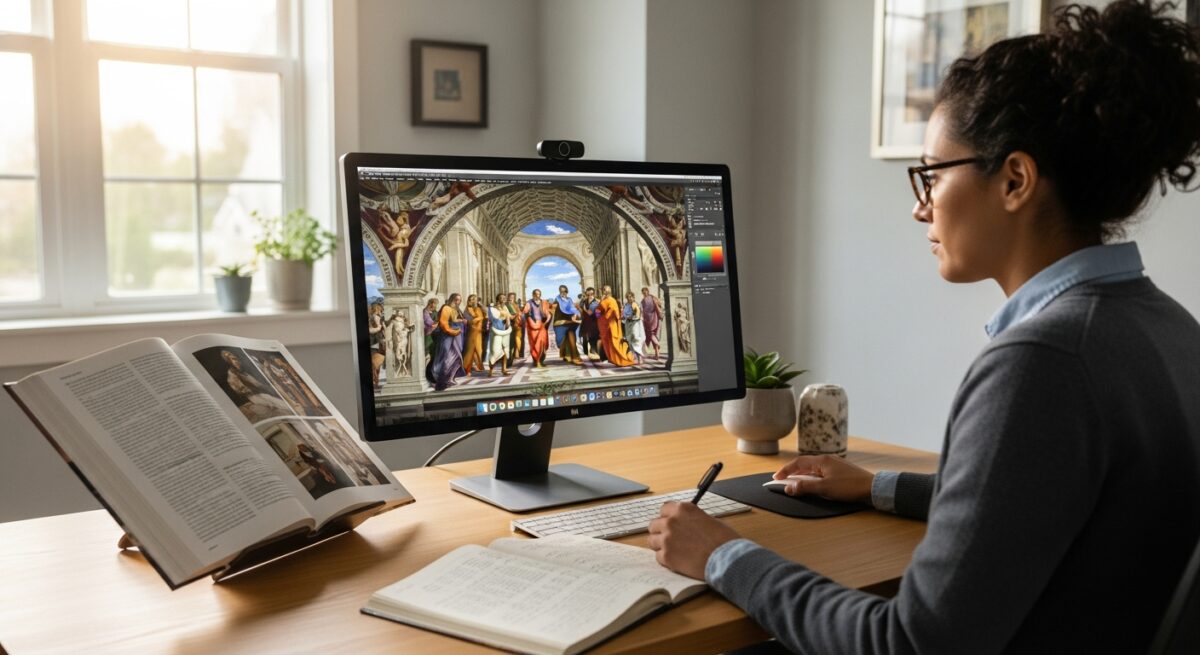
Beyond accreditation, you must evaluate the program’s delivery model against your personal learning style and life circumstances. Key questions to ask include: Is the program primarily asynchronous, allowing maximum flexibility, or does it have required live sessions? What is the expected weekly time commitment? How are critiques and faculty interactions facilitated? Some learners thrive in a self-paced environment, while others need the structure of scheduled meetings. Furthermore, examine the technical requirements. You will need a reliable computer, specific software (like the Adobe Creative Cloud), a high-quality camera for documenting work, and potentially specialized hardware like a drawing tablet.
Your career goals should directly influence your choice of program structure. If you aim for a career in a fast-paced field like web design or motion graphics, seek a program with a strong digital focus, up-to-date software training, and courses in user experience (UX) design. If your goal is to become a studio artist or pursue an MFA, look for programs with a strong fine arts foundation, robust critique culture, and faculty who are practicing exhibiting artists. Many programs also offer concentrations or specializations. When researching, look for these structural elements that align with your aspirations:
- Industry-Focused Curriculum: Courses taught by current professionals, software training on industry-standard tools, and assignments based on real-world briefs.
- Portfolio Development Integration: Courses dedicated to building and refining your professional portfolio, not just as a final project but throughout the program.
- Career Services: Access to online career counseling, resume reviews for creative fields, virtual job fairs, and alumni networking platforms.
- Flexible Pacing: Options for part-time enrollment, accelerated tracks, or competency-based progression, which can be crucial for working adults.
Just as prospective law students must understand the unique format of digital legal education, art students must grasp the specifics of their chosen field’s online pedagogy. For a parallel look at how another professional discipline structures its online offerings, our guide on ABA approved online JD programs illustrates the importance of specialized accreditation and structured interaction in a remote learning context.
Frequently Asked Questions
Can I get a quality art education entirely online?
Yes, absolutely. Accredited online art schools provide a rigorous curriculum comparable to on-campus programs. The key differentiator is the delivery method. You receive the same foundational training in technique and theory, but you must be highly self-disciplined to manage your studio time and actively engage in digital critiques and discussions.
What should I include in my application portfolio?
Your portfolio should show your best and most recent work, demonstrating a range of skills and a cohesive artistic voice. Include 10-20 pieces. Follow the specific guidelines of each school, but generally, show finished pieces, sketches, and process work. For design fields, include projects that solve a visual problem. Always provide a title, medium, dimensions, and a brief description for each piece.
How do online art programs handle hands-on studio work, like painting or sculpture?
Students are responsible for setting up a home studio space. Programs provide material lists and students procure their own supplies. You learn techniques through detailed video demonstrations. You then create the work physically, document it professionally with photography, and submit the digital files for critique. Instructors provide feedback on the documentation of the work, its conceptual strength, and technical execution.
Are online art degrees respected by employers?
Degrees from regionally and professionally accredited institutions are respected. What matters most to employers in creative fields is the quality of your portfolio and your demonstrated skills. A strong online art degree program will equip you with a competitive portfolio and relevant technical skills, which are the primary currency in the job market.
What kind of technical setup do I need for an online art degree?
At a minimum, you will need a reliable computer (Mac or PC) with sufficient processing power and RAM for design software, a high-speed internet connection, a quality webcam and microphone for live sessions, and storage for large digital files. A digital drawing tablet (like a Wacom) is essential for digital art and design courses. A good digital camera or smartphone with a high-resolution camera is necessary for documenting physical work.
The journey through an online art school’s admission and program structure is a deliberate one, requiring careful research and self-assessment. By thoroughly understanding the application demands and the architectural blueprint of the degree, you can make an empowered choice. The ideal program is not just a list of courses, but an ecosystem designed to nurture your talent, challenge your perspectives, and connect you with a community of peers and mentors, all within a flexible digital framework. This approach to education empowers you to build a sustainable creative practice and a compelling career, on your own terms.