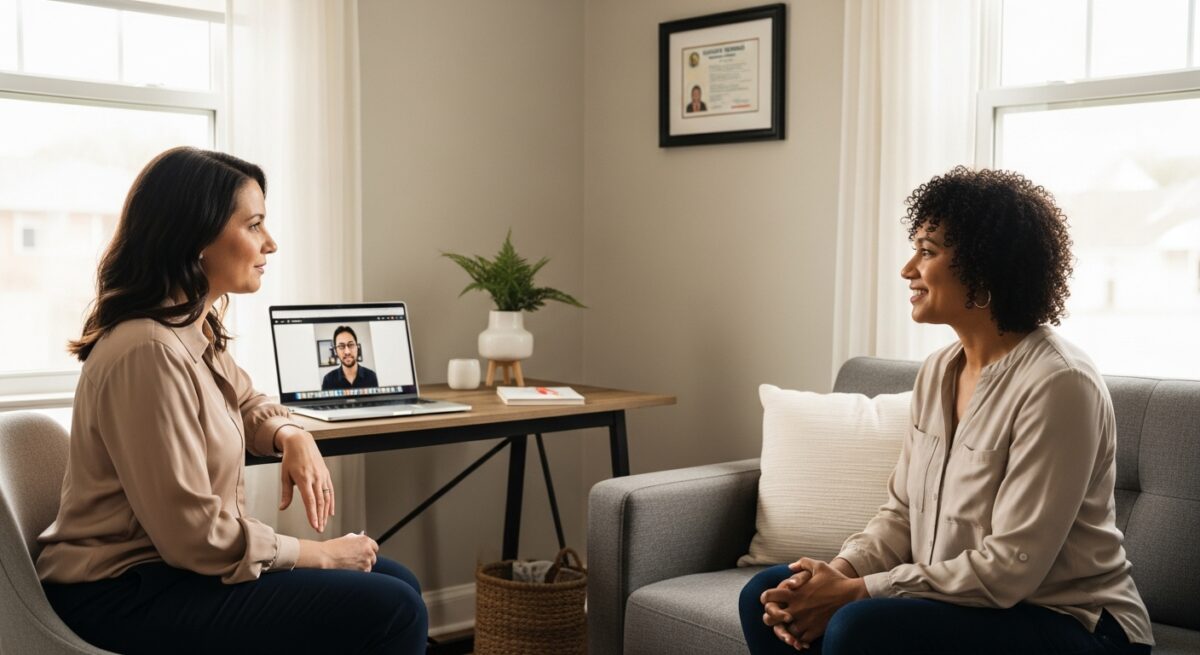
Imagine a career where you help people navigate life’s most difficult moments. You listen, guide, and empower them to find strength they did not know they had. That career is therapy, and the path to it starts with a graduate degree. For many working adults, parents, and career changers, the most flexible path is an online program. An online master’s degree in counseling can unlock a fulfilling profession as a licensed therapist, school counselor, or clinical mental health specialist. This guide explores how these programs work, what to look for in a quality school, and how to build a successful therapy career after graduation.
Why Choose an Online Master’s in Counseling?
The decision to pursue a graduate degree is significant. It requires time, money, and a deep commitment to personal and professional growth. For those who cannot relocate or quit their jobs, online education removes many barriers. You can attend classes from your home office, a coffee shop, or even while traveling for work. This flexibility allows you to maintain your current income while building toward a new future.
Beyond convenience, online counseling programs often offer a diverse student body. You will learn alongside classmates from different states, backgrounds, and professional experiences. This diversity enriches classroom discussions and prepares you to work with a wide range of clients. Many programs also use technology to simulate real therapy sessions. You might practice counseling techniques via video calls with standardized patients, gaining hands-on experience before your formal internship.
Another key advantage is the ability to specialize. Many counseling graduate programs offer concentrations in areas like addiction counseling, marriage and family therapy, or school counseling. You can tailor your education to match your passion and the job market in your region. For example, if you live in a rural area with a shortage of mental health providers, a general clinical mental health track might be the most practical choice. If you work in a school system, a school counseling specialization could align perfectly with your current role.
Accreditation: The Non-Negotiable Standard
Before you enroll in any program, you must verify its accreditation. This is not a bureaucratic formality. It is the foundation of your future license. In the United States, the standard for counseling programs is accreditation through the Council for Accreditation of Counseling and Related Educational Programs (CACREP). Graduating from a CACREP-accredited program is often required for licensure in many states. It also makes it easier to transfer credits if you move to a different state later in your career.
Accreditation also affects financial aid. Only students at accredited institutions can receive federal student loans and grants. Additionally, many employers, especially government agencies and hospitals, require a degree from an accredited program. If you choose a non-accredited online program, you may find that you cannot sit for the licensing exam in your state. You could waste years and thousands of dollars on a degree that does not lead to a license. Always check the program’s accreditation status on the university website or the CACREP directory before applying.
Core Curriculum and Clinical Training
An online master’s in counseling typically requires 48 to 60 credit hours. The curriculum covers foundational topics such as human growth and development, counseling theories, group counseling, ethics, and research methods. You will also take courses in psychopathology, diagnosis, and treatment planning. These classes give you the theoretical knowledge needed to understand human behavior and mental health conditions.
Clinical training is the heart of the program. You will complete a practicum and an internship, which are supervised fieldwork experiences. During the practicum, you observe licensed professionals and begin to practice basic counseling skills. The internship is more intensive. You will carry your own caseload of clients under supervision. Most online programs help you find a local site for these placements, such as a community mental health center, a private practice, or a school. You will also participate in weekly supervision calls or video sessions with your faculty supervisor.
Many programs now integrate technology into clinical training. You might use secure video platforms to conduct telehealth sessions with clients. This experience is increasingly valuable, as teletherapy has become a standard mode of service delivery. By the time you graduate, you will have practical skills in both in-person and online counseling.
Licensing and Certification: The Steps After Graduation
Earning your degree is only the first step. To become a licensed therapist, you must pass a national examination and accumulate supervised clinical hours. The most common exam is the National Counselor Examination (NCE) or the National Clinical Mental Health Counseling Examination (NCMHCE). After passing, you will work as an associate or provisional counselor for a set number of hours, usually 2,000 to 4,000, depending on your state. During this time, you are supervised by a fully licensed professional.
The requirements vary significantly by state. Some states require additional coursework in specific areas like human sexuality or substance abuse. Others have specific rules about the number of hours you must spend in direct client contact versus administrative tasks. It is crucial to research the licensing board in the state where you plan to practice. Many online programs offer a licensing exam preparation course to help you succeed on your first attempt.
For those interested in school counseling, the process is similar but often involves a separate certification from the state Department of Education. School counselors typically work in K-12 settings and focus on academic, career, and social-emotional development. They do not provide long-term therapy but offer short-term intervention and crisis support. If this path appeals to you, ensure your program includes the specific coursework required for school counselor certification in your state.

Career Paths in Therapy and Counseling
A master’s degree opens doors to several rewarding careers. Here are some of the most common paths graduates pursue:
- Clinical Mental Health Counselor: Work in private practice, community agencies, or hospitals. You will diagnose and treat mental health disorders using evidence-based therapies.
- School Counselor: Support students academically, socially, and emotionally. You will help with college planning, crisis intervention, and behavioral issues.
- Marriage and Family Therapist: Focus on relationships and family dynamics. You will help couples and families improve communication and resolve conflicts.
- Substance Use Disorder Counselor: Specialize in addiction treatment. You will work in rehabilitation centers, outpatient clinics, or correctional facilities.
- Career Counselor: Assist clients with job searches, career changes, and vocational planning. You might work in universities, outplacement firms, or government agencies.
The job outlook for counselors is strong. According to the Bureau of Labor Statistics, employment for mental health counselors is projected to grow much faster than average over the next decade. This growth is driven by increased awareness of mental health issues and a greater demand for accessible services. As a result, salaries are also rising. The median annual wage for mental health counselors is around $50,000, but experienced therapists in private practice can earn significantly more.
How to Select the Right Online Program
Choosing the right online counseling masters degrees and therapy careers pathway requires careful research. Start by identifying programs that are CACREP-accredited and regionally accredited. Then, consider the program’s format. Some programs are synchronous, meaning you attend live classes at set times. Others are asynchronous, allowing you to watch recorded lectures on your own schedule. Many programs offer a hybrid model with both live and self-paced components.
Next, evaluate the faculty. Look for professors who are licensed clinicians with experience in the field. They can provide valuable mentorship and networking opportunities. You should also ask about the program’s internship placement assistance. Some universities have partnerships with local clinics and schools, making it easier to find a placement. Others leave it entirely to the student. If you are relocating or live in a remote area, strong placement support is critical.
Finally, consider the total cost. Tuition for online programs varies widely, from around $20,000 to over $60,000 for the entire degree. Factor in additional costs such as technology fees, textbooks, and travel for on-campus residencies, if required. Some programs require one or two short on-campus intensives, which can add travel expenses. Explore financial aid options, scholarships, and employer tuition reimbursement programs. For more insights on comparing degree costs and finding affordable options, check out our guide on how UNCG online masters degrees boost career prospects.
Frequently Asked Questions
Can I become a licensed therapist with an online degree?
Yes, as long as the program is CACREP-accredited and meets your state’s licensing requirements. Many states accept online degrees without distinction from on-campus programs. Always verify with your state’s licensing board before enrolling.
How long does it take to complete an online master’s in counseling?
Most full-time students finish in two to three years. Part-time students may take four to five years. Some accelerated programs allow completion in 18 to 24 months if you attend year-round.
Do I need to complete an on-campus residency?
Some programs require one or two short residencies for intensive skill-building and networking. Others are fully online with no residency requirement. Check the program details carefully.
What is the difference between a counselor and a therapist?
These terms are often used interchangeably. However, a licensed professional counselor (LPC) typically focuses on practical problem-solving and coping strategies. A licensed marriage and family therapist (LMFT) or licensed clinical social worker (LCSW) may have a broader focus on systemic issues or social factors. The specific license you pursue depends on your degree and state regulations.
How much can I earn as a therapist?
Salaries vary by location, experience, and setting. Entry-level counselors often earn $40,000 to $50,000. Experienced therapists in private practice can earn $80,000 to $120,000 or more. School counselors earn a median salary of around $60,000.
Choosing to pursue online counseling masters degrees and therapy careers is a major decision. It requires dedication, financial investment, and a genuine desire to help others. However, the rewards are immense. You will gain the skills to make a tangible difference in people’s lives. You will join a growing profession that values compassion, resilience, and evidence-based practice. With the right program and a clear plan, you can build a career that is both financially stable and deeply fulfilling. As you explore your options, remember to prioritize accreditation, clinical training, and state licensing requirements. The path is challenging, but the destination is worth every step. You can also explore more resources on DegreesOnline.Education to find programs that fit your goals and budget.