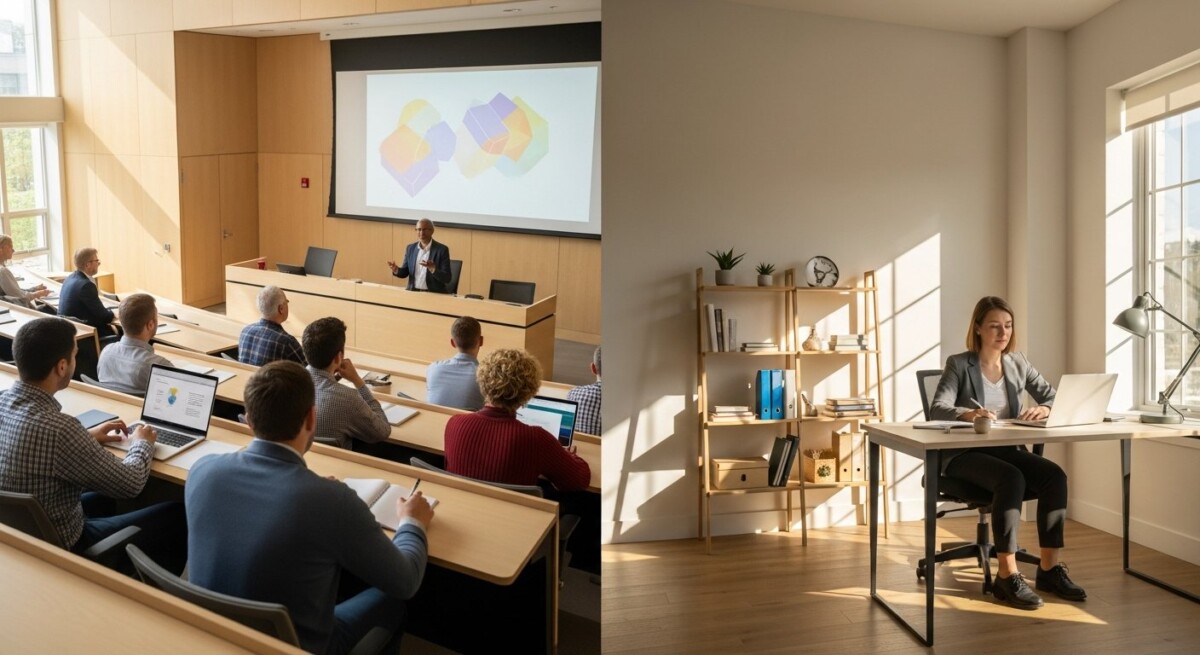
The decision to pursue higher education is a pivotal one, and today’s students face a fundamental choice that previous generations did not: the learning environment itself. The classic image of a college campus, with its lecture halls and dormitories, now competes with the digital classroom accessible from anywhere with an internet connection. This online degree vs traditional college debate is not about which model is universally superior, but about which format aligns with your individual life circumstances, learning style, career goals, and personal responsibilities. Understanding the core distinctions, benefits, and trade-offs is essential for making an informed investment in your future.
Defining the Educational Models
Before diving into comparisons, it’s crucial to clearly define what we mean by “traditional” and “online” education. A traditional degree program, often referred to as on-campus education, requires physical attendance at a college or university. This model is characterized by scheduled, in-person classes, direct face-to-face interaction with professors and peers, access to physical campus facilities like libraries and labs, and a structured, location-dependent routine. The experience is immersive, extending beyond academics to include campus life, extracurricular activities, and social integration.
An online degree program, in contrast, delivers curriculum primarily or entirely through digital platforms. Students access lectures, course materials, assignments, and discussions via learning management systems like Canvas or Blackboard. Interaction is mediated through video conferences, discussion forums, email, and chat. The defining hallmark of online education is flexibility: it decouples learning from a specific physical location and, in many cases, from a rigid synchronous schedule. This model has evolved significantly from simple correspondence courses to include live virtual seminars, collaborative online projects, and sophisticated digital resources. For those concerned about cost, a thorough analysis is key, as detailed in our strategic guide to choosing affordable online degrees.
Core Comparison: Flexibility, Structure, and Cost
The most pronounced difference between these two paths lies in their approach to time and location. Online degrees offer unparalleled flexibility, making them ideal for working professionals, parents, military personnel, or anyone with significant geographical or scheduling constraints. You can often study early in the morning, late at night, or on weekends, fitting education around your job and family. This asynchronous flexibility, however, demands a high degree of self-discipline, time management, and intrinsic motivation. Without the structure of a fixed class schedule, the responsibility to keep pace falls entirely on the student.
Traditional programs provide a rigid, externally imposed structure. The set schedule of classes, exams, and library hours creates a framework that helps many students stay organized and focused. This structure also fosters a clear separation between academic life and personal life, which can be beneficial for focus. The trade-off is a lack of flexibility that can be prohibitive for non-traditional students. Financially, the picture is complex. While tuition for online programs can be comparable to or sometimes lower than on-campus rates, the potential savings are significant when considering ancillary costs. Online students avoid expenses for commuting, campus parking, and often for relocation or on-campus housing and meal plans. Furthermore, they can maintain full-time employment, offsetting the cost of education. Exploring degree programs online can also reveal specialized scholarship opportunities tailored for distance learners.
The Learning Experience and Student Life
The nature of the learning experience diverges sharply between the two models. Traditional education thrives on spontaneous, real-time interaction. The raised hand in a lecture, the quick question after class, and the impromptu study group in the library foster a dynamic and socially rich learning environment. This setting is often ideal for learners who thrive on verbal discussion, immediate feedback, and non-verbal cues from instructors and classmates. The campus experience itself is a form of education, offering networking events, club meetings, and cultural activities that contribute to personal development.
Online learning is typically more deliberate and text-based. Communication happens through discussion posts, emails, and scheduled video calls. This can be a benefit for introverted students or those who prefer to think through their responses before contributing. The written format often leads to more thoughtful, in-depth discussions. However, it can feel isolating without proactive effort. Building relationships with professors and peers requires intentional outreach through virtual office hours and active participation in online forums. The absence of a tangible campus community means students must seek out networking and social opportunities elsewhere, often through professional organizations or local events.
Career Outcomes and Perceptions
A critical concern for many students is how their degree will be perceived by employers. The good news is that the stigma once associated with online education has largely faded, especially when the degree comes from a properly accredited institution. Employers now primarily care about accreditation, the reputation of the granting university, and the relevant skills you have acquired. In many fields, particularly technology and business, the ability to succeed in an online program demonstrates valuable traits like self-motivation, technological proficiency, and superior time management skills.
That said, nuances remain. Certain highly traditional or hands-on professions may still exhibit a preference for well-known brick-and-mortar programs, especially at the elite level. Furthermore, the networking opportunities differ. Traditional campuses offer organic, broad-based networking with a diverse peer group. Online programs can offer deep, focused networking with geographically dispersed professionals in your field, which can be incredibly valuable for career changers. The key is to choose a program, whether online or on-campus, with a strong career services department that offers virtual recruiting, resume support, and alumni connections. For a focused look at managing the financial aspect of this decision, our guide to affordable online degrees breaks down cost-saving strategies.
Who Thrives in Each Environment?
Choosing between an online and traditional degree is ultimately a personal decision. To make the right choice, conduct an honest self-assessment. Consider the following profiles:
- The Ideal Online Learner: You are self-disciplined and can create and adhere to your own schedule. You are comfortable with technology and written communication. You require flexibility due to work, family, or location. You are proactive about reaching out for help and building connections. You are goal-oriented and see the degree as a means to a specific career advancement.
- The Ideal Traditional Learner: You benefit from external structure and a fixed routine. You learn best through in-person dialogue and hands-on, immediate interaction. You value the full “college experience,” including social activities, clubs, and campus life. You have the ability to relocate or commute to a campus and can accommodate a typical class schedule.
Many institutions now recognize that these models are not mutually exclusive and offer hybrid or blended programs. These combine scheduled on-campus sessions with online coursework, providing a middle ground that offers some flexibility while retaining face-to-face interaction. This can be an excellent option for students who live within commuting distance but still need to manage work or family commitments.
Frequently Asked Questions
Are online degrees respected by employers?
Yes, when earned from a regionally accredited institution. Employer focus has shifted from delivery method to accreditation, school reputation, and candidate skills. An online degree from a reputable university is widely accepted.
Is an online degree easier than a traditional degree?
No. Accredited online programs maintain the same academic rigor and learning outcomes as their on-campus counterparts. The workload is equivalent; only the delivery method and required self-discipline differ.
Can I get financial aid for an online degree?
Yes. Accredited online degree programs qualify for the same federal and state financial aid (loans, grants) as traditional programs. You must complete the FAFSA and ensure the program meets aid eligibility requirements.
How do I know if an online program is accredited?
Always verify accreditation directly on the institution’s website or through the U.S. Department of Education’s Database of Accredited Postsecondary Institutions and Programs. Regional accreditation is the gold standard.
Will my diploma say “online degree”?
Typically, no. Most universities issue the same diploma to online and on-campus graduates, with no distinction on the delivery method. The diploma states the degree earned and the name of the accredited university.
The online degree vs traditional college decision is a deeply personal calculus. There is no one-size-fits-all answer. By carefully weighing factors of flexibility, learning style, cost structure, career goals, and personal discipline, you can select the educational path that not only fits your current life but also most effectively propels you toward your long-term aspirations. The best choice is the one that aligns with who you are as a learner and a professional, enabling you to succeed and achieve your goals.