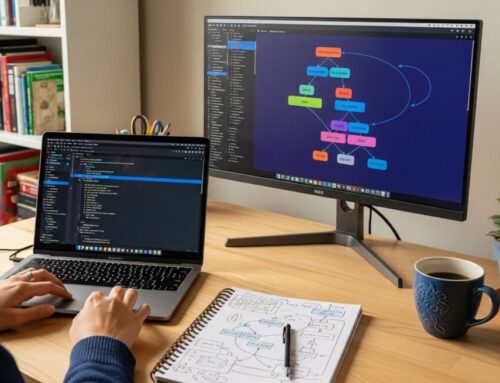
For many prospective students, the promise of an online degree is flexibility. The ability to study from anywhere, on your own schedule, is a powerful draw. Yet, a common concern lingers: will this degree provide the real-world experience employers demand? This is where the innovative model of online degrees with co-op options bridges the gap. These programs combine the convenience of digital learning with structured, paid professional work experiences, allowing you to apply classroom theory to practical challenges, build a professional network, and often offset educational costs, all while earning your credential. It is a transformative approach that answers the critical question of employability head-on.
What Are Co-Op Programs in an Online Context?
Traditionally, cooperative education (co-op) has been a hallmark of certain on-campus programs, particularly in engineering, technology, and business. It involves alternating periods of academic study with periods of paid, full-time work in a field related to your major. In the online education sphere, this model has been thoughtfully adapted. An online degree with a co-op option is not simply an online program with a career services page, it is a structured curriculum that integrates mandatory work terms as part of the degree requirements.
The key distinction lies in integration and support. These programs typically have a dedicated co-op coordinator or office that partners with employers to develop positions, assists students with resume writing and interview preparation, and ensures the work experience aligns with academic goals. The co-op is not an afterthought, it is a core component. This structured support is crucial for online learners who may not have physical access to a campus career center. The work terms are usually full-time and can range from three to twelve months, often leading to multiple rotations with different companies. This depth of experience is what sets co-ops apart from standard internships or part-time jobs.
The Tangible Benefits of Combining Online Study and Co-Op Work
The synergy between online learning and cooperative work creates a powerful educational engine. The primary benefit is the immediate application of knowledge. Concepts learned in a virtual classroom on Tuesday can be tested in a real business environment on Wednesday. This cycle reinforces learning and develops critical problem-solving skills. Furthermore, co-op placements provide an unparalleled opportunity to build a professional network. These connections often lead to job offers upon graduation, effectively turning a degree program into an extended interview.
Financially, co-ops can significantly reduce the burden of student debt. Since co-op positions are paid, often at competitive rates, students can earn a substantial income during their work terms. This money can be used to pay for tuition, living expenses, or saved for the future. Beyond finances and job prospects, co-ops offer immense personal value. They allow students to test-drive a career path, confirm their interest in a field, and develop soft skills like communication, teamwork, and professionalism in a supported setting. For a deeper look at how practical experience influences hiring, our analysis of future hiring trends for online graduates provides valuable insights.
To summarize, the key advantages include:
- Enhanced Employability: Graduates possess both a degree and 1-2 years of relevant work experience.
- Professional Network Development: Establish connections that can lead to full-time job offers.
- Income Generation: Earn a salary during work terms to help fund your education.
- Career Clarification: Gain hands-on experience to confirm your chosen field is the right fit.
- Skill Application: Directly apply academic theories to solve real-world business challenges.
Finding and Evaluating the Right Online Co-Op Program
Not all online programs advertising “experiential learning” offer a true, structured co-op. Due diligence is essential. Start your search by focusing on accredited institutions, as accreditation ensures educational quality and is often a prerequisite for employer partnerships. Look for specific language on the program’s website: “cooperative education,” “mandatory work terms,” “integrated co-op,” or “professional practice” are strong indicators. Be wary of programs that only offer optional internships or general career counseling.
When evaluating a program, ask pointed questions. How many work terms are required? What is the typical duration of each term? What is the process for securing a placement? Does the program have a dedicated co-op office that actively partners with employers, or are students largely responsible for finding their own positions? What is the historical placement rate for students in co-op roles? Also, consider the scheduling. Some programs are designed with co-op in mind, offering courses in condensed formats or asynchronously to accommodate full-time work blocks. It is also wise to research the types of companies that partner with the program to ensure they align with your career aspirations. For guidance on avoiding programs that may not lead to strong outcomes, consider reading about the risks associated with low-demand online degrees.
Popular Fields for Online Degrees With Co-Op Options
While the model is expanding, certain disciplines have more readily adopted the online co-op structure due to high industry demand for skilled workers. These fields often have clear, project-based work that can be performed remotely or in hybrid settings, making them ideal for integration with online study.
Information Technology and Computer Science: This is perhaps the most prevalent area for online co-op degrees. The demand for software developers, cybersecurity analysts, data scientists, and network engineers is immense. Companies are eager to bring on co-op students for project-based work, and many of these tasks can be performed remotely. An online Bachelor of Science in Computer Science with co-op can provide direct pathways into tech giants and startups alike.
Business Administration and Management: Online MBA or Bachelor of Business Administration programs with co-op options are highly valuable. Co-op placements can be in areas like marketing analysis, financial planning, operations management, or human resources. The experience allows students to understand organizational dynamics and apply business frameworks in a live environment, making them highly competitive for management-track positions.
Engineering Technology: Some engineering technology fields, such as electrical engineering technology or mechanical engineering technology, offer online co-op paths. While some hands-on lab components may require short residencies or kit-based learning, the design, analysis, and project management work can often be done in co-op roles at manufacturing firms, utilities, or engineering service companies.
Healthcare Administration: With the complexity of modern healthcare systems, there is strong demand for administrators. An online degree in health administration with a co-op component can place students in hospitals, insurance companies, or public health agencies to work on projects related to compliance, process improvement, or data management.
Navigating the Financial and Logistical Considerations
Pursuing an online degree with co-op requires careful planning. Financially, while co-ops provide income, you must understand the program’s fee structure. Some institutions charge a reduced tuition rate or a special co-op fee during work terms, while others may require full tuition if you are taking a concurrent online course. Clarify this with the admissions office. Additionally, explore all avenues for online degree guidance on scholarships and financial aid, as these resources can further reduce your overall cost.
Logistically, you must be prepared for the transition between study and work modes. Time management becomes even more critical. During academic periods, you will need to balance your online coursework. During co-op terms, you will be working full-time, which may require putting formal studies on hold temporarily. Communication with your employer and academic advisor is key to managing these transitions smoothly. Furthermore, some co-op positions may require relocation or be hybrid, so flexibility is an asset. Ensure you have the necessary technology and a professional workspace at home to meet the demands of both remote learning and potentially remote work.
Frequently Asked Questions
Are online co-op degrees respected by employers?
Yes, when from an accredited institution. Employers primarily value the skills and experience you gain. A degree from a reputable online program with substantive co-op work demonstrates initiative, time management, and practical ability. The credential itself typically does not specify “online” on the diploma.
Can I do my co-op remotely?
Increasingly, yes. Especially in fields like IT, digital marketing, and data analysis, many companies offer remote or hybrid co-op positions. However, some industries, like certain engineering technologies or lab-based sciences, may require on-site presence. This is a key question to ask programs during your research.
How does the co-op placement process work?
In a well-structured program, a co-op office will maintain a job board of vetted positions. Students typically apply to these postings, interview with the employers, and receive job offers similar to a standard hiring process. The co-op office provides support throughout. Some programs may have a guaranteed placement, but most operate on a competitive application basis.
Will a co-op delay my graduation?
Often, yes, but strategically. Because co-op terms are full-time work blocks not spent in classes, they typically extend the total time to degree completion. For example, a traditional 4-year bachelor’s might become 4.5 to 5 years with multiple co-op rotations. This is generally seen as a worthwhile trade-off for the year or more of gained experience.
Is a co-op the same as an internship?
Not exactly. Co-ops are usually longer (3-12 months), paid, full-time, and are integrated as a mandatory, credit-bearing part of the academic curriculum. Internships are often shorter, may be unpaid, can be part-time, and are sometimes optional. The depth and structure of a co-op are typically more robust.
Choosing an online degree with a co-op option is a decision to invest not just in education, but in a launchpad for your career. It demands a high level of commitment and organization, as you will be juggling the rigors of academia with the responsibilities of professional work. However, the return on that investment can be profound. You graduate not as a new entrant to the job market, but as an experienced professional with a proven track record, a network of contacts, and significantly less debt. In an economy that increasingly values skills and experience, this hybrid model of learning and earning provides a distinct and powerful advantage.