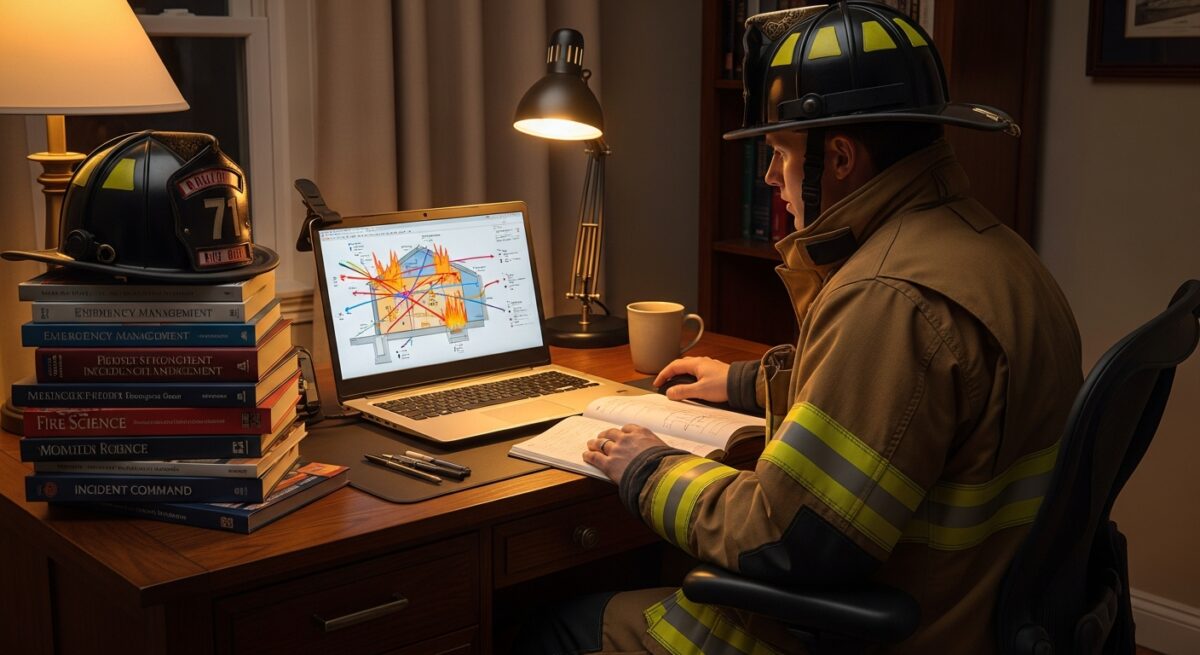
Imagine a career where every shift brings new challenges, where your decisions directly protect lives and property, and where advancement depends on a blend of experience and formal education. For many current firefighters, emergency medical technicians, and public safety officers, the path to promotion or specialization has traditionally required stepping away from duty to attend campus-based classes. That dynamic is changing rapidly. Online fire science degree programs and public safety careers now offer a flexible, accredited pathway for professionals to earn credentials while continuing to serve their communities. These programs combine rigorous academic coursework with the practical wisdom that only field experience can provide, creating a powerful foundation for leadership roles in fire departments, emergency management agencies, and related organizations.
The demand for educated fire and emergency services leaders continues to grow. According to the U.S. Bureau of Labor Statistics, employment of firefighting supervisors and emergency management directors is projected to grow at rates consistent with or faster than the national average over the next decade. Municipalities increasingly require associate or bachelor’s degrees for promotion to captain, battalion chief, or fire marshal positions. An online fire science degree meets this need by delivering instruction in fire behavior, hazardous materials management, emergency medical services administration, and personnel management through a virtual classroom that fits around rotating shift schedules. Whether you are a veteran firefighter looking to move up the ranks or a career changer seeking a stable, meaningful profession, understanding the landscape of online fire science education and the public safety careers it unlocks is the first step toward achieving your goals.
What Defines an Online Fire Science Degree Program?
An online fire science degree program is an accredited academic curriculum delivered primarily through internet-based platforms, designed to prepare students for leadership and specialized roles within fire departments and broader public safety agencies. These programs typically range from associate degrees (60 credits, roughly two years of full-time study) to bachelor’s degrees (120 credits, about four years) and even master’s degrees for those targeting executive leadership positions. The curriculum blends foundational fire science principles with management, communication, and critical thinking skills.
Core coursework in a typical program covers several key areas. Students study fire dynamics and combustion to understand how fires start, spread, and can be suppressed. They examine fire prevention strategies, building codes, and inspection techniques. Emergency medical services management is often a component, reflecting the integrated role many firefighters play as first responders. Leadership and personnel management courses prepare graduates to supervise crews, manage budgets, and navigate the complexities of municipal governance. Additionally, courses in hazardous materials response, disaster planning, and fire investigation round out the curriculum. Because these programs are online, students access lectures, discussion forums, and assignments through a learning management system. Many programs incorporate virtual labs, simulation exercises, and recorded demonstrations to teach practical skills that would otherwise require physical presence.
One critical distinction that prospective students must understand is the difference between a fully online degree and a hybrid program. A fully online fire science degree can be completed from anywhere with an internet connection, with all coursework delivered digitally. A hybrid or low-residency program may require occasional on-campus visits for hands-on training sessions, skills assessments, or final exams. When evaluating programs, always verify whether the degree is designated as online, hybrid, or on-campus. Accredited online programs are held to the same academic standards as their traditional counterparts, and the degree itself does not typically indicate the delivery method.
Accreditation and Quality Assurance in Fire Science Education
Accreditation is the single most important factor to consider when selecting an online fire science degree program. Accreditation ensures that the institution and its specific program meet established standards of educational quality. For fire science programs, there are two primary levels of accreditation to investigate. Institutional accreditation applies to the entire college or university. Regional accreditation is the most widely recognized and respected form of institutional accreditation in the United States. Nationally accredited institutions may also offer valid programs, but credits from nationally accredited schools often transfer less easily to regionally accredited institutions. Programmatic accreditation is specific to the fire science curriculum itself. The International Fire Service Accreditation Congress (IFSAC) and the National Board on Fire Service Professional Qualifications (Pro Board) are the leading organizations that accredit fire science degree programs. Graduating from an IFSAC-accredited program can streamline the process of obtaining professional certifications and may be preferred by employers.
Why does accreditation matter for your career? Many fire departments require that promotion candidates hold a degree from an accredited institution. If you plan to pursue a master’s degree later, graduate schools typically only accept transfer credits from regionally accredited undergraduate programs. Furthermore, federal financial aid, including Pell Grants and student loans, is only available to students enrolled at accredited institutions. Before enrolling in any program, verify its accreditation status through the U.S. Department of Education’s database of accredited postsecondary institutions and programs. Do not rely solely on the school’s marketing materials. A quick check can save you from investing time and money in a degree that may not be recognized by employers or other academic institutions.
Public Safety Careers Unlocked by a Fire Science Degree
An online fire science degree opens doors to a wide range of public safety careers beyond the traditional firefighter role. While many graduates are active firefighters seeking promotion, the degree also prepares individuals for positions in emergency management, fire prevention, fire investigation, and safety administration. Here are several career paths that a fire science degree supports, along with typical responsibilities and earning potential.
- Fire Officer (Lieutenant, Captain, Battalion Chief): These supervisory roles involve managing firefighting crews, coordinating emergency responses, conducting training, and ensuring equipment readiness. A bachelor’s degree is increasingly required for higher ranks. Median annual salaries for fire supervisors exceed $80,000, with top earners in major metropolitan areas reaching six figures.
- Fire Marshal or Fire Inspector: These professionals enforce fire codes, conduct building inspections, investigate fire causes, and oversee public education programs. Fire marshals often hold law enforcement powers. The role requires deep knowledge of fire science and building construction. Salaries typically range from $60,000 to $90,000 annually.
- Emergency Management Director: These leaders develop and coordinate disaster response plans for local, state, or federal agencies. They work with police, fire, public health, and other organizations to prepare for natural disasters, terrorist attacks, and industrial accidents. A bachelor’s degree in fire science or emergency management is standard. The median salary is approximately $76,000 per year.
- Fire Investigator: These specialists determine the origin and cause of fires, often working alongside law enforcement. They must understand fire chemistry, evidence collection, and legal procedures. Many investigators are former firefighters or have fire science degrees. Salaries vary widely but often exceed $65,000.
- Industrial Safety Specialist: Private companies, particularly in manufacturing, oil and gas, and chemical processing, hire safety specialists to prevent workplace fires and hazardous material incidents. A fire science degree combined with safety certifications can lead to roles with salaries from $70,000 to $100,000.
These career paths demonstrate that a fire science degree is not a one-way ticket to a single job. It provides a versatile foundation that can adapt to your interests, whether you prefer field operations, investigations, administration, or community education. The key is to align your degree program with your specific career objectives. For example, if you aim to become an emergency management director, you might choose a program that offers a concentration in disaster preparedness or homeland security.
Choosing the Right Online Program for Your Goals
Selecting the best online fire science degree program requires careful consideration of several factors beyond accreditation. Start by identifying your educational level. If you have no college experience, an associate degree in fire science is an excellent starting point. If you already hold an associate degree or have significant fire service experience, a bachelor’s degree completion program can build on your existing credits. For those targeting executive roles like fire chief or emergency services director, a master’s degree in fire science, emergency management, or public administration may be appropriate. In our guide on Doctorate in Public Administration Online Programs Guide, we explain how advanced degrees can prepare leaders for the highest levels of public service.

Next, evaluate the curriculum for alignment with your career goals. Some programs emphasize fire suppression and tactical operations, while others focus on administration, fire prevention, or emergency medical services. Look for programs that offer elective concentrations or certificate options in areas like fire investigation, hazardous materials management, or disaster planning. Consider the program’s flexibility. Do they offer asynchronous courses that allow you to study at your own pace, or are there required live sessions that may conflict with your shift schedule? How many credits can you transfer from previous coursework or professional training? Many fire science programs award credit for prior learning, including military service, fire academy completion, and professional certifications such as EMT-Paramedic or Fire Officer I/II. Finally, investigate the program’s faculty. Instructors who are current or retired fire service leaders bring real-world perspective to the virtual classroom. Read student reviews and reach out to alumni if possible to gauge their satisfaction with the program and its impact on their careers.
Cost is another significant factor. Tuition for online fire science programs varies widely, from approximately $200 per credit at public community colleges to over $500 per credit at private universities. Remember to factor in fees for technology, course materials, and any required on-campus visits. Complete the Free Application for Federal Student Aid (FAFSA) to determine your eligibility for grants, loans, and work-study programs. Many employers, particularly municipal fire departments, offer tuition reimbursement programs for employees pursuing job-related degrees. Check with your human resources department to see if such benefits are available. Some states also offer scholarship programs for first responders. Taking the time to research financial aid options can significantly reduce your out-of-pocket costs.
Frequently Asked Questions
Can I become a firefighter with an online degree? Yes, but with an important clarification. An online fire science degree alone does not qualify you to work as a firefighter. You must still complete a fire academy training program and obtain necessary certifications (such as EMT or Paramedic). The degree prepares you for advancement and specialized roles after you have gained field experience.
How long does it take to complete an online fire science degree? An associate degree typically takes two years of full-time study. A bachelor’s degree usually requires four years. Many online programs offer accelerated formats that allow motivated students to finish faster, sometimes in 18 months for an associate or three years for a bachelor’s degree. Part-time enrollment extends the timeline.
Are online fire science degrees respected by fire departments? Yes, provided the program is accredited. Fire departments care about the quality of your education, not the delivery method. An accredited online degree from a reputable institution holds the same weight as a traditional degree. Many departments actively encourage online education because it accommodates the demanding schedules of firefighters.
Do I need to be a current firefighter to enroll? Not necessarily. Many programs accept students who are career changers or recent high school graduates. However, some courses may require prerequisites such as firefighter I/II certification or EMT training. Check the admission requirements of each program. If you lack field experience, consider programs that offer introductory courses or partnerships with local fire academies.
What is the difference between a fire science degree and an emergency management degree? Fire science degrees focus specifically on fire behavior, suppression, prevention, and related operational aspects. Emergency management degrees cover a broader spectrum of disaster planning, response coordination, and recovery operations across all hazards (natural disasters, terrorism, public health crises). Both fields overlap, but fire science is more specialized. Some programs offer combined curricula or dual concentrations.
Building Your Future in Public Safety
The decision to earn an online fire science degree is an investment in your professional future and the safety of your community. Whether you are a veteran firefighter seeking a promotion or a motivated individual entering the field, the flexibility of online education makes it possible to earn a respected credential without sacrificing your current responsibilities. Accredited programs provide the knowledge and skills needed to lead crews, manage emergencies, and develop prevention strategies that save lives. As you research your options, focus on accreditation, curriculum alignment, cost, and support services. Talk to advisors at multiple schools, compare program outcomes, and consider how each program fits your career timeline. With the right degree and a commitment to service, you can advance into leadership roles that make a lasting impact on public safety. The path is open, the resources are available, and the time to start is now. Learn more