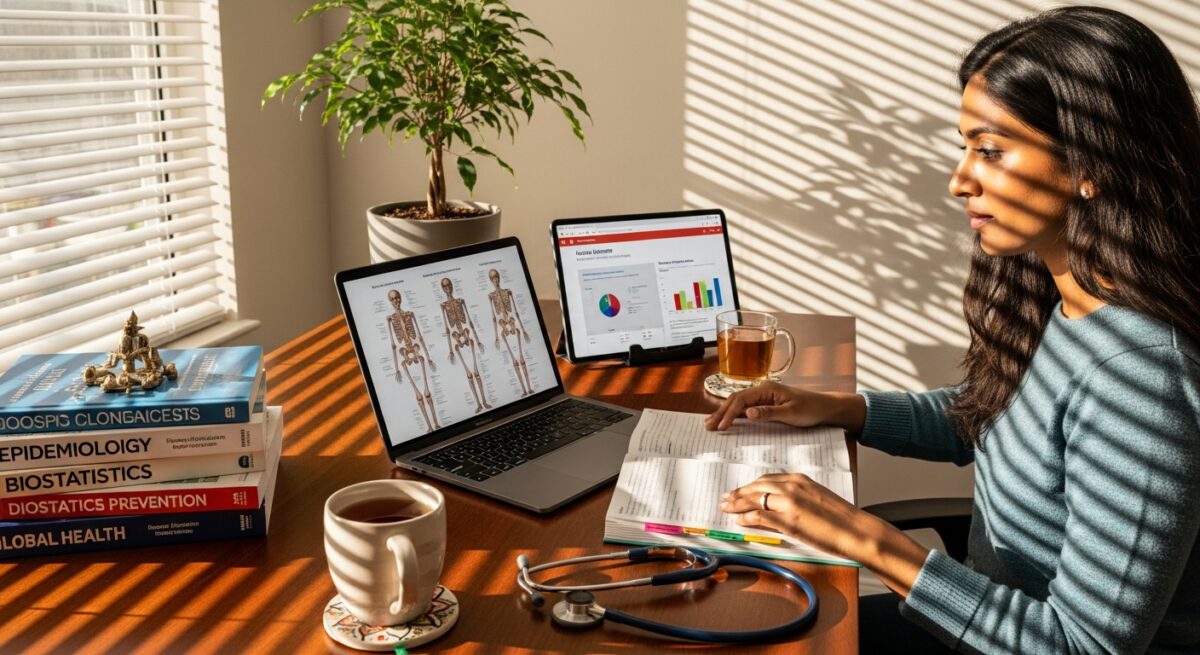
The healthcare industry is expanding at an unprecedented rate, and with it comes a surge in demand for skilled professionals who understand the science behind patient care, public health, and medical administration. For working adults, career changers, and busy professionals, the path to entering this field no longer requires quitting a job or relocating. An online health science degree offers a flexible, accredited route to a rewarding career. This guide examines the career scope and programs available, helping you determine if this educational path aligns with your professional goals.
Understanding the landscape of health science is the first step. This broad field integrates biology, chemistry, public health, and healthcare management. It prepares graduates for roles that support clinical teams, manage health data, or educate communities. Unlike a nursing or medical degree which focuses on direct patient treatment, a health science degree provides a foundational understanding of the healthcare system. This versatility makes it a powerful asset for those seeking leadership or administrative roles within hospitals, clinics, insurance companies, or government agencies.
What an Online Health Science Degree Entails
An online health science degree is an academic program delivered through digital platforms, allowing students to complete coursework remotely. These programs cover a wide range of subjects, including human anatomy, epidemiology, health policy, ethics, and healthcare informatics. The curriculum is designed to build critical thinking and analytical skills essential for problem-solving in complex healthcare environments.
Most reputable programs require between 120 and 128 credit hours for a bachelor’s degree, with a significant portion dedicated to general education and core health science courses. Specializations are common, allowing students to focus on areas such as public health, health administration, or pre-professional studies for graduate programs in medicine, dentistry, or physical therapy. The flexibility of online learning means you can study at your own pace, often with asynchronous classes that fit around your work and family schedule.
Accreditation and Quality Assurance
When researching an online health science degree, accreditation is non-negotiable. Accreditation ensures the program meets established standards of quality and that your degree will be recognized by employers and other institutions. Look for regional accreditation for the university as a whole, and programmatic accreditation from bodies like the Commission on Accreditation of Healthcare Management Education (CAHME) for health administration tracks. The site scholarship.education offers resources to help you identify accredited programs and financial aid opportunities.
Without proper accreditation, you risk earning a degree that holds little value in the job market. Always verify a program’s accreditation status through the U.S. Department of Education’s database. This step protects your investment of time and tuition dollars.
Career Scope After Graduation
The career scope for graduates of an online health science degree is remarkably broad. Because the degree provides a holistic view of healthcare, graduates can pursue roles in direct patient support, administration, research, or community outreach. Below are several common career paths with typical responsibilities and earning potential.
- Health Services Manager: Oversees operations in a medical facility, manages budgets, and ensures compliance with regulations. Median salary is over $104,000 per year.
- Medical and Health Services Manager: Plans and coordinates health services in departments like clinics or nursing homes. Growth rate is projected at 28% through 2032.
- Public Health Educator: Develops programs to promote wellness in communities. Works for government agencies or non-profits.
- Healthcare Consultant: Advises organizations on efficiency, technology, and policy improvements.
- Clinical Research Coordinator: Manages clinical trials and ensures data integrity for pharmaceutical or research institutions.
These roles often require a bachelor’s degree as a minimum entry point. For those who pursue a master’s degree, such as a Master of Public Health (MPH) or a Master of Health Administration (MHA), career opportunities expand into executive leadership and specialized consulting. The Bureau of Labor Statistics projects that healthcare occupations will grow 13% from 2021 to 2031, much faster than the average for all occupations. This growth translates to approximately 2 million new jobs, many of which are accessible with a health science background.
Graduates also find positions in insurance companies, pharmaceutical firms, and wellness technology startups. The degree’s emphasis on systems thinking and data analysis makes it valuable in an era of value-based care and electronic health records. For example, a graduate might work as a population health analyst, using data to identify at-risk patient groups and design intervention strategies.
Popular Online Programs and Specializations
Universities now offer robust online health science degree programs tailored to different career goals. When comparing programs, consider factors such as tuition cost, flexibility, internship requirements, and faculty expertise. Many top-tier institutions offer the same curriculum online as they do on campus, ensuring academic rigor.
Common specializations within a Bachelor of Science in Health Science (BSHS) include:
- Public Health: Focuses on community wellness, disease prevention, and health policy.
- Health Administration: Prepares students for management roles in healthcare organizations.
- Pre-Professional Studies: Provides prerequisites for medical, dental, or pharmacy school.
- Health Informatics: Combines healthcare with information technology to manage patient data.
- Gerontology: Addresses the needs of an aging population.
Programs typically take four years for full-time students, but accelerated options allow completion in as little as three years. Part-time options extend the timeline but offer greater flexibility. For working professionals, many programs accept transfer credits from community colleges or previous coursework, reducing the time to completion. In our guide on online healthcare management courses, we explain how to leverage these programs for career advancement.
Admission Requirements and Prerequisites
Admission to an online health science degree program typically requires a high school diploma or GED, with a minimum GPA of 2.5 to 3.0. Some programs require prerequisite courses in biology, chemistry, and math. Letters of recommendation and a personal statement are common for competitive programs. For transfer students, official transcripts from all previous institutions are necessary.

Prospective students should also check for technical requirements, such as a reliable internet connection and a computer meeting specific software standards. Most programs provide technical support and orientation sessions to help students transition to online learning.
Financial Considerations and Return on Investment
The cost of an online health science degree varies widely. Public universities often offer lower tuition for in-state residents, while private institutions may charge higher rates but provide more scholarship opportunities. The average annual tuition for an online bachelor’s degree ranges from $10,000 to $30,000. However, many students qualify for federal financial aid, employer tuition reimbursement, or scholarships.
When calculating return on investment, consider the earning potential of your target career. Entry-level health science roles start around $45,000 per year, while experienced managers earn six-figure salaries. Online programs also offer hidden savings: no commuting costs, reduced housing expenses, and the ability to continue working while studying. This makes the degree accessible to a wider demographic.
Employers increasingly value the self-discipline and time management skills demonstrated by online graduates. As long as the program is accredited, online degrees are treated equally to on-campus degrees by most employers.
Frequently Asked Questions
Can I become a nurse with an online health science degree?
No, an online health science degree does not lead to registered nurse licensure. However, it can serve as a stepping stone for accelerated nursing programs or graduate nursing degrees.
Is an online health science degree respected by employers?
Yes, when earned from a regionally accredited institution. Employers focus on the skills and knowledge you gain, not the delivery method.
How long does it take to complete an online health science degree?
Full-time students typically finish in four years. Accelerated programs allow completion in three years, while part-time students may take five to six years.
What are the most in-demand specializations?
Health informatics and health administration are growing rapidly due to technological advances and an aging population.
Can I pursue a master’s degree after earning a BSHS online?
Absolutely. Many graduates go on to earn an MPH, MHA, or even a doctoral degree in health sciences.
Choosing an online health science degree is a strategic decision for anyone seeking stability, growth, and purpose in their career. The programs are designed to fit modern lifestyles while delivering rigorous academic content. By understanding the career scope and selecting an accredited program that matches your interests, you can position yourself for success in one of the most vital sectors of the economy.
The healthcare field needs professionals who can think critically, communicate effectively, and adapt to change. An online health science degree builds these competencies. Whether you aim to manage a hospital department, analyze health data, or educate communities, this degree opens doors. Take the time to research programs, speak with admissions counselors, and consider your long-term goals. Your future in health science starts with a single step: choosing the right program for you.