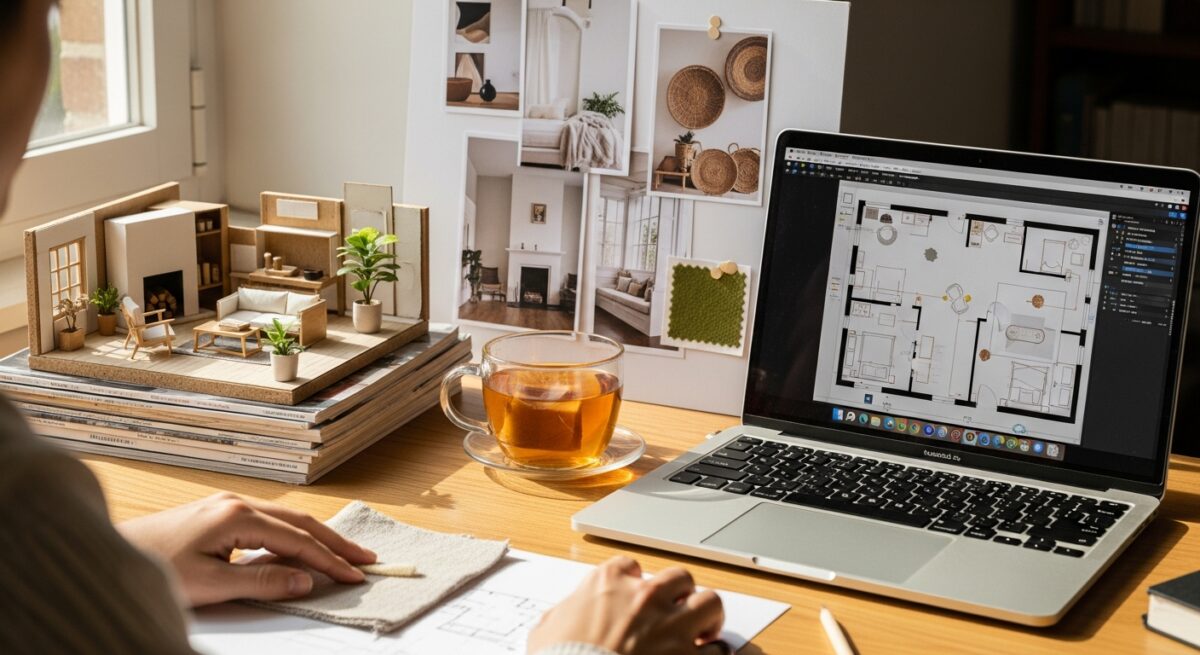
Imagine transforming blank spaces into functional, beautiful environments that improve how people live and work. Interior design blends creativity with technical knowledge, and the path to this career has evolved significantly. Today, you can pursue professional credentials entirely through online interior design degree programs and career paths that offer flexibility without sacrificing academic rigor. Whether you are a working professional seeking a career change or a parent balancing family responsibilities, an online interior design degree can open doors to a fulfilling profession. This article explores what these programs entail, how to choose the right one, and the diverse career opportunities that await graduates.
What to Expect from an Online Interior Design Degree
Online interior design degree programs mirror the curriculum of traditional on-campus programs but deliver content through digital platforms. You will study design principles, color theory, space planning, materials and finishes, building codes, and sustainable design. Most programs require you to complete a portfolio capstone project that demonstrates your ability to apply these concepts to real-world scenarios.
Coursework typically includes both synchronous and asynchronous components. Live virtual classes allow for real-time feedback from instructors and collaboration with peers, while recorded lectures and downloadable resources let you learn at your own pace. Many programs also require hands-on projects that you complete in your own space, photograph, and submit for critique. This structure makes interior design studies online accessible to students who cannot relocate or commit to a rigid class schedule.
Accreditation Matters
When evaluating design programs online, accreditation is non-negotiable. The Council for Interior Design Accreditation (CIDA) sets the standard for quality interior design education. Graduating from a CIDA-accredited program is often required to sit for the National Council for Interior Design Qualification (NCIDQ) exam, which is the benchmark for professional licensure in many states. Always verify a program’s accreditation status before enrolling. Non-accredited programs may leave you ineligible for licensure, limiting your career options.
Types of Online Interior Design Degrees
Online interior design degree programs and career paths cater to students at different stages of their education and professional journey. The three most common degree levels are associate, bachelor’s, and master’s degrees. Each serves a distinct purpose and leads to different opportunities.
An associate degree typically takes two years to complete and covers foundational topics. Graduates often qualify for entry-level positions such as design assistant or showroom consultant. A bachelor’s degree, which usually requires four years of study, provides comprehensive training and is the standard credential for professional interior designers. A master’s degree is ideal for individuals who already hold a bachelor’s in another field and want to transition into interior design or for experienced designers seeking advanced specialization.
Associate Degree in Interior Design
An associate degree offers a quick entry point into the field. Students learn drafting, basic computer-aided design (CAD), and fundamental design theory. While this degree may not meet licensure requirements in every state, it can provide immediate job opportunities and a foundation for pursuing a bachelor’s degree later. Many community colleges and online institutions offer affordable associate programs that transfer credits to four-year universities.
Bachelor’s Degree in Interior Design
The bachelor’s degree is the most common path for aspiring interior designers. Programs cover advanced topics such as lighting design, building systems, professional practice, and ethics. Students develop a robust portfolio that showcases their ability to manage complex projects. Graduates from CIDA-accredited bachelor’s programs are eligible to sit for the NCIDQ exam after completing the required work experience. This degree positions you for roles in residential design, commercial design, hospitality design, and healthcare design.
Master’s Degree in Interior Design
Master’s programs are designed for career changers and experienced designers. Some programs offer a track for students with a bachelor’s in interior design, allowing them to specialize in areas like sustainable design or historic preservation. Other programs provide a first professional degree for students from unrelated undergraduate backgrounds. A master’s degree can accelerate career advancement and qualify graduates for leadership roles, teaching positions, or specialized consultancy work.
Key Skills You Will Develop
Online interior design degree programs and career paths emphasize both creative and technical competencies. You will graduate with a blend of artistic vision and practical problem-solving abilities. Here are the core skills you can expect to develop:
- Space Planning and Layout: The ability to analyze a room’s dimensions, traffic flow, and functional requirements to create efficient and comfortable layouts.
- Color Theory and Material Selection: Understanding how color, texture, and materials affect mood, perception, and usability within a space.
- Building Codes and Accessibility Standards: Knowledge of safety regulations, ADA requirements, and zoning laws that govern interior construction and renovation.
- Computer-Aided Design (CAD) and Building Information Modeling (BIM): Proficiency in industry-standard software such as AutoCAD, Revit, SketchUp, and Adobe Creative Suite to create technical drawings and 3D renderings.
- Project Management and Client Communication: Skills in budgeting, scheduling, sourcing materials, and presenting ideas clearly to clients, contractors, and vendors.
These skills are cultivated through project-based assignments, virtual workshops, and peer reviews. Many programs also require an internship or practicum, which provides real-world experience and networking opportunities. Developing these competencies is essential whether you plan to work in a design firm, start your own business, or specialize in a niche area.
Career Paths and Job Outlook
Graduates of online interior design degree programs and career paths can pursue diverse roles across multiple industries. The U.S. Bureau of Labor Statistics projects steady growth for interior designers, driven by demand for energy-efficient and aesthetically pleasing spaces in residential, commercial, and institutional settings. Median salaries vary by specialization, location, and experience level, but the field offers strong earning potential for skilled professionals.
Common career paths include residential interior designer, commercial interior designer, kitchen and bath designer, sustainable design consultant, and set designer for film or television. Some designers work for architecture firms, furniture retailers, or home staging companies. Others choose self-employment, offering consulting services directly to homeowners or businesses. The flexibility of online education prepares graduates to adapt to these varied environments.

For those interested in a broader business context, consider exploring a business associate degree to complement your design education. Combining design skills with business acumen can be especially valuable if you plan to run your own firm or manage commercial projects.
How to Choose the Right Program
Selecting the best online interior design degree for your goals requires careful research. Start by confirming accreditation through CIDA or a regional accrediting body. Next, review the curriculum to ensure it covers the topics and software tools that align with your career interests. Look for programs that offer a strong portfolio development component, as your portfolio is the single most important asset when job hunting.
Consider the program’s format and support services. Does it offer live instruction, recorded lectures, or a combination? Are academic advisors and career counselors available to online students? What technology requirements must you meet? Read student reviews and alumni outcomes to gauge satisfaction and job placement rates. Finally, compare tuition costs and financial aid options. Many accredited online programs offer competitive tuition rates and scholarships for distance learners.
You should also investigate whether the program provides internship placement assistance. An internship not only counts toward NCIDQ work experience requirements but also helps you build professional connections. Some programs have partnerships with design firms that offer remote or hybrid internship opportunities, which is ideal for online students.
Frequently Asked Questions
Can I become a licensed interior designer with an online degree?
Yes, provided you graduate from a CIDA-accredited program and fulfill your state’s specific licensure requirements. Most states require passing the NCIDQ exam and completing a certain number of supervised work hours. An online degree from an accredited institution meets the educational prerequisite for the exam.
How long does it take to complete an online interior design degree?
An associate degree typically takes two years of full-time study. A bachelor’s degree usually requires four years, though accelerated programs may allow completion in three years. Master’s degrees range from one to three years depending on the program structure and your previous education.
What software do I need for an online interior design program?
Most programs require AutoCAD, Revit, SketchUp, and Adobe Photoshop or Illustrator. Some may also use 3D rendering software like 3ds Max or Lumion. Programs often provide student licenses for these tools at reduced or no cost.
Are online interior design degrees respected by employers?
Employers value accredited programs and strong portfolios over the delivery method. Graduates from reputable online programs are equally competitive in the job market, especially if they have relevant internship experience and a polished portfolio.
Can I work while earning my degree online?
Yes, the flexibility of online learning allows many students to work part-time or full-time while studying. However, interior design programs are project-intensive, so it is important to manage your time effectively. Many programs recommend dedicating 15 to 20 hours per week to coursework.
For more guidance on selecting an accredited program and understanding financial aid, visit DegreeOnline.Education to explore resources tailored for adult learners and career changers.
Pursuing an online interior design degree is a strategic investment in a creative and growing field. With the right program, you can gain the skills, credentials, and professional network needed to design spaces that inspire and function beautifully. Whether you aim to work in residential design, commercial projects, or a specialized niche, the flexibility of online education makes it possible to achieve your goals without putting your life on hold.