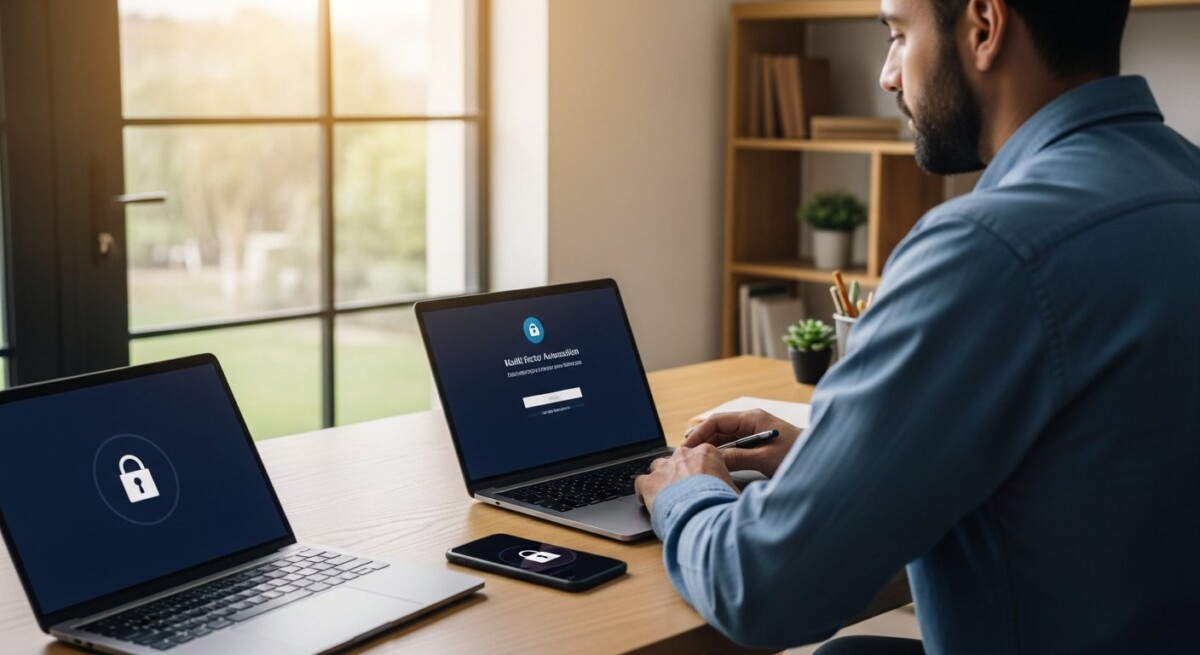
When you enroll in an online degree program, you share sensitive personal and financial data. Your name, address, Social Security number, credit card details, and academic records all travel through digital systems. A single breach can derail your education and damage your credit. Understanding how to protect yourself is not optional. It is a critical part of choosing and succeeding in an online program.
Why Security in Digital Learning Environments Matters for Adult Learners
Adult learners and working professionals often juggle jobs, family, and coursework. You log into learning management systems (LMS) from home Wi-Fi, public coffee shops, or work computers. Each connection point creates a potential vulnerability. Cybercriminals target educational institutions because they hold vast amounts of personal data and often have weaker security than banks or healthcare providers.
According to the 2023 Verizon Data Breach Investigations Report, the education sector experienced over 1,500 confirmed data breaches in the previous year. These incidents exposed student records, financial aid documents, and login credentials. For a career changer investing time and money into a new degree, a data breach can mean identity theft, financial loss, and academic disruption. This makes security in digital learning environments a top priority when evaluating online programs.
Prospective students should ask hard questions before applying. Does the school use multi-factor authentication (MFA)? Are student portals encrypted with HTTPS? Does the institution have a published data privacy policy? These are not technicalities. They are safeguards that protect your future.
Common Threats in Online Education Platforms
Understanding the risks helps you make informed decisions. Here are the most prevalent security threats facing digital learning environments today.
Phishing attacks. Fraudulent emails or messages that appear to come from your university. They ask you to click a link, verify your password, or provide your Social Security number. A single click can compromise your entire account. Always verify the sender’s email address and never click suspicious links.
Weak authentication. Many students reuse passwords across multiple sites. If one service is breached, attackers can access your school account. Multi-factor authentication adds a second layer of protection, such as a code sent to your phone. Choose programs that require MFA for all users.
Unsecured Wi-Fi. Public networks in cafes, airports, or hotels are not encrypted. Anyone on the same network can intercept your traffic. Use a virtual private network (VPN) when accessing school systems from public Wi-Fi. Many universities offer free VPN clients for students.
Data breaches at the institution. Even with strong personal habits, your data is only as secure as the school’s systems. Research whether the university has experienced past breaches and how they responded. Look for schools that conduct regular security audits and have a dedicated incident response team.
Insider threats. Not all risks come from outside. A disgruntled employee or a compromised instructor account can expose student records. Institutions must enforce strict access controls and monitor for unusual activity. Ask about their data governance policies.
Each of these threats can be mitigated through proper policies, technology, and user awareness. The best defense is a combination of institutional responsibility and personal vigilance.
How Accredited Online Programs Prioritize Data Protection
Accreditation bodies now include cybersecurity and data privacy in their evaluation criteria. Regional accreditors such as the Higher Learning Commission (HLC) and the Southern Association of Colleges and Schools (SACSCOC) require institutions to demonstrate adequate security measures for online programs. This means that choosing an accredited program is itself a first step toward better protection.
Many accredited online universities invest in enterprise-grade security tools. They use encrypted databases, intrusion detection systems, and regular penetration testing. They also train faculty and staff on data handling best practices. For example, Grand Canyon University, a featured school on DegreeOnline.Education, provides encrypted student portals and enforces secure login protocols for all online learners.
Students should verify a school’s accreditation status through the Council for Higher Education Accreditation (CHEA) or the U.S. Department of Education database. Accreditation ensures that the institution meets minimum standards for academic quality and operational security. When you compare programs, look for accreditation logos on the school’s website and check the accreditor’s scope. This is a concrete way to assess how seriously a program takes security in digital learning environments.
In our guide on Digital Learning Credentials, we explain how verified digital badges and transcripts also enhance security by reducing document fraud. These credentials use blockchain or encrypted verification systems that employers can trust without contacting the university directly.
Practical Steps to Protect Your Data as an Online Student
You can take control of your digital safety with a few straightforward actions. These steps require minimal time but significantly reduce your risk.
- Use strong, unique passwords. Create a different password for your student portal, email, financial aid system, and library access. Use a password manager to store them securely. Never share your credentials with anyone, including family members or classmates.
- Enable multi-factor authentication (MFA). If your school offers MFA, activate it immediately. This typically requires a code from an authenticator app or a text message. It stops attackers even if they steal your password. If your program does not offer MFA, ask the IT department when it will be available.
- Keep software updated. Update your operating system, browser, and antivirus software regularly. Updates patch known vulnerabilities. Enable automatic updates on your devices to avoid missing critical patches.
- Be cautious with links and attachments. Hover over links before clicking to see the actual URL. Do not open attachments from unknown senders. If an email claims to be from your university’s IT department but asks for personal information, report it to the school’s security team.
- Use a VPN on public networks. A VPN encrypts all traffic between your device and the internet. This prevents anyone on the same Wi-Fi network from reading your data. Many universities provide free VPN software to students. If yours does not, consider a reputable paid service.
Taking these steps creates a strong personal security posture. However, your safety also depends on the school’s infrastructure. Before enrolling, ask the admissions office about their data protection policies. Reputable programs will provide clear answers and documentation.
Evaluating a School’s Security Posture Before You Enroll
You would not buy a house without an inspection. Similarly, you should evaluate a school’s digital security before committing your time and money. Here are key questions to ask during your research.

Does the school have a dedicated information security team? A team of professionals who focus on cybersecurity indicates institutional commitment. Smaller schools may outsource this function, which is acceptable as long as they have clear service-level agreements and incident response plans.
What encryption standards are used for student data? All sensitive data should be encrypted both in transit (while traveling over the internet) and at rest (while stored on servers). Look for AES-256 encryption, which is the industry standard. Ask about their policy for handling paper documents that contain personal information.
How does the school handle breach notifications? Many states require institutions to notify affected individuals within a specific timeframe. Ask for a copy of their breach notification policy. A school that is transparent about past incidents and has a clear communication plan is more trustworthy than one that hides problems.
Are there privacy controls for student data sharing? Some schools share student information with third-party vendors for marketing or analytics. You should have the right to opt out of non-essential data sharing. Review the school’s privacy policy for details on data collection, storage, and sharing practices.
What training do students receive on cybersecurity? The best security systems fail if users do not follow safe practices. Look for programs that offer mandatory cybersecurity awareness training for all new students. These modules typically cover password hygiene, phishing detection, and safe browsing habits.
Asking these questions helps you separate institutions that treat security as a checkbox from those that make it a core value. The latter are far more likely to protect your data over the long term.
The Role of Financial Aid Security in Online Learning
Financial aid data is especially sensitive. Your Free Application for Federal Student Aid (FAFSA) contains detailed income information, Social Security numbers, and tax data. If this information is compromised, criminals can file fraudulent tax returns in your name or apply for loans using your identity.
When you apply for financial aid through an online program, ensure you are using the official government site (studentaid.gov) or the school’s secure portal. Never submit FAFSA information through email or unencrypted forms. Legitimate schools will never ask for your FAFSA password or PIN over the phone.
DegreeOnline.Education provides financial aid guidance that helps you understand the true cost of your education and avoid overpaying. Part of that guidance includes recognizing secure application processes. If a school’s financial aid portal looks outdated, lacks HTTPS, or asks for excessive personal information, consider it a red flag.
For more detailed information on protecting your financial data during the application process, you can visit CollegeDegrees.School, which offers additional resources on secure enrollment practices and financial aid safety.
Frequently Asked Questions About Security in Digital Learning Environments
What is the most common security threat for online students?
Phishing attacks are the most frequent. Cybercriminals send emails that appear to come from the university, asking you to click a link or provide login credentials. Always verify the sender and never share your password.
Should I use a VPN for my online classes?
Yes, especially if you access your coursework from public Wi-Fi. A VPN encrypts your internet traffic and prevents others on the network from intercepting your data. Many universities offer free VPN software for students.
How can I tell if an online program is secure?
Check for HTTPS in the website URL, look for multi-factor authentication options, and ask about the school’s data encryption standards. Also verify accreditation through CHEA or the U.S. Department of Education.
What should I do if I suspect a data breach at my school?
Immediately change your passwords, enable MFA if not already active, and monitor your bank and credit card statements for unusual activity. Report the incident to the school’s IT department and consider placing a fraud alert on your credit report.
Can I request my data be deleted after I graduate?
Many schools retain student records for compliance purposes, but you can ask about their data retention policy. You may be able to request deletion of non-essential data such as marketing preferences or survey responses.
Building a Culture of Security for Lifelong Learning
Security in digital learning environments is not a one-time setup. It is an ongoing practice that requires attention from both the institution and the student. As you advance in your career and pursue additional certifications or degrees, the habits you build now will serve you for a lifetime. Protect your credentials, guard your personal information, and choose programs that prioritize your safety. Your education is an investment. Make sure it is a secure one.