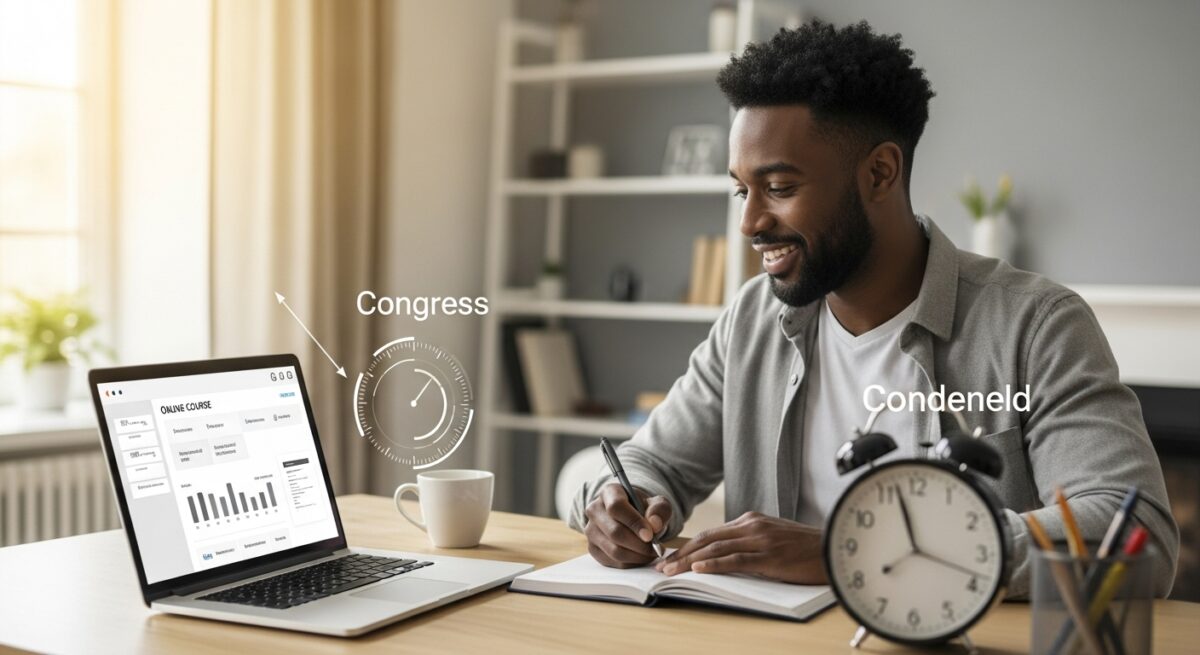
Balancing a full-time job with academic pursuits can feel like an impossible juggling act. You already manage deadlines, meetings, and personal commitments. Adding coursework, exams, and assignments to that mix often leads to burnout rather than breakthrough. Yet thousands of working professionals successfully earn degrees each year without sacrificing their careers or sanity. The difference between those who thrive and those who struggle often comes down to strategy rather than time. With the right study approach, you can advance your education while maintaining your professional edge.
Why Traditional Study Methods Fail Busy Adults
Most study advice comes from a traditional academic setting where students have few external obligations. That advice rarely translates to the life of a working professional. Sitting down for a three-hour study block after an eight-hour workday is unrealistic for most people. Your brain is fatigued, your willpower is depleted, and your attention span has been fragmented by constant task-switching at work.
The real challenge for working professionals is not intelligence or motivation. It is the scarcity of uninterrupted focus time. Traditional study methods assume you can carve out large chunks of time and maintain high concentration throughout. In reality, you need techniques that work with your fragmented schedule and compromised energy levels. This is why micro-learning and strategic scheduling outperform marathon study sessions for employed learners.
Master Time Blocking Around Your Energy Cycles
Time management is not about cramming more activities into your day. It is about aligning your study sessions with your natural energy peaks. Most people experience two high-focus windows each day: one in the late morning and another in the late afternoon or early evening. Identify your personal energy rhythm by tracking your concentration levels for one week. Note when you feel most alert and when you hit an afternoon slump.
Once you know your energy patterns, protect those peak periods for deep study work. If you are a morning person, wake up 45 minutes earlier and study before your workday begins. If you focus best after work, block 60 minutes immediately after your shift before you crash on the couch. The key is consistency. A daily 45-minute session during your peak energy window produces better results than a four-hour cram session on Saturday.
For professionals enrolled in online degree programs for working adults, this approach is especially effective because asynchronous coursework allows you to engage with materials when your brain is most receptive. You can watch lectures at double speed during your commute or complete discussion posts during your lunch break.
Apply the Pomodoro Technique for Workplace Fatigue
The Pomodoro Technique is a time management method that breaks work into focused intervals, traditionally 25 minutes long, separated by short breaks. For working professionals, this technique is a game changer because it matches the attention span limits of a tired brain. After a full workday, your ability to concentrate deeply for extended periods is severely reduced. Trying to force a two-hour study session often leads to frustration and wasted time.
Instead, commit to just 25 minutes of focused study. Set a timer, eliminate all distractions, and work intensely on one task. Then take a five-minute break to stretch, hydrate, or close your eyes. Repeat this cycle three or four times, then take a longer 15 to 30 minute break. This approach respects your cognitive limits while building momentum. Most professionals find they accomplish more in three focused 25-minute blocks than in one unfocused hour of study.
To implement this effectively:
- Use a physical timer or a dedicated app to enforce the intervals
- Choose one specific task per session (read one chapter, write 200 words, solve five problems)
- Remove your phone and close unnecessary browser tabs before starting
- Take your break away from your study space to reset mentally
- Track completed Pomodoros each day to build a visible streak of progress
This method also helps overcome procrastination. When a task feels overwhelming, telling yourself you only need to work for 25 minutes reduces resistance. Often, once you start, you will continue beyond the timer because the hard part is beginning.
Use Active Recall Instead of Passive Review
Many working professionals fall into the trap of passive review. They reread textbooks, highlight passages, or rewatch lectures, believing this repetition will cement knowledge. Research in cognitive science consistently shows that passive review is one of the least effective study methods. It creates a false sense of familiarity without real learning.
Active recall is the practice of retrieving information from memory without looking at the source material. Instead of rereading a chapter, close the book and write down everything you remember. Instead of rewatching a lecture, try to summarize the key points aloud. This effortful retrieval strengthens neural pathways and reveals gaps in your understanding. It takes more mental energy, which is why it works so much better.
For busy professionals, active recall can be integrated into small pockets of time. While waiting for a meeting to start, mentally quiz yourself on key terms. During your commute, verbally summarize the main concepts from your last study session. Use flashcards on your phone for quick reviews throughout the day. This spaced repetition combined with active recall is the most efficient way to learn when study time is limited.
Build a Study System That Works With Your Job
Effective studying for working professionals requires more than techniques. It requires a system that integrates seamlessly with your existing work and life routines. Start by auditing your current schedule for hidden time pockets. These are short periods of 10 to 20 minutes that you currently waste scrolling social media, waiting in line, or commuting. Most professionals have 60 to 90 minutes of hidden time each day that can be repurposed for micro-study sessions.
Create a weekly study plan that maps specific tasks to specific time slots. For example, Monday morning commute: review flashcards. Tuesday lunch break: watch one lecture segment. Wednesday evening: write discussion post. Thursday afternoon: complete practice quiz. Friday morning: review weekly summary notes. This level of specificity removes decision fatigue. You do not need to decide what to study each day because your system already tells you.

Your system should also include a dedicated study space, even if it is small. A corner of your dining table with your materials ready reduces the friction of starting. Keep a notebook, pens, and your device charger in that space at all times. When you sit down, you start immediately rather than wasting time gathering supplies.
Leverage Technology Without Letting It Distract You
Technology is a double-edged sword for working professional students. The same device that gives you access to course materials, research databases, and study apps also delivers notifications, social media, and streaming services. The key is to use technology intentionally rather than reactively.
Use productivity apps that block distracting websites during study sessions. Tools like Freedom, Cold Turkey, or even your phone’s focus mode can prevent temptation. Set your phone to Do Not Disturb or airplane mode during Pomodoro sessions. Create separate browser profiles for work, study, and personal use so you are not tempted to check work email while studying or vice versa.
On the positive side, technology enables powerful study tools that were unavailable a decade ago. Digital flashcards with spaced repetition algorithms like Anki help you retain information long-term. Note-taking apps like Notion or OneNote allow you to organize course materials by topic and search them instantly. Text-to-speech tools let you listen to articles during your commute. Use these tools strategically to multiply your learning efficiency.
Manage Your Mental and Physical Energy
Studying while working is as much a physical challenge as a mental one. Your brain consumes approximately 20 percent of your body’s energy, and cognitive work depletes glucose and neurotransmitters. Without proper fuel and rest, your study sessions will be unproductive regardless of how much time you allocate.
Prioritize sleep as a non-negotiable study aid. Seven to eight hours of quality sleep improves memory consolidation, problem-solving ability, and focus. Sacrificing sleep to study more is counterproductive because your brain cannot encode new information effectively when sleep-deprived. Similarly, stay hydrated throughout the day and eat protein-rich snacks before study sessions to maintain stable blood sugar levels.
Incorporate brief physical movement into your study breaks. A five-minute walk, stretching, or a few jumping jacks increases blood flow to the brain and improves concentration when you return to studying. Many professionals find that a short exercise session before studying enhances their focus significantly.
Your employer may also have resources available. Some companies offer tuition reimbursement, flexible schedules, or reduced hours for employees pursuing degrees. Check your employee handbook or speak with HR about education benefits. Using employer support can reduce financial stress and free up more time for focused study.
Frequently Asked Questions
How many hours should a working professional study each day?
Quality matters more than quantity. Aim for 45 to 90 minutes of focused, active study per day. This is sustainable long-term and produces better results than irregular marathon sessions. Adjust based on your course load and personal energy levels.
What is the best time of day to study for busy professionals?
The best time is your personal peak energy window. For most people, this is either early morning before work or immediately after work before dinner fatigue sets in. Experiment to find what works for you and protect that time consistently.
How can I avoid burnout while working and studying?
Schedule regular breaks and one full day off from both work and study each week. Use active recovery activities like exercise, social time, or hobbies. Monitor your stress levels and reduce study intensity if you notice chronic fatigue or irritability.
Should I tell my employer I am studying?
In most cases, yes. Many employers support professional development and may offer flexible scheduling or tuition assistance. Being transparent also helps manage expectations around your availability. However, assess your workplace culture before sharing.
What if I fall behind on coursework?
Contact your instructor immediately rather than avoiding the situation. Most online programs have flexibility and support systems for working students. Communicate early, create a catch-up plan, and adjust your schedule temporarily to prioritize the most critical assignments.
The path to earning a degree while working full-time is demanding but entirely achievable. By adopting study techniques that respect your limited time and energy, you can advance your education without sacrificing your career or well-being. Start with one small change today: identify your peak energy window and protect it for 25 minutes of focused study. That single habit will compound into significant progress over the next semester. Learn more