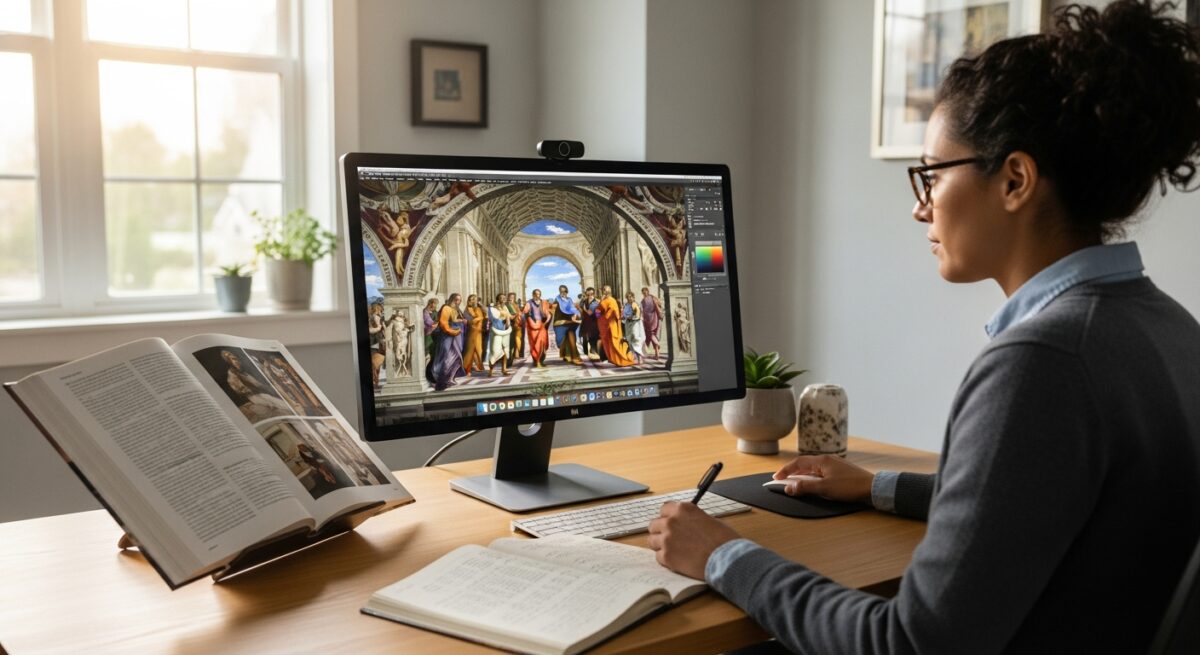
Exploring art history from the comfort of your own home is an increasingly popular and enriching educational path. Whether you are a curious beginner, a professional seeking to deepen your expertise, or someone considering a career pivot, online art history classes offer a unique blend of flexibility, academic rigor, and visual discovery. The digital classroom transforms your screen into a portal across centuries and continents, from Renaissance frescoes to contemporary installations. But what does this learning experience truly entail? Understanding the structure, demands, and rewards of these programs is key to a successful and fulfilling journey. This guide will detail what you can realistically expect when you enroll in art history courses online, from the virtual lecture hall to the final project.
The Structure and Format of Online Learning
Online art history programs are designed with accessibility in mind, but they are far from passive experiences. The core of your learning will typically revolve around a Learning Management System (LMS), such as Canvas, Blackboard, or Moodle. This platform is your virtual campus, housing everything from weekly modules and lecture videos to discussion boards and assignment submission portals. Unlike a traditional lecture where you listen in real-time, most online art history courses are delivered asynchronously. This means you can watch pre-recorded lectures, complete readings, and participate in discussions on your own schedule, a crucial benefit for working adults or those with family commitments. However, some programs may incorporate synchronous elements, like live video seminars or virtual museum tours, which require attendance at a specific time.
The weekly rhythm is predictable yet demanding. A typical module might open on a Monday, presenting you with a set of learning objectives, required readings from digital textbooks or academic journals, and a series of lecture videos. These videos are the cornerstone, often featuring the professor speaking over high-resolution images of artworks, diagrams, and maps. The quality of these visuals is paramount, and reputable courses invest heavily in ensuring you can see the brushstrokes of a Van Gogh or the intricate details of a Mughal miniature. Following the content consumption, you are expected to engage. This usually means posting a thoughtful response to a discussion prompt and replying to classmates’ posts, fostering a collaborative learning environment despite the physical distance. This format requires a high degree of self-discipline and time management, similar to the strategies needed for part-time online degree programs that many adult learners pursue.
Core Components of the Curriculum
Art history courses online are structured to build both broad knowledge and specific analytical skills. The curriculum often progresses from foundational surveys to specialized topics, mirroring traditional degree paths but with digital tools enhancing the experience.
Survey Courses and Thematic Deep Dives
Your journey will likely begin with broad survey courses, such as “Introduction to Western Art” or “Global Art Histories.” These classes provide the essential timeline and framework, moving chronologically or thematically through major movements, cultures, and artists. Expect to encounter the canonical works, from ancient Greek sculpture to Impressionism. Beyond surveys, you will delve into specialized electives. These might focus on a specific period (Baroque Art), a region (Art of the African Diaspora), a medium (The History of Photography), or a theoretical lens (Feminist Art History). This is where online platforms shine, allowing for niche topics that might not be offered locally.
Developing the Art Historian’s Toolkit
Merely recognizing artworks is not the goal. A significant portion of your coursework will be dedicated to developing formal analysis and critical writing skills. You will learn the vocabulary to describe composition, color, line, and form. More importantly, you will practice iconography (interpreting symbols) and contextual analysis, placing works within their historical, social, political, and religious milieus. Assignments are designed to hone these skills. A common progression includes visual analysis essays, where you describe and interpret a single work in detail, and research papers, where you develop a thesis argument supported by scholarly sources. Many programs now also incorporate digital humanities projects, such as creating virtual exhibitions or timelines, adding a modern skill set to the traditional art history toolkit.
Assessment, Interaction, and Academic Rigor
A common misconception is that online courses are easier than their on-campus counterparts. In reality, accredited online art history classes maintain high academic standards. Assessment is continuous and multifaceted. Your grade will typically be a composite of several elements designed to evaluate different competencies.
Discussion board participation is often weighted heavily, sometimes constituting 20-30% of your final grade. Quality matters more than quantity, professors look for posts that demonstrate critical engagement with the material, cite specific readings or lecture points, and advance the conversation. Written assignments, as mentioned, are central. You will receive detailed feedback on your essays, often through digital comments and rubrics. Exams are also common, though their format varies. They may be open-book, timed quizzes on factual knowledge (dates, artists, terms) or take-home essays that ask for synthesis and analysis. Proctoring software is sometimes used for midterms and finals to ensure academic integrity. The key takeaway is that the workload is substantial. Expect to spend 8-12 hours per week on a standard 3-credit course, balancing reading, viewing, writing, and discussing.
Interaction is another vital component. While you may not be in a physical room with peers, the discussion forums create a dynamic text-based dialogue. Video introductions, group projects using collaborative software like Google Docs, and live office hours via Zoom further bridge the gap. Building relationships with instructors is entirely possible, proactive communication through email or virtual office hours is encouraged and can be invaluable for mentorship and recommendation letters.
Technology Requirements and Learning Environment
To succeed, you need more than just enthusiasm, you need a reliable technological setup. Before enrolling, consider these practical requirements. A stable, high-speed internet connection is non-negotiable for streaming lecture videos and participating in live sessions. Your computer should have sufficient processing power and storage. A larger screen is highly beneficial for examining artwork details, so a laptop or desktop is preferable to a tablet or phone for serious study. Essential software includes a word processor (like Microsoft Word or Google Docs), a PDF reader, and potentially presentation software. Your university will provide access to the LMS and crucial academic resources, most importantly, digital library databases such as JSTOR and ArtSTOR, which contain millions of scholarly articles and high-quality art images. Learning to navigate these databases effectively is a skill you will develop early on.
Creating a dedicated study space is also part of the online learning expectation. This physical environment should be organized, free from distractions, and conducive to focused reading and writing. Just as you would go to a library or classroom, having a defined “study zone” helps mentally separate your academic work from your personal life, a key to maintaining balance and preventing burnout in a flexible schedule.
Outcomes: From Personal Enrichment to Professional Paths
Completing online art history courses can lead to a range of outcomes, depending on your goals. For many, the primary reward is personal enrichment, gaining a deeper understanding of human creativity and culture. The knowledge enhances travel, museum visits, and everyday visual literacy. For others, the courses are a stepping stone on a formal academic path. Successfully completed individual courses can often be transferred as credits toward an associate’s or bachelor’s degree. Full online degree programs in art history, from the bachelor’s to the master’s level, are available and can lead to careers in museums, galleries, archives, education, publishing, and arts administration.
Pursuing an art history certification online is another specific outcome. These focused certificate programs, often in areas like Museum Studies or Digital Art History, provide professional credentials without the commitment of a full degree. They are ideal for career enhancers looking to specialize. Furthermore, the research, writing, and critical thinking skills honed in art history are highly transferable to fields like law, marketing, and journalism. It is also worth exploring financial support options for these pursuits, for more information on funding your studies, education scholarship guidance provides a resource to help you explore scholarship programs and other financial aid avenues.
Frequently Asked Questions
Are online art history degrees respected by employers?
Yes, especially when earned from a regionally accredited institution. Employers increasingly value the self-discipline, time management, and technical skills demonstrated by successful online graduates. The accreditation status of the school is the key factor in respectability.
How do I view the artwork if I am not in a museum?
Courses rely on high-resolution digital images from museum collections, academic image databases like ArtSTOR, and interactive 360-degree virtual tours. The quality is often superior to textbook reproductions, allowing for zooming into fine details.
Can I get hands-on experience or an internship online?
While handling physical objects is limited, many programs offer virtual internships. These can involve remote research for a museum, digital collections management, creating online educational content, or social media curation for arts organizations.
What is the biggest challenge of online art history courses?
The biggest challenge is usually self-motivation and time management. Without a fixed class schedule, it is easy to fall behind. Creating a consistent weekly routine and actively participating in discussions are the best defenses against this.
Do I need any prior art or history knowledge?
No prior expertise is required for introductory survey courses. They are designed for beginners. A genuine curiosity and willingness to engage with visual material and scholarly texts are the only prerequisites.
Enrolling in art history courses online opens a world of visual culture and critical thought. By setting realistic expectations for the workload, embracing the interactive digital format, and leveraging the resources provided, you can embark on a profoundly rewarding educational adventure. The journey through art history, though conducted virtually, offers a very real and lasting expansion of your perspective and capabilities.