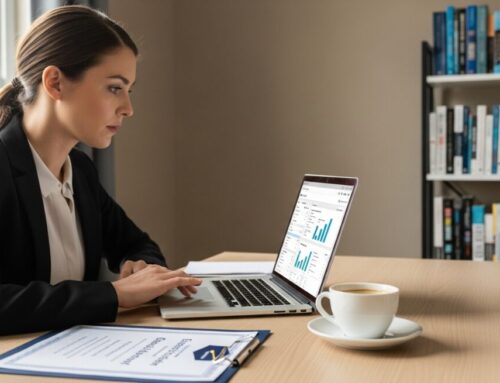
If you are ready to advance your career in finance, auditing, or tax preparation, an online accounting bachelor degree offers a flexible and affordable path to achieving your goals. The accounting field continues to grow, with the Bureau of Labor Statistics projecting steady demand for accountants and auditors. Earning your degree entirely online allows you to balance work, family, and education without relocating or quitting your job. This guide walks you through everything you need to know about selecting, applying to, and succeeding in an accredited online accounting program.
In this article, you will learn how to evaluate program quality, understand typical curriculum requirements, explore financial aid options, and discover how an accounting degree online can lead to certifications like the CPA. Whether you are a career changer or a working professional seeking advancement, this resource provides the clarity you need to make an informed decision.
Why Choose an Online Accounting Bachelor Degree?
An online accounting bachelor degree provides the same rigorous education as a traditional on-campus program but with greater flexibility. Accredited online accounting programs deliver coursework through interactive platforms, allowing you to attend lectures, complete assignments, and collaborate with peers from anywhere with an internet connection. This format is especially valuable for adult learners who need to maintain employment while studying.
Beyond convenience, online programs often cost less than their campus-based counterparts. You save on commuting, housing, and campus fees. Many universities also offer in-state tuition rates for online students regardless of their physical location. Additionally, employers increasingly recognize and respect degrees earned from accredited online institutions, especially when the program holds specialized accreditation from organizations like the Association to Advance Collegiate Schools of Business (AACSB) or the Accreditation Council for Business Schools and Programs (ACBSP).
Choosing an accounting degree online also prepares you for the CPA exam. Most states require 150 credit hours of education to sit for the CPA exam, and many online bachelor programs offer accelerated tracks or combined bachelor-to-master pathways to meet this requirement efficiently.
What to Look for in Online Accounting Programs
Not all online accounting programs are created equal. To ensure you invest in a quality education that employers and licensing boards respect, consider the following factors during your research.
Accreditation Matters
Accreditation is the single most important factor when evaluating any degree program. Regional accreditation ensures that the institution meets high academic standards. Programmatic accreditation from AACSB or ACBSP signals that the accounting curriculum specifically meets industry benchmarks. Without proper accreditation, you may struggle to transfer credits or qualify for the CPA exam.
Curriculum and Specializations
Review the core courses required in the program. A strong accounting curriculum typically includes financial accounting, managerial accounting, taxation, auditing, business law, and ethics. Some online accounting programs offer specializations in forensic accounting, data analytics, or nonprofit accounting. Choose a specialization that aligns with your career goals.
Faculty and Support Services
Look for programs where courses are taught by faculty with real-world accounting experience. Also, investigate the support services available to online students, such as academic advising, tutoring, career counseling, and technical support. These resources can significantly impact your success.
To help you compare options, here are key features to evaluate across programs:
- Accreditation status (regional and programmatic)
- Total program cost and availability of financial aid
- Credit transfer policies for prior college credits
- CPA exam pass rates for graduates
- Networking and internship opportunities
After reviewing these features, reach out to admissions advisors at your top choices. Ask about average class size, course delivery format (synchronous vs. asynchronous), and graduation rates. A transparent program will gladly share this information.
How to Apply to an Online Accounting Bachelor Degree Program
The application process for an online accounting bachelor degree is similar to on-campus admissions but often streamlined for remote applicants. Follow these steps to submit a competitive application.
First, gather your transcripts from all previously attended colleges. Most programs require a minimum GPA of 2.5 or higher for admission. If you are a transfer student, request official transcripts early to avoid delays. Second, prepare a personal statement or essay explaining your motivation for pursuing accounting and your career aspirations. Some programs may also require letters of recommendation from employers or professors.
Third, complete the Free Application for Federal Student Aid (FAFSA) to determine eligibility for grants, loans, and work-study programs. Even if you plan to pay out of pocket, submitting the FAFSA opens doors to scholarships specific to online learners. Finally, submit your application before the deadline. Many online programs offer multiple start dates throughout the year, so you can begin in the fall, spring, or summer.
For more detailed guidance on navigating the application process for various fields, review our guide to earning a bachelor’s degree through online programs which covers transfer credits and financial aid strategies relevant to all disciplines.
Cost and Financial Aid for Online Accounting Degrees
The cost of an online accounting bachelor degree varies widely depending on the institution, residency status, and program length. On average, tuition ranges from $10,000 to $50,000 total for the entire degree. Public universities typically offer lower tuition rates for in-state students, but many extend reduced online tuition rates to all students regardless of location.
Beyond tuition, consider additional expenses such as technology fees, digital textbooks, and proctoring fees for exams. Some programs include these costs in a flat per-credit rate, while others charge separately. Always request a full cost breakdown before enrolling.
Financial aid options for online students include federal Pell Grants, federal student loans, employer tuition reimbursement programs, and scholarships from professional organizations like the American Institute of CPAs (AICPA). Many universities also offer merit-based scholarships for students with strong academic records. Be proactive in researching and applying for aid early.
One effective way to reduce costs is to transfer previously earned credits from community college or other accredited institutions. Many online accounting programs accept up to 90 transfer credits, allowing you to complete your degree in as little as two years. This significantly lowers the overall investment.
Career Paths with an Accounting Degree Online
Graduates of an accounting degree online qualify for a variety of roles in public accounting, corporate finance, government agencies, and nonprofit organizations. Common job titles include staff accountant, auditor, tax associate, financial analyst, and budget analyst. The median annual wage for accountants and auditors was over $78,000 in 2023, according to the Bureau of Labor Statistics, making this a financially rewarding field.
For those pursuing CPA licensure, an online accounting bachelor degree is a critical stepping stone. After earning your degree, you must pass the uniform CPA exam and meet experience requirements in your state. Many online programs specifically design their curricula to cover the content tested on the CPA exam, giving you a competitive advantage.
Beyond the CPA, additional certifications like the Certified Management Accountant (CMA) or Certified Internal Auditor (CIA) can further enhance your earning potential and career mobility. An online accounting program that emphasizes ethical decision-making and data analytics will prepare you for these advanced credentials.
If you are ready to explore specific programs and compare costs, you can use resources like collegedegrees.school to research accredited options that fit your budget and schedule.
Frequently Asked Questions
Can I become a CPA with an online accounting bachelor degree?
Yes, as long as the program is regionally accredited and meets your state’s educational requirements. Many online programs specifically prepare students for the CPA exam.
How long does it take to complete an online accounting bachelor degree?
Most programs require 120 credit hours and take four years of full-time study. Accelerated programs and generous transfer credit policies can reduce this to two or three years.
Is an online accounting degree respected by employers?
Yes, especially when earned from a regionally accredited institution with programmatic accreditation. Major employers including Big Four accounting firms hire graduates from reputable online programs.
What technology do I need for an online accounting program?
You need a reliable computer, high-speed internet, and access to software like Microsoft Excel and accounting-specific tools. Most programs provide detailed technical requirements before enrollment.
Choosing an online accounting bachelor degree is a significant decision that can transform your career trajectory. By focusing on accreditation, curriculum quality, cost transparency, and support services, you can select a program that fits your life and goals. The flexibility of online learning combined with the strong demand for accounting professionals makes this degree a smart investment in your future. Start researching programs today and take the first step toward a rewarding career in accounting.