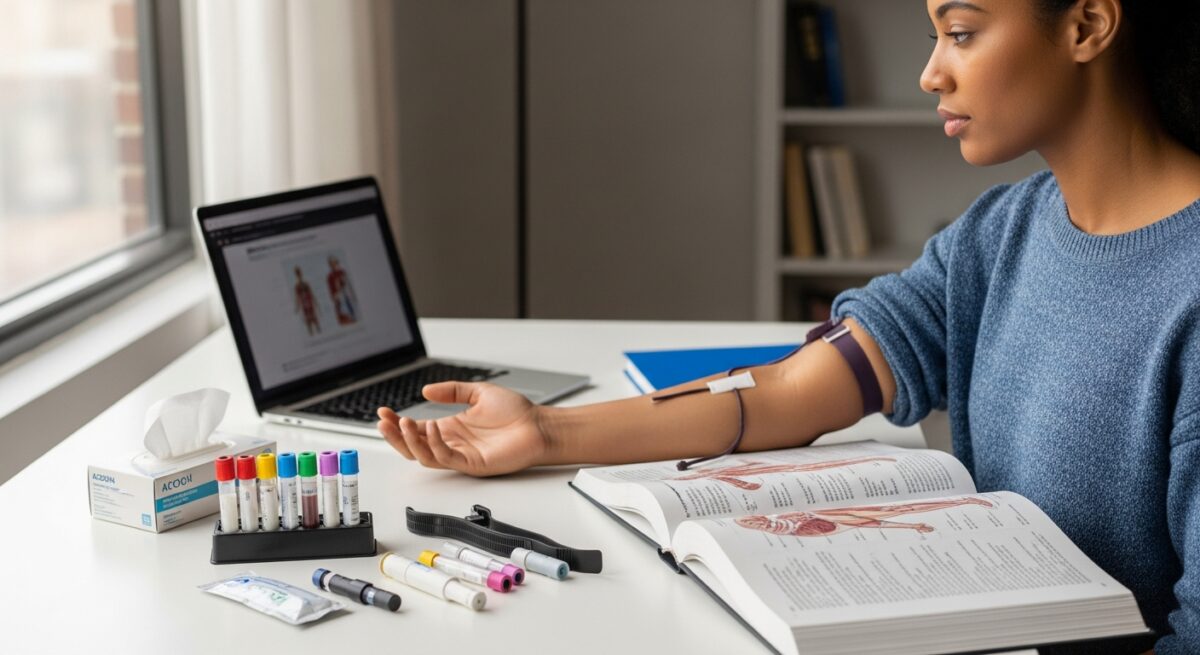
Entering the healthcare field as a phlebotomist offers a stable, rewarding, and in-demand career path without the requirement of a multi-year degree. For busy adults, career changers, or those seeking a flexible entry point into medicine, online phlebotomist courses present a compelling opportunity. This comprehensive guide demystifies the process of becoming a certified phlebotomist through online education, detailing the steps from selecting the right program to navigating certification and launching your career. We will explore the structure of phlebotomist online classes, clarify certification requirements, and provide a roadmap to help you make an informed decision about this vital healthcare profession.
Understanding the Phlebotomy Profession
Phlebotomy is the practice of drawing blood from patients for medical testing, transfusions, donations, or research. Phlebotomists are critical frontline healthcare team members, responsible for ensuring the safe and accurate collection of specimens that form the basis for countless medical diagnoses. The role requires a unique blend of technical skill, precision, and interpersonal ability to put patients at ease. The Bureau of Labor Statistics projects employment for phlebotomists to grow much faster than the average for all occupations, driven by an aging population and increased demand for diagnostic testing. This growth, combined with the relatively short training timeline, makes phlebotomy an attractive option for many.
Before enrolling in any program, it’s crucial to understand the hybrid nature of phlebotomy education. While the theoretical knowledge can be effectively delivered online through phlebotomist online classes, the profession is hands-on by definition. Therefore, a legitimate phlebotomist course online will always include a mandatory clinical externship or in-person skills lab component where students practice venipuncture and capillary puncture techniques on real people under supervision. This combination allows for the flexibility of remote learning while ensuring graduates possess the practical competency required by employers.
Choosing an Accredited Online Phlebotomy Program
Selecting the right program is the most critical step in your journey. Not all online phlebotomy certification online programs are created equal, and accreditation is the key differentiator. Accreditation ensures a program meets established standards of quality and rigor, which is vital for your education, your eligibility for certification, and your future employment. Look for programs accredited by recognized agencies such as the National Accrediting Agency for Clinical Laboratory Sciences (NAACLS) or those approved by your state’s department of education.
When evaluating a phlebotomist course online, consider the following essential components. A quality curriculum should comprehensively cover medical terminology, anatomy and physiology (particularly of the circulatory system), infection control and safety protocols, specimen handling and processing, and legal and ethical issues in healthcare. The program should clearly outline its clinical training arrangement. Does it assist in placing you at a local clinic, hospital, or lab for your externship, or are you responsible for securing your own site? This support is invaluable. Furthermore, investigate the program’s pass rates on national certification exams and its job placement assistance services. These factors are strong indicators of a program’s effectiveness and commitment to student success.
The Structure of Online Phlebotomy Training
A typical online phlebotomy program is designed to be completed in a matter of months, often ranging from 4 to 8 months for a certificate. The online portion delivers didactic content through a learning management system where you access video lectures, reading materials, interactive modules, and assignments. You’ll participate in discussion forums and take proctored exams to demonstrate your knowledge. This format provides the flexibility to study around work or family commitments, a significant advantage for adult learners.
The in-person clinical component is non-negotiable. This is where theory meets practice. Under the guidance of a licensed preceptor, you will perform a required number of successful blood draws, typically 30 to 100, depending on the program and certification goals. You’ll learn various techniques, including venipuncture with vacuum tubes and butterflies, and capillary punctures for fingersticks. This hands-on experience builds the muscle memory and confidence necessary to perform the job competently. When researching programs, ensure the clinical hours and competencies align with the requirements of the certification agency you plan to use. For those considering broader healthcare data roles, understanding how clinical data is sourced can be insightful. In our guide on Choosing the Best Data Science Certification Courses Online, we explain how data-driven fields intersect with clinical practices.
Navigating Phlebotomy Certification and Credentials
Upon completing your training, the next step is to obtain national certification. While not every state legally requires it, most employers strongly prefer or mandate certification as proof of your knowledge and skills. Certification is offered by several nationally recognized organizations. The most common include the National Healthcareer Association (NHA), the American Society for Clinical Pathology (ASCP), the American Medical Technologists (AMT), and the National Center for Competency Testing (NCCT). Each has specific eligibility requirements, often tied to the completion of an accredited program and a successful clinical externship.
The certification process typically involves submitting an application with proof of your education and clinical experience, followed by passing a comprehensive exam. These exams test your knowledge in areas like patient identification, order of draw, complications and troubleshooting, and safety standards. Here is a brief comparison of key certification agencies:
- National Healthcareer Association (NHA): Offers the Certified Phlebotomy Technician (CPT) exam. Popular for its accessibility and widespread employer recognition.
- American Society for Clinical Pathology (ASCP): Offers the Phlebotomy Technician (PBT) certification. Often considered a gold standard, with rigorous eligibility requirements.
- National Center for Competency Testing (NCCT): Offers the National Certified Phlebotomy Technician (NCPT) exam. Known for its lifetime certification upon meeting continuing education requirements.
Preparing for these exams is a crucial part of your phlebotomy certification online journey. Many programs include exam preparation within their curriculum, but independent study using review books and practice tests is highly recommended.
Career Pathways and Advancement for Phlebotomists
With certification in hand, a world of opportunities opens up. Phlebotomists are employed in a variety of settings, each offering different experiences and schedules. Hospitals provide a fast-paced environment with a wide range of patient types. Diagnostic laboratories offer more routine hours and high-volume drawing. Blood donation centers, such as those run by the American Red Cross, focus on apheresis and whole blood collection. Other opportunities exist in physicians’ offices, outpatient clinics, and research facilities.
Career advancement is a realistic goal for motivated phlebotomists. With experience, you can move into supervisory or lead phlebotomist roles, managing teams and workflows. Some phlebotomists specialize in areas like pediatric or geriatric draws. Furthermore, phlebotomy serves as an excellent stepping stone to more advanced healthcare careers. The experience and patient contact provide a solid foundation for pursuing further education to become a medical laboratory technician (MLT), nurse (LPN/RN), or other clinical roles. For individuals looking to eventually move into healthcare administration or leadership, foundational clinical experience is invaluable, and exploring online education resources for related degree pathways can be a strategic next step.
Frequently Asked Questions
Can I become a fully certified phlebotomist entirely online?
No. You cannot become certified through a 100% online program. All reputable certification bodies require documented, hands-on clinical experience performing blood draws on live patients. A legitimate phlebotomist course online will pair remote theory with a mandatory in-person externship.
How much does an online phlebotomy program cost?
Costs vary widely, typically ranging from $1,000 to $3,000 for a certificate program. This usually includes tuition, study materials, and sometimes exam fees. Always ask what is included and budget for additional costs like background checks, immunizations, and travel to your clinical site.
What are the prerequisites for enrolling in a program?
Most programs require a high school diploma or GED. Some may have minimum age requirements (often 18) and require a criminal background check, drug screening, and proof of specific immunizations (like Hepatitis B) prior to the clinical rotation.
How long does it take to complete training and get certified?
From start to finish, including the clinical externship, most students can complete a program and sit for their certification exam within 4 to 8 months. The timeline depends on whether you study full-time or part-time and the scheduling of your clinical hours.
Is financial aid available for online phlebotomy programs?
Financial aid options vary by institution. Accredited programs at community colleges or vocational schools may qualify for federal aid. Many private training providers offer payment plans. Additionally, some employers offer tuition reimbursement, and military benefits or workforce development grants may be applicable.
Pursuing a career as a phlebotomist through online training is a strategic and efficient path to entering the healthcare field. By carefully selecting an accredited phlebotomist course online, diligently completing both the theoretical and hands-on components, and obtaining national certification, you position yourself for success in a stable and growing profession. This guide to phlebotomist online classes and certification provides the framework. Your commitment to patient care and professional development will do the rest, opening the door to a meaningful career with tangible impact on community health.