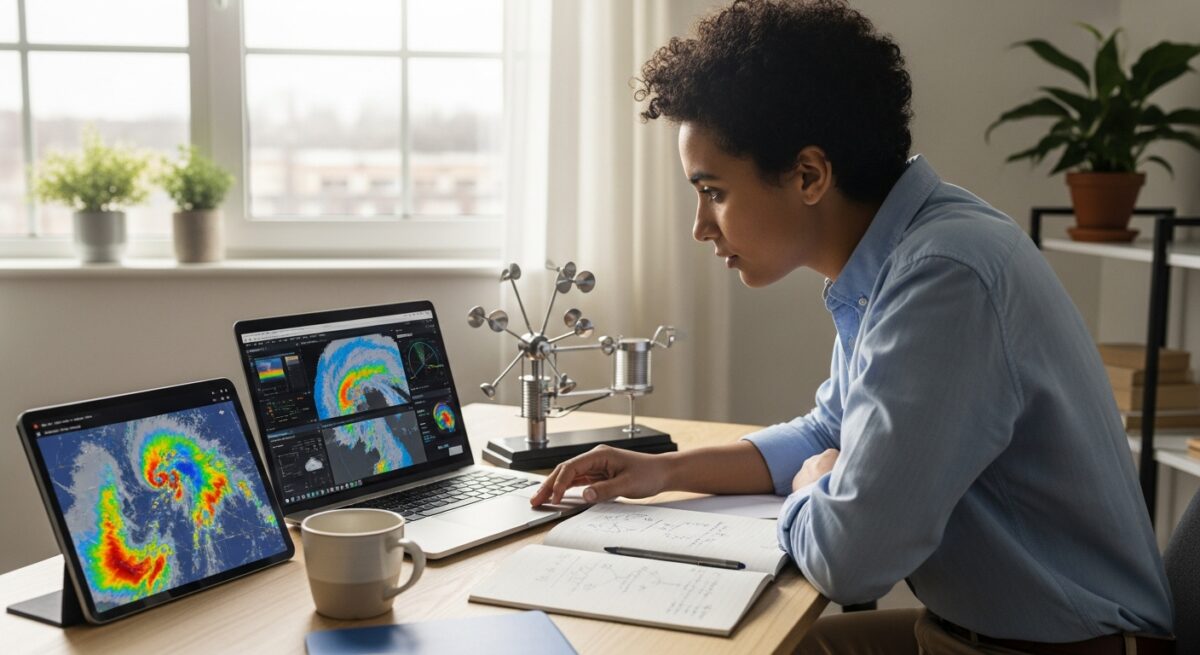
Weather patterns influence everything from agriculture and aviation to disaster preparedness and daily commutes. Meteorology, the science of the atmosphere, offers a fascinating career path for those who want to understand and predict these phenomena. For working professionals, career changers, and adult learners, pursuing an online meteorology degree provides a flexible route into this dynamic field. This Online Meteorology Degree Programs Guide will help you navigate the options, understand the curriculum, and choose a program that aligns with your goals. Whether you are interested in broadcast meteorology, climate research, or operational forecasting, the digital classroom now offers a path that fits around your life.
What Is an Online Meteorology Degree?
An online meteorology degree is an undergraduate or graduate program delivered primarily through digital platforms. These programs allow students to complete coursework remotely, often with access to virtual labs, real-time weather data, and interactive simulations. Unlike traditional on-campus programs, online meteorology degrees emphasize flexibility while maintaining academic rigor. Students can study atmospheric dynamics, climatology, and weather forecasting from anywhere with an internet connection.
Many programs are designed to meet the same standards as their on-campus counterparts. They are often offered by regionally accredited universities and may include synchronous (live) classes, asynchronous (self-paced) modules, or a hybrid of both. For students who need to balance work, family, or other commitments, this format is a practical solution. For example, a professional already working in emergency management can pursue a meteorology degree online to deepen their understanding of storm systems without quitting their job.
Why Pursue a Meteorology Degree Online?
The demand for skilled meteorologists continues to grow, driven by climate change, extreme weather events, and the need for accurate data in sectors like energy and transportation. An online degree offers several distinct advantages beyond convenience.
- Flexibility: You can study when and where it works for you. This is ideal for parents, full-time employees, or those in remote locations.
- Lower Costs: Many online programs have lower tuition rates than on-campus options, and you save on commuting, housing, and campus fees.
- Access to Leading Programs: You are not limited by geography. You can enroll in a top meteorology school without relocating.
- Technology-Enhanced Learning: Online platforms often use cutting-edge tools like weather modeling software and satellite data analysis, giving you hands-on experience with industry-standard technology.
These benefits make an online meteorology degree an attractive option for adult learners who need a practical, career-focused education. The ability to learn at your own pace while applying concepts to real-world scenarios can accelerate your understanding and readiness for the field.
Types of Online Meteorology Degrees
Meteorology programs are available at various academic levels, each serving different career objectives. Understanding these distinctions is crucial for selecting the right path.
Associate Degrees in Meteorology
An associate degree typically takes two years to complete and provides foundational knowledge in atmospheric science, mathematics, and physics. Graduates often work as weather technicians, data collectors, or in support roles for government agencies like the National Weather Service. This is a good starting point if you want to test the field before committing to a four-year program.
Bachelor’s Degrees in Meteorology
The bachelor’s degree is the standard entry-level credential for professional meteorologists. Most online programs offer a Bachelor of Science (BS) in Meteorology or Atmospheric Science. Coursework includes synoptic meteorology, thermodynamics, remote sensing, and statistical methods. Many programs also require a capstone project or internship. Graduates are prepared for roles in broadcast meteorology, private weather consulting, or government forecasting. For example, a student who completes a BS online can pursue certification from the American Meteorological Society (AMS).
Master’s Degrees in Meteorology
A master’s degree offers advanced study in specialized areas such as climate modeling, hurricane dynamics, or air quality. Online master’s programs are typically designed for working professionals who already hold a bachelor’s degree in a related field. These programs often require a thesis or research project. Graduates can move into leadership roles, research positions, or teaching at the college level. In our guide on accelerating your career with the fastest online degree programs, we explain how accelerated formats can help you advance more quickly.
Graduate Certificates
For those who already have a degree in a related field, a graduate certificate in meteorology or climatology can provide specialized knowledge without the full commitment of a master’s. These certificates often focus on areas like weather risk management or environmental forecasting.
Key Features of a High-Quality Online Meteorology Program
Not all online meteorology degrees are created equal. When evaluating programs, consider the following factors to ensure you receive a valuable education.
Accreditation: Look for regional accreditation and program-specific accreditation from organizations like the AMS. Accreditation ensures that the program meets established quality standards and that your degree will be recognized by employers and other institutions.
Curriculum and Faculty: Review the course list to ensure coverage of core topics like atmospheric dynamics, physical meteorology, and instrumentation. Faculty should have real-world experience in meteorology or atmospheric science. Many programs list faculty credentials online, so you can verify their expertise.
Technology and Resources: A strong online program provides access to virtual labs, weather data archives, and simulation software. Some programs also offer cloud-based access to high-performance computing for modeling exercises. Check whether the program provides a dedicated tech support team for remote learners.
Internship and Career Support: Hands-on experience is critical in meteorology. Look for programs that help you secure internships at local weather stations, government offices, or private firms. Career services should include resume reviews, interview preparation, and job placement assistance.
What You Will Learn: Core Meteorology Courses Online
The curriculum in an online meteorology degree program is designed to build a strong scientific foundation. Here are common courses you will encounter.

- Synoptic Meteorology: The study of weather maps, fronts, and storm systems. You will learn to interpret data from satellites, radars, and weather stations.
- Atmospheric Thermodynamics: Covers the physical laws governing the atmosphere, including energy transfer, humidity, and stability.
- Dynamic Meteorology: Focuses on the equations of motion and how air moves. This course is mathematically intensive.
- Climatology: Examines long-term weather patterns, climate zones, and the factors driving climate change.
- Remote Sensing: Teaches you how to use satellite imagery, radar, and other tools to observe the atmosphere from a distance.
These courses are typically delivered through video lectures, interactive assignments, and discussion forums. Many programs use recorded weather events as case studies, allowing you to apply theoretical knowledge to real-world scenarios.
Career Paths With an Online Meteorology Degree
Graduates of online meteorology programs find work in diverse sectors. The skills you gain are applicable to many roles beyond traditional weather forecasting.
Broadcast Meteorology: If you enjoy communicating science to the public, this path involves presenting weather forecasts on television, radio, or online platforms. Many broadcast meteorologists hold AMS Television Seal of Approval credentials.
Operational Forecasting: Work for government agencies like the National Weather Service or private companies that provide forecasts for utilities, agriculture, or aviation. This role requires strong analytical skills and the ability to work under pressure during severe weather events.
Climate Research: With a graduate degree, you can study long-term climate trends, model future scenarios, and contribute to policy development. Research positions are available at universities, think tanks, and environmental organizations.
Private Sector Consulting: Companies in energy, insurance, and logistics hire meteorologists to assess risk, optimize operations, and plan for weather-related disruptions. For example, a wind energy company might employ a meteorologist to predict wind patterns for turbine placement.
How to Choose the Right Online Meteorology Program
Selecting a program requires careful research. Start by identifying your career goals. If you want to be a broadcast meteorologist, look for programs that offer courses in communication and media. If you aim to work in research, prioritize programs with strong mathematics and modeling components.
Next, compare costs and financial aid options. Many online meteorology degree programs offer tuition discounts for military veterans or in-state rates for online learners. Fill out the Free Application for Federal Student Aid (FAFSA) to see if you qualify for grants or loans. Some employers also offer tuition reimbursement, so check with your HR department.
Finally, read student reviews and reach out to alumni. Ask about their experience with the online platform, the quality of instruction, and how well the program prepared them for their career. You can also find valuable information on DegreeOnline.Education, a resource that helps you research and compare accredited online programs.
Frequently Asked Questions
Can I become a meteorologist with an online degree?
Yes. Many employers, including the National Weather Service, accept online degrees from regionally accredited institutions. However, you should ensure the program includes the required coursework in physics, mathematics, and atmospheric science.
Is an online meteorology degree as respected as an on-campus degree?
Accreditation is the key factor. If the online program is from a regionally accredited university and meets industry standards, it is equally respected. The American Meteorological Society evaluates both on-campus and online programs.
Do online meteorology programs include lab work?
Yes. Virtual labs allow you to analyze satellite data, run weather models, and complete experiments remotely. Some programs also require a short on-campus residency for hands-on work.
How long does it take to complete an online meteorology degree?
An associate degree takes about two years. A bachelor’s degree typically takes four years for full-time students, but many online programs offer accelerated tracks that can shorten this timeline. Master’s programs generally take two years.
Pursuing an online meteorology degree is a strategic move for anyone passionate about weather and climate. The flexibility of online learning, combined with a strong curriculum and career support, makes it possible to enter this rewarding field without sacrificing your current responsibilities. By carefully evaluating programs and aligning your choice with your career goals, you can build a foundation for success in meteorology. Whether you aim to forecast storms, research climate patterns, or educate the public, the right online program can open the door to a fulfilling career.