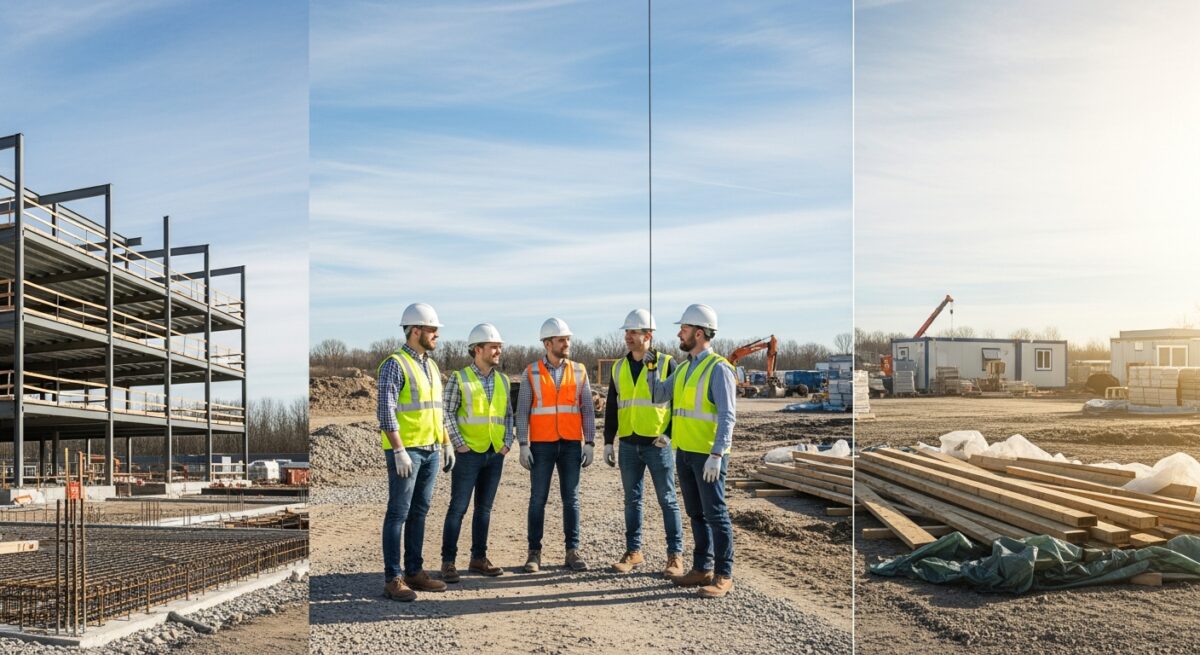
If you have ever watched a large building rise from an empty lot and wondered who orchestrates the entire process, the answer is often a construction manager. These professionals turn blueprints into reality by coordinating teams, budgets, timelines, and safety protocols. The path to this career usually begins with a bachelor’s in construction management. This article serves as a bachelor degree in construction management guide, explaining what the degree involves, who it is for, and how it can lead to a stable, well-paying career. By the end, you will understand why this credential is a strong investment for anyone who enjoys leadership, problem-solving, and tangible results.
What Is a Bachelor’s in Construction Management?
A bachelor’s in construction management is a four-year undergraduate degree that blends business principles, engineering fundamentals, and hands-on project management skills. Unlike a pure engineering degree, which dives deep into technical design, this program focuses on the management side of construction. Students learn how to read blueprints, estimate costs, manage labor, ensure safety compliance, and communicate with architects, clients, and subcontractors.
Most programs award a Bachelor of Science (BS) in Construction Management, though some offer a Bachelor of Applied Science (BAS) or a Bachelor of Science in Construction Science. The curriculum typically includes courses in construction methods, materials, structural systems, building codes, project scheduling, and contract administration. Many programs also require a capstone project or an internship, giving students real-world experience before graduation.
This degree is designed for individuals who want to work on active construction sites rather than behind a drafting table. If you like seeing your work take physical shape and thrive on coordinating moving parts, this field offers a rewarding mix of desk-based planning and on-site leadership.
Core Curriculum and Skills You Will Gain
A construction management degree covers a broad range of topics to prepare you for the diverse challenges of the industry. Below are the typical subject areas you can expect to study.
- Construction Methods and Materials: Understand how different materials (concrete, steel, wood) behave and how to select them for various projects. You also learn about foundation systems, framing, and finishing techniques.
- Project Management and Scheduling: Learn to use software like Microsoft Project or Primavera P6 to create timelines, allocate resources, and track progress. This is the backbone of delivering projects on time and within budget.
- Cost Estimation and Budgeting: Develop skills to calculate labor, material, equipment, and overhead costs. Accurate estimates prevent financial overruns and keep projects profitable.
- Building Codes and Safety Regulations: Study OSHA standards, local building codes, and environmental regulations. Safety is non-negotiable in construction, and managers must enforce compliance.
- Contracts and Business Law: Learn how to read and negotiate contracts, handle change orders, and resolve disputes. Legal knowledge protects you and your employer from costly litigation.
- Communication and Leadership: Courses often include team management, conflict resolution, and client presentation skills. You will learn how to motivate crews and maintain clear communication across all stakeholders.
Beyond these technical skills, a bachelor’s in construction management sharpens your ability to think critically under pressure. You will practice making decisions when timelines shift, budgets tighten, or weather delays occur. This combination of hard and soft skills makes graduates highly employable across residential, commercial, industrial, and infrastructure sectors.
Why Accreditation Matters
When selecting a program, look for accreditation from the American Council for Construction Education (ACCE) or the Accreditation Board for Engineering and Technology (ABET). Accredited programs meet industry standards and often lead to better job prospects. Many employers prefer graduates from ACCE-accredited schools because the curriculum aligns with current industry practices. Additionally, some states require a degree from an accredited program to qualify for a contractor’s license. If you plan to pursue professional certifications later, such as the Certified Construction Manager (CCM) credential, an accredited degree is often a prerequisite.
Who Should Pursue This Degree?
The construction management degree is ideal for people who enjoy a mix of office and field work. You might be a good fit if you have strong organizational skills, can communicate clearly with diverse groups, and do not mind solving problems on your feet. The work can be fast-paced and stressful during crunch times, but it also offers a deep sense of accomplishment when a project is completed safely and on schedule.
This degree also suits career changers. If you have a background in trades (carpentry, electrical, plumbing) and want to move into a supervisory role, a bachelor’s in construction management can bridge that gap. Many programs offer evening, weekend, or online formats to accommodate working adults. For example, online degree options allow you to earn your degree while continuing to gain field experience. This flexibility is a major advantage for those who cannot pause their income to attend classes on campus.
Career Paths and Salary Potential
A bachelor’s in construction management opens doors to several career paths. The most common role is construction manager, but graduates also work as project engineers, estimators, schedulers, safety managers, or field supervisors. With experience, you can advance to senior project manager, director of construction, or even start your own contracting firm.
According to the U.S. Bureau of Labor Statistics, the median annual wage for construction managers was over $100,000 in 2023. However, salaries vary by location, experience, and project type. Managers working on large commercial or industrial projects tend to earn more than those in residential construction. The job outlook is strong as well, with employment projected to grow faster than the average for all occupations. This growth is driven by population increases, infrastructure upgrades, and the need to replace retiring workers.
Beyond financial rewards, construction management offers variety. No two projects are the same. One month you might oversee a hospital renovation; the next, you could manage a highway bridge replacement. This variety keeps the work engaging and allows you to build a diverse portfolio of experience.

Online vs. On-Campus Programs
Many universities now offer a bachelor’s in construction management online, making the degree accessible to students who live far from campus or work full-time. Online programs deliver the same curriculum as on-campus versions, often through recorded lectures, live discussions, and virtual simulations. Some programs require brief on-site residencies for hands-on labs, but pure online options exist as well.
When choosing between online and on-campus, consider your learning style and schedule. Online programs offer flexibility but demand strong self-discipline. On-campus programs provide more direct interaction with professors and peers, which can help with networking and mentorship. Both paths can lead to the same career outcomes, provided the program is accredited and reputable.
How to Choose the Right Program
With hundreds of options available, selecting the right construction management degree requires careful research. Start by checking accreditation. Next, review the curriculum to ensure it covers areas you find interesting, such as sustainable construction, BIM (Building Information Modeling), or heavy civil construction. Look for programs that offer internship placements or cooperative education opportunities, as these provide valuable experience and often lead to job offers.
You should also consider the faculty. Professors with industry experience bring real-world case studies and contacts into the classroom. Finally, compare costs and financial aid options. Community colleges sometimes offer associate degrees that transfer into a bachelor’s program, lowering overall tuition. Use resources like DegreeOnline.Education to compare programs side by side and read reviews from current students and alumni.
Frequently Asked Questions
Is a construction management degree worth it? Yes, for most people. The median salary is high, job growth is strong, and the degree qualifies you for leadership roles that are not accessible with only a high school diploma or trade experience.
Can I get a construction management job without a degree? It is possible but harder. Some managers rise from the trades after years of experience, but many employers now require a bachelor’s degree for management positions. A degree also makes you more competitive for promotions.
How long does it take to complete a bachelor’s in construction management? Typically four years of full-time study. Accelerated programs may take as little as three years, while part-time or online students often take five to six years.
What is the difference between construction management and civil engineering? Civil engineers focus on design and technical calculations. Construction managers focus on execution, budgets, schedules, and team coordination. The two roles work closely together but require different skill sets.
Do I need to be good at math? Basic algebra, geometry, and some statistics are helpful, but you do not need advanced calculus. Most programs require college-level math but not engineering-level mathematics.
Earning a bachelor’s in construction management is a practical, forward-looking investment in your career. The degree equips you with the skills to lead complex projects, manage diverse teams, and navigate the financial and legal aspects of construction. Whether you are a recent high school graduate or a seasoned tradesperson looking to move up, this credential can open doors to stable, well-paying jobs with room for growth. Start by researching accredited programs that fit your lifestyle and budget, and take the first step toward becoming the person who turns blueprints into buildings.