Music has a unique ability to reach people in ways that words often cannot. For those who have experienced the emotional shift of a favorite song or the calming effect of a melody, the therapeutic power of music is undeniable. Music therapy harnesses this power through evidence-based clinical practice, and the demand for qualified professionals is growing. If you feel called to this rewarding field but need flexibility to balance work, family, or other commitments, a music therapy degree online program can open the door. This guide will walk you through everything from accreditation and clinical training to career outcomes and financial aid, so you can decide if an online path is right for you.
Online education has evolved dramatically, and music therapy is no exception. While this field requires substantial hands-on clinical experience, the didactic coursework, theoretical foundations, and even some observation hours can be completed online. For adult learners and career changers, this flexibility is a game changer. Instead of uprooting your life to attend a campus-based program, you can study from anywhere with a reliable internet connection. As you explore your options, you will find that music therapy degree online programs combine rigorous academics with supervised practicum placements in your local community, offering the best of both worlds.
What Is Music Therapy and What Does a Degree Involve?
Music therapy is a health profession that uses music interventions to address physical, emotional, cognitive, and social needs. A board-certified music therapist (MT-BC) works with clients of all ages in hospitals, schools, rehabilitation centers, and private practice. The degree itself is not just about playing instruments; it is an interdisciplinary study of psychology, anatomy, music theory, and clinical methods. You will learn how to assess clients, design interventions, and document progress, all while building a deep understanding of how music affects the brain and body.
An online music therapy degree typically leads to a Bachelor of Music Therapy or a Master of Arts in Music Therapy. The undergraduate path is the most common entry point, as it includes the required coursework and clinical hours for board certification. Graduate programs are designed for those who already hold a bachelor’s degree, either in music therapy (for advanced standing) or in a related field (for those seeking a second degree). Whichever level you choose, you will study subjects like music therapy principles, therapeutic relationships, research methods, and psychopathology. You will also complete extensive practical training, which we will discuss in detail shortly.
Accreditation and Certification: The Non-Negotiables
When researching online music therapy degree programs, accreditation is your first filter. In the United States, the American Music Therapy Association (AMTA) approves degree programs, and the Certification Board for Music Therapists (CBMT) administers the board certification exam. Without graduating from an AMTA-approved program, you cannot sit for the exam, and without MT-BC credential, you cannot practice as a professional music therapist. So, before you fall in love with a program, verify its AMTA status. This is not a detail to overlook; it is the foundation of your career.
Regional accreditation of the university itself is equally important. Regional accreditation ensures that your credits transfer and that your degree is recognized by employers and other institutions. It also determines your eligibility for federal financial aid. A program might be approved by AMTA but offered by a non-regionally accredited institution, which would be a red flag. Always look for both seals of approval. For a deeper look at how accreditation affects your choices, you might find our guide on Christian counseling degree online programs helpful, as it covers similar accreditation considerations in a related helping profession.
Clinical Training: The Heart of the Matter
The most common question about music therapy degree online programs is how clinical training works. The answer is that programs use a hybrid model. You complete your coursework online, but you also complete practicum experiences in your local area. The AMTA requires a certain number of supervised clinical hours, typically around 1,200 for undergraduate students. These hours are spread across multiple practicum placements and a full-time internship of 6 to 9 months. The online program’s clinical coordinator will work with you to identify approved sites near you, and a local music therapist will supervise your work.
This arrangement actually has a hidden benefit. Because you are not tied to a university’s local network, you may have the opportunity to gain experience in a wider variety of settings. You can choose a hospital, a school for children with autism, a hospice center, or a community mental health clinic. The key is to be proactive and communicative with your program’s clinical team. They are there to support you, but you must advocate for your own learning and seek out placements that align with your career goals. Many students find that this local immersion makes them more confident and well-rounded clinicians.
Choosing the Right Program for Your Goals
With a growing number of music therapy degree online programs, how do you narrow down your choices? First, decide on your level of education. If you are just starting out, a bachelor’s degree is your path. If you already have a bachelor’s in another field, look for an equivalency program or a master’s degree that accepts non-music majors. These programs are often called “Master’s in Music Therapy for Non-Music Majors” or “Equivalency Plus Master’s” tracks. They combine undergraduate prerequisites with graduate-level coursework, allowing you to earn your credential in about two to three years of full-time study.
Next, consider the program’s specializations. Some schools emphasize mental health, while others focus on medical music therapy, neurologic music therapy, or community music. Your choice should align with the population you want to serve. For example, if you dream of working with veterans with PTSD, a program with a strong trauma-informed care component is essential. If you love working with older adults, look for coursework in gerontology and end-of-life care. Here are a few other factors to weigh:
- Faculty expertise: Are the professors active clinicians and researchers? Do they publish and present at conferences?
- Technology platform: Is the online learning platform user-friendly? Are synchronous (live) classes offered, or is it all asynchronous?
- Student support: Is there a dedicated advisor for online students? Are there virtual office hours and social events?
- Cost and financial aid: Compare tuition rates and fees. Are there scholarships specifically for music therapy students?
- Graduation and certification pass rates: High pass rates on the board exam are a strong indicator of program quality.
After you have a shortlist, schedule informational interviews with program directors. Ask them about their clinical placement process and how they support out-of-state students. This personal connection can give you a sense of the program’s culture and responsiveness.
The Online Learning Experience: What to Expect
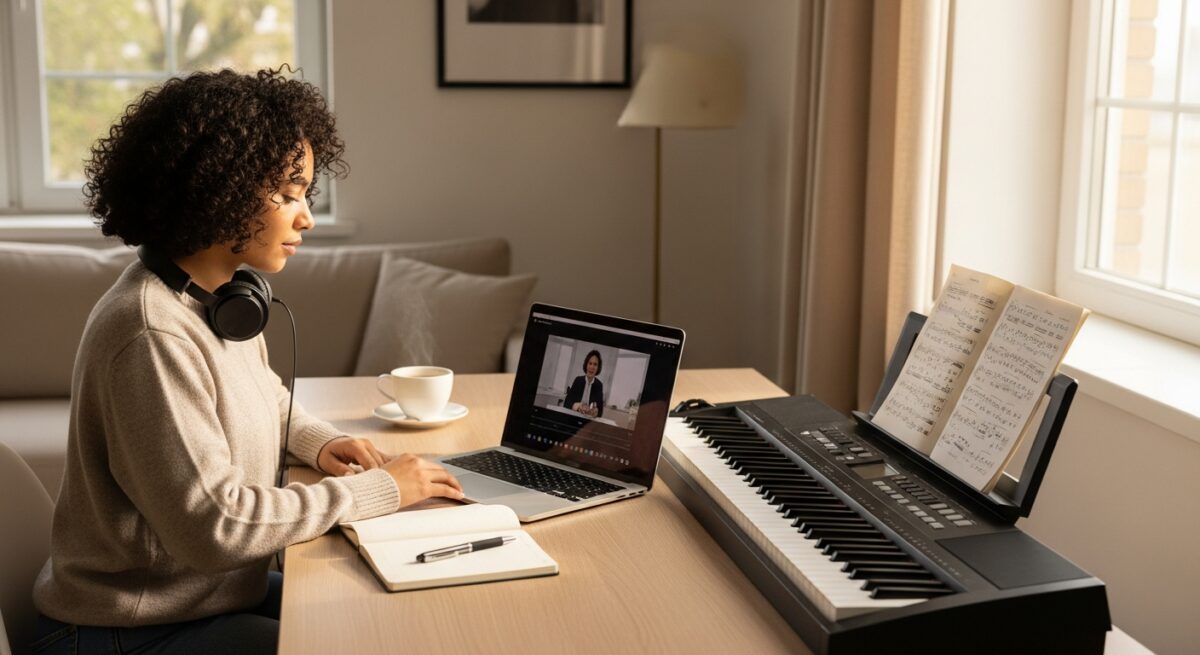
Online learning is not easier than campus-based study; it is simply more flexible. In a music therapy program, you will still have deadlines, group projects, and rigorous exams. The difference is that you will manage your time more independently. Most programs offer asynchronous lectures, which means you can watch recorded videos and complete assignments on your own schedule. However, some courses may require live sessions for discussions, guest lectures, or virtual lab demonstrations. You will need a reliable computer, a good internet connection, and a quiet space to study.
One of the surprising joys of an online music therapy degree is the diversity of your cohort. You will study alongside people from different states, countries, and professional backgrounds. This diversity enriches class discussions and expands your professional network. You will also have the chance to practice virtual therapy skills, which are increasingly valuable in the telehealth era. Many programs now teach students how to conduct music therapy sessions via video conferencing, a skill that will make you more marketable after graduation.

Career Opportunities and Salary Outlook
With an online music therapy degree, your career options are broad. Music therapists work in hospitals (on units like oncology, pediatrics, and psychiatry), in schools (as part of special education teams), in nursing homes, in rehabilitation centers, in private practice, and even in corporate wellness programs. The U.S. Bureau of Labor Statistics does not track music therapists separately, but the broader category of recreational therapists is projected to grow by 4% from 2023 to 2033, which is about average. The median annual wage for recreational therapists was $51,130 in May 2023, but music therapists in hospital settings or in private practice often earn more, especially with a master’s degree.
The demand for music therapy services is particularly strong in areas like autism treatment, dementia care, and mental health support. As more research demonstrates the clinical efficacy of music interventions, hospitals and schools are increasingly hiring board-certified therapists. If you are willing to be an advocate for your profession and market your services, you can build a thriving practice. Many music therapists combine part-time positions at multiple facilities to create a full-time schedule, which also offers variety and professional satisfaction.
Financial Aid and Making It Affordable
The cost of a music therapy degree online can range from $300 to $600 per credit hour at public universities, and higher at private institutions. A bachelor’s degree might cost anywhere from $40,000 to $100,000 in total tuition, but financial aid can significantly reduce this burden. You should start by filling out the Free Application for Federal Student Aid (FAFSA) to see if you qualify for grants, loans, and work-study. Many online students are eligible for federal aid, even if they study part-time.
Beyond federal aid, look for scholarships from the American Music Therapy Association, local music clubs, and the university itself. Some employers offer tuition reimbursement if you are already working in a related healthcare or education field. Also, consider a tuition payment plan to spread out costs, and be sure to factor in the cost of required technology, such as a good laptop and possibly a webcam for telehealth practice. For more strategies on financing your education, visit CollegeDegree.School for comprehensive resources on scholarships, grants, and loan repayment options.
Licensure and State Requirements
While the MT-BC credential is the national standard, some states have additional licensure requirements for music therapists. For example, Nevada, Wisconsin, and North Dakota have state licensure laws, and others are in the process of adopting them. Before you enroll, check the requirements in the state where you plan to practice. Most state licenses require the MT-BC exam, but some may also require a background check, jurisprudence exam, or continuing education credits. Online programs should prepare you to meet these requirements, but you must take the initiative to verify them.
If you live in a state without specific music therapy licensure, you can still practice with your MT-BC credential. However, it is wise to stay informed about legislative changes. Professional organizations like AMTA and your local music therapy association can keep you updated. They also offer networking events, conferences, and job boards that are invaluable during your job search.
Frequently Asked Questions
Can I really become a music therapist entirely online?
Yes, you can complete the academic portion of your degree online, but you will also need to complete supervised clinical hours in your local area. This hybrid model is the standard for online music therapy programs. You will not be able to complete the clinical requirements from your living room, but you do not have to relocate to a university campus to do them.
How long does it take to earn an online music therapy degree?
A bachelor’s degree typically takes four years of full-time study, but online students often take longer if they are working. An equivalency or master’s degree for those with a prior bachelor’s can take two to three years full-time. Part-time options can extend this to four or five years. Your program’s academic advisor can help you map out a timeline that fits your life.
What are the prerequisites for a master’s in music therapy online?
For a master’s in music therapy, you generally need a bachelor’s degree in any field, but you must also complete prerequisite coursework in music therapy, psychology, and music (such as music theory, history, and applied lessons). Some programs offer a combined equivalency and master’s track that covers these prerequisites. You will also need to demonstrate a certain level of proficiency on your primary instrument and pass an audition, which for online programs can be done via video.
Will an online degree be respected by employers?
Yes, as long as the program is accredited by AMTA and the university is regionally accredited. Employers care about your board certification and clinical skills, not the delivery format of your degree. In fact, the flexibility required to complete an online degree often demonstrates strong self-discipline and time management, which are assets in any clinical setting.
Do I need to be a skilled musician to be a music therapist?
Yes, you need to be a competent musician on at least one instrument (usually piano or guitar) and have good vocal skills. You will use these skills to facilitate sessions. However, you do not need to be a concert performer. Your focus is on using music as a therapeutic tool, not on perfect performance. Programs will assess your musicianship during the admissions process and help you refine your skills throughout your studies.
Your Next Steps Toward a Meaningful Career
Choosing to pursue a music therapy degree online is a significant commitment, but it is one that can lead to a deeply fulfilling career. You have the chance to combine your love of music with a genuine desire to help others heal. As you move forward, remember to prioritize accreditation, seek out a program that aligns with your clinical interests, and build a strong support network of faculty, peers, and local supervisors. The path is challenging, but the reward of seeing a client smile, connect, and communicate through music is immeasurable. Start exploring your options today, and take the first step toward a profession where your talent truly makes a difference.