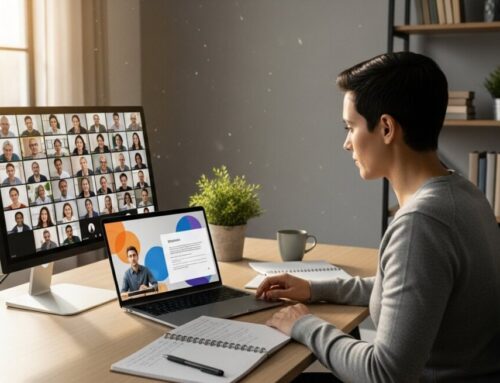
For millions of working professionals, parents, and career changers, the traditional college schedule is an impossible barrier. The rigid class times, physical campus requirements, and semester-long commitments simply do not fit the realities of a busy, demanding life. This is where the modern concept of a flexible online college transforms from an alternative into the only viable path forward. It represents a fundamental shift in educational delivery, designed not just to impart knowledge but to adapt to the individual. This model prioritizes your career, your family, and your personal rhythm, offering accredited, respected degrees through a framework built on accessibility, self-paced learning, and technological innovation. The goal is no longer to make your life fit school, but to make school fit seamlessly into your life.
The Core Components of a Truly Flexible Online Program
Not all online degrees are created equal. The term “online” can simply mean recorded lectures posted to a portal, which offers little more flexibility than a correspondence course. A genuinely flexible online college program is architected around several key pillars that work in concert to empower the student. The first is asynchronous learning. This is the non-negotiable foundation. Coursework, lectures, discussions, and materials are accessible 24/7 from any location with an internet connection. There are no required login times for live sessions, though they may be offered optionally. This allows a nurse on night shift, a parent managing bedtimes, or a professional with unpredictable travel to engage with their education on their own schedule.
The second pillar is competency-based education (CBE). This progressive model decouples learning from seat time. Instead of progressing based on a semester calendar, you advance by demonstrating mastery of specific skills and knowledge areas. If you enter a program with prior experience or knowledge, you can potentially test out of certain competencies and accelerate your time to degree. This approach values what you know, not how long you spent learning it, making it exceptionally efficient for adult learners with professional backgrounds. For a deeper exploration of this model, our guide on self-paced online college courses details how this modern path operates.
A third critical component is rolling admissions and multiple start dates. Flexible programs understand that life doesn’t align neatly with Fall and Spring semesters. They offer frequent start dates, often monthly or quarterly, so you can begin your educational journey almost immediately after making the decision, maintaining momentum and motivation.
Who Benefits Most from This Learning Model?
The adaptable nature of a flexible online college serves a diverse demographic, but it is particularly transformative for specific groups. Working professionals seeking career advancement or a pivot represent the largest cohort. They need to gain new credentials without sacrificing their current income or professional standing. The ability to study after hours or during lunch breaks makes this possible. Military personnel and their families, who face frequent relocations and unpredictable schedules, find immense value in a program that moves with them, unaffected by geographic change.
Parents, especially those with young children or caregiving responsibilities, benefit enormously. Education can be woven into nap times, school hours, or evenings, without the need for costly and complex childcare arrangements for fixed class times. Furthermore, individuals in remote or rural areas, who may be hours from the nearest physical campus, gain access to the same quality of education as those in major metropolitan areas. Finally, self-directed learners who thrive when controlling the pace and order of their study find this model intellectually freeing and more effective than traditional, instructor-paced formats.
Evaluating Accreditation and Program Quality
Flexibility should never come at the expense of quality or legitimacy. The single most important factor in evaluating any online degree program, flexible or otherwise, is accreditation. Regional accreditation is the gold standard in the United States and is non-negotiable for ensuring your degree will be respected by employers, other academic institutions, and licensing bodies. Always verify a school’s accreditation status directly with the accrediting agency, not just the school’s website.
Beyond accreditation, assess the program’s structure and support services. A high-quality flexible program will have:
- A robust, intuitive learning management system (LMS) that is mobile-friendly.
- Dedicated academic advisors who understand the unique needs of online, non-traditional students.
- Proactive technical support available outside standard business hours.
- Access to online libraries, writing centers, and tutoring services.
- Strong career services that can be accessed virtually, including resume reviews and virtual networking events.
Investigate the faculty credentials. Instructors should be both experts in their field and trained in effective online pedagogy. The interaction design is also crucial: look for programs that foster collaboration through discussion forums, group projects using digital tools, and opportunities for substantive feedback, even in an asynchronous environment.
Balancing Flexibility with Structure and Discipline
The freedom offered by a flexible online college requires a reciprocal commitment to self-discipline and time management. Without the external structure of weekly class meetings, the responsibility for progress shifts entirely to the student. Success in this environment hinges on creating personal structure. This begins with dedicated time blocking. Treat your study time like a critical business meeting: schedule it on your calendar, protect it from interruptions, and communicate its importance to those around you. Even 30-60 minutes of focused study per day is far more effective than sporadic, marathon sessions.
Setting and tracking micro-goals is essential. Instead of focusing on “finish the course,” break it down: “complete the reading for module one by Wednesday,” “post to the discussion forum by Friday,” “draft the first section of the paper by Sunday.” Using a digital planner or project management app can help visualize these tasks and deadlines. Furthermore, actively engage with the online community. While interactions are asynchronous, participating in discussion boards, forming virtual study groups, and communicating regularly with your instructor creates a sense of connection and accountability that combats the isolation sometimes felt in distance learning. For those seeking clear, step-by-step advice on navigating these choices, online degree guidance can provide a valuable framework for decision-making.
Financial Considerations and Aid for Flexible Programs
The financial model of flexible online degrees can offer distinct advantages. Many programs charge by the credit hour or, in competency-based models, by the subscription term (e.g., a six-month period), allowing you to control costs by accelerating your pace. This can lead to significant overall savings compared to traditional per-semester tuition. It is imperative to understand the full cost structure: tuition, technology fees, resource fees, and any costs for assessment or prior learning evaluation.
Financial aid is typically available for accredited flexible online programs. The process begins with completing the Free Application for Federal Student Aid (FAFSA). Federal loans, grants, and work-study funds can often be applied. Additionally, explore employer tuition reimbursement programs, which are a perfect fit for working adults in flexible degree tracks. Many schools also offer scholarships specifically for online or adult learners. Military benefits, including the GI Bill, are commonly accepted. A key step is to speak directly with the financial aid office of your prospective school to outline all options specific to their flexible program format.
Frequently Asked Questions
Are flexible online degrees viewed as legitimate by employers?
Yes, when earned from a regionally accredited institution. Employer perception of online degrees has improved dramatically, especially when the awarding university is well-known. The key is the accreditation, not the delivery method.
How fast can I complete a flexible degree?
Completion time varies widely based on the program structure (competency-based vs. traditional course-based), how many credits you transfer in, and the time you can dedicate. Some accelerated programs allow dedicated students to finish a bachelor’s degree in 2-3 years, while others may follow a more standard four-year timeline paced part-time.
Can I transfer credits from previous college experience?
Most flexible online colleges have generous transfer policies, often accepting credits from other accredited institutions, and may offer credit for professional training, military service, or prior learning assessments. This is a major advantage for adult learners.
What technology do I need to succeed?
At a minimum, a reliable computer, high-speed internet, and basic software (like a word processor). Specific programs may have additional requirements. Strong digital literacy skills are also important for navigating the online learning platform.
Is there any required on-campus component?
Most fully online, flexible degrees have no on-campus requirements. However, some programs, particularly in certain healthcare or science fields, may require in-person clinicals, labs, or short residencies. This is always disclosed upfront.
The evolution of the flexible online college represents more than a technological convenience, it is a democratization of higher education. It acknowledges that expertise, ambition, and life experience are not confined to traditional student timelines. By choosing a program that intentionally designs for flexibility, you are not settling for a lesser education, you are investing in an education that respects the entirety of your life. The path requires initiative and organization, but the reward is a respected credential earned on your terms, paving the way for advancement without requiring you to pause your world to get it.