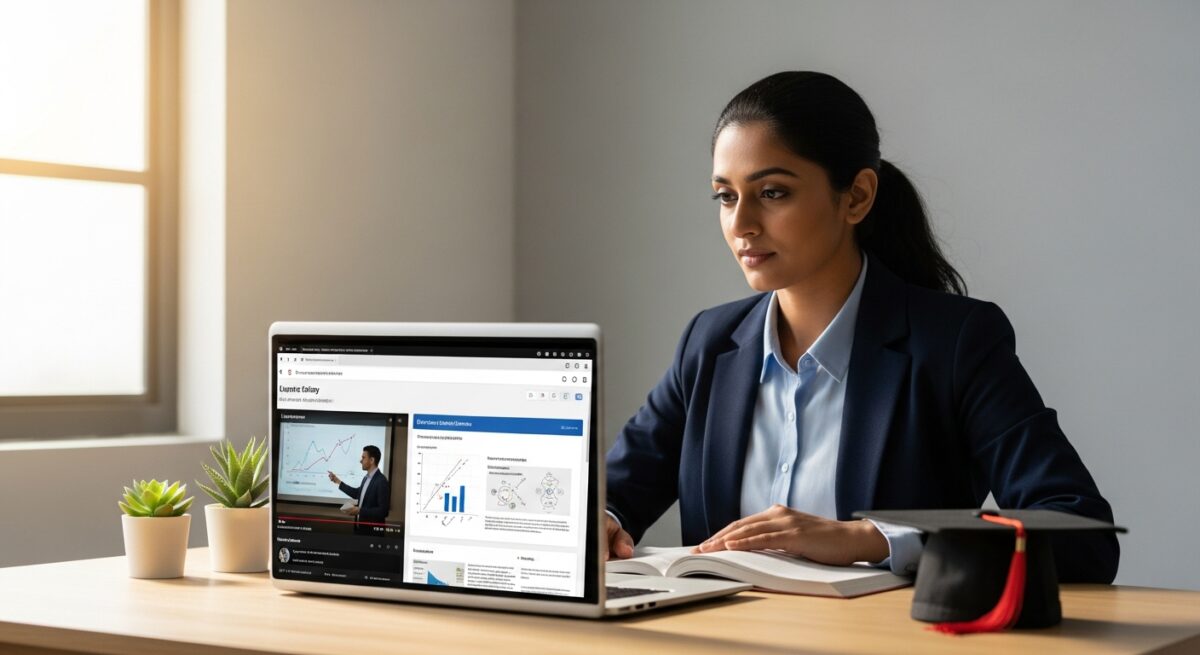
The landscape of higher education has fundamentally shifted. Today, pursuing a degree or expanding your expertise no longer requires relocating or putting your life on hold. Accredited online university courses offer a legitimate, flexible, and powerful pathway to career advancement and personal achievement. However, the sheer volume of programs and institutions can be overwhelming. Understanding how to identify truly valuable, accredited online uni courses is the critical first step in an educational journey that can transform your professional trajectory without compromising your current responsibilities.
The Paramount Importance of Accreditation in Online Learning
When evaluating online university courses, accreditation is not just a checkbox, it is the cornerstone of value and recognition. Accreditation is a voluntary, independent review process conducted by external agencies to ensure that an institution or specific program meets established standards of quality and rigor. For the student, it acts as a vital consumer protection. An accredited degree signifies that your education meets the benchmarks respected by employers, other academic institutions, and professional licensing bodies. Enrolling in a non-accredited program can lead to a credential that employers disregard, credits that won’t transfer, and ineligible for federal financial aid, representing a significant waste of time and resources.
There are two primary types of accreditation to understand: institutional and programmatic. Institutional accreditation applies to the entire university or college and is granted by regional or national accrediting bodies recognized by the U.S. Department of Education. Regional accreditation is generally considered the most prestigious and widely accepted standard for academic institutions. Programmatic or specialized accreditation applies to specific departments, schools, or programs within an institution, such as business (AACSB), engineering (ABET), nursing (CCNE), or education (CAEP). When researching online uni courses, especially for regulated professions, verifying both institutional and relevant programmatic accreditation is essential.
Exploring the Spectrum of Accredited Online Learning Options
Accredited online education is not a monolith. It encompasses a diverse array of formats designed to meet different learning styles, schedules, and goals. Understanding these options allows you to select the model that best aligns with your life and objectives. The traditional model is the asynchronous course, where you access lectures, readings, assignments, and discussions on your own schedule within weekly deadlines. This format offers maximum flexibility for working professionals or parents. Synchronous courses, on the other hand, require live online attendance at scheduled times, mimicking a traditional classroom environment and offering real-time interaction.
Beyond course delivery, the program structures themselves vary. Full online degree programs allow you to earn an entire associate, bachelor’s, master’s, or doctoral degree remotely. Many reputable public and private universities now offer these comprehensive options. For those not seeking a full degree, certificate programs provide focused, graduate or undergraduate-level training in a specific skill area, such as data analytics, project management, or cybersecurity, often in less than a year. Individual online university courses can also be taken for professional development, to explore a new field, or to fulfill prerequisite requirements. Furthermore, competency-based education (CBE) models, offered by some accredited institutions, allow you to progress by demonstrating mastery of skills rather than accumulating credit hours, potentially accelerating your time to completion.
To make an informed decision, consider the following key aspects of any program you research:
- Learning Management System (LMS): The platform (like Canvas, Blackboard, or Moodle) should be intuitive and reliable. Explore demo courses if available.
- Student Support Services: Robust online access to academic advising, tutoring, career services, and technical support is crucial for success.
- Faculty Credentials and Engagement: Instructors should be qualified experts who are trained and active in facilitating online learning.
- Interaction and Community: Look for programs that foster peer-to-peer and student-instructor interaction through discussions, group projects, or virtual office hours.
A Strategic Framework for Selecting Your Program
Choosing the right accredited online learning option requires a systematic approach. Begin by conducting a thorough self-assessment. Clarify your primary goal: is it a career change, a promotion within your current field, or acquiring a specific skill set? Your goal will dictate the level and type of credential you need. Next, research is paramount. Utilize the U.S. Department of Education’s Database of Accredited Postsecondary Institutions and Programs to verify institutional accreditation. For programmatic accreditation, visit the websites of the relevant specialized accrediting bodies.
When comparing specific online university courses and programs, create a comparison checklist. Key factors should include total cost (tuition, fees, materials), transfer credit policies (if applicable), course length and format, and technological requirements. Reach out to admissions counselors with detailed questions. Inquire about student outcomes, such as graduation rates, job placement statistics, and alumni networks. Speaking with current students or alumni can provide invaluable, unfiltered insights into the actual student experience. For a broader perspective on comparing academic tracks and institutional offerings, our guide on E-Degree Learning Options provides a detailed framework for evaluation.
Maximizing Success in the Virtual Classroom
Success in accredited online uni courses demands a different set of strategies compared to a traditional campus setting. It requires a high degree of self-discipline, time management, and proactive communication. The flexibility is a gift, but without structure, it can become a pitfall. The first step is to establish a dedicated study space and a consistent schedule. Treat your online course time like a fixed appointment. Break down larger assignments into smaller, manageable tasks and set personal deadlines ahead of the official ones. Actively use digital calendars and project management tools to stay organized.
Engagement is the engine of online learning. In the absence of a physical classroom, you must intentionally create presence. Participate actively in discussion forums, not just to meet requirements, but to deepen understanding through dialogue. Don’t hesitate to reach out to instructors with questions via email or during virtual office hours. Forming or joining virtual study groups can combat isolation and enhance learning through collaboration. Furthermore, take full advantage of all the digital resources your university provides, from online libraries and writing centers to tutorial services. Remember, in an online program, you are responsible for driving your educational experience. Proactively building relationships and utilizing available supports are non-negotiable habits for thriving in this environment. As you plan your academic journey, exploring comprehensive accredited online degree info can help you align your educational choices with long-term career pathways.
Addressing Common Questions About Online Accredited Courses
Prospective students often have specific concerns about venturing into online education. Here are answers to some of the most frequently asked questions.
Will my diploma say “online”?
In the vast majority of cases, no. The diploma or transcript from a reputable, accredited university typically does not distinguish between online and on-campus completion. You earn the same degree as on-campus students.
Are online degrees respected by employers?
The stigma around online degrees has diminished significantly, especially when earned from a regionally accredited institution with a strong reputation. Employers increasingly value the self-discipline, time-management, and technical skills demonstrated by successful online graduates. The key is the accreditation and reputation of the granting institution.
How do I manage the cost of online programs?
Financial aid options for accredited online programs are often identical to those for on-campus programs. Complete the Free Application for Federal Student Aid (FAFSA) to determine eligibility for federal grants, loans, and work-study. Many employers offer tuition reimbursement or assistance programs. Additionally, look for scholarships specifically designed for online or adult learners.
Can I transfer credits from online courses to another institution?
Transferability is almost entirely dependent on the accreditation of the institution where the credit was earned and the policies of the receiving institution. Credits from a regionally accredited online school are far more likely to transfer than credits from a nationally accredited or non-accredited school. Always consult with the admissions or registrar’s office of the target institution before assuming credits will transfer.
What technology do I need to succeed?
At a minimum, you will need a reliable computer (less than 5 years old is ideal), high-speed internet access, a webcam, and a microphone. Specific programs may have additional software requirements (e.g., statistical analysis software, design programs). Ensure your computer skills are sufficient for word processing, navigating the web, and using the institution’s learning platform.
The journey through accredited online university courses represents a strategic investment in yourself. By prioritizing accreditation, carefully selecting a program that fits your life and goals, and adopting the proactive strategies necessary for online success, you can unlock new career potential and achieve your educational objectives. The flexibility of online uni courses makes advanced learning accessible, but it is the quality assured by accreditation that makes it truly valuable. Your next career milestone may be just a well-chosen online program away.