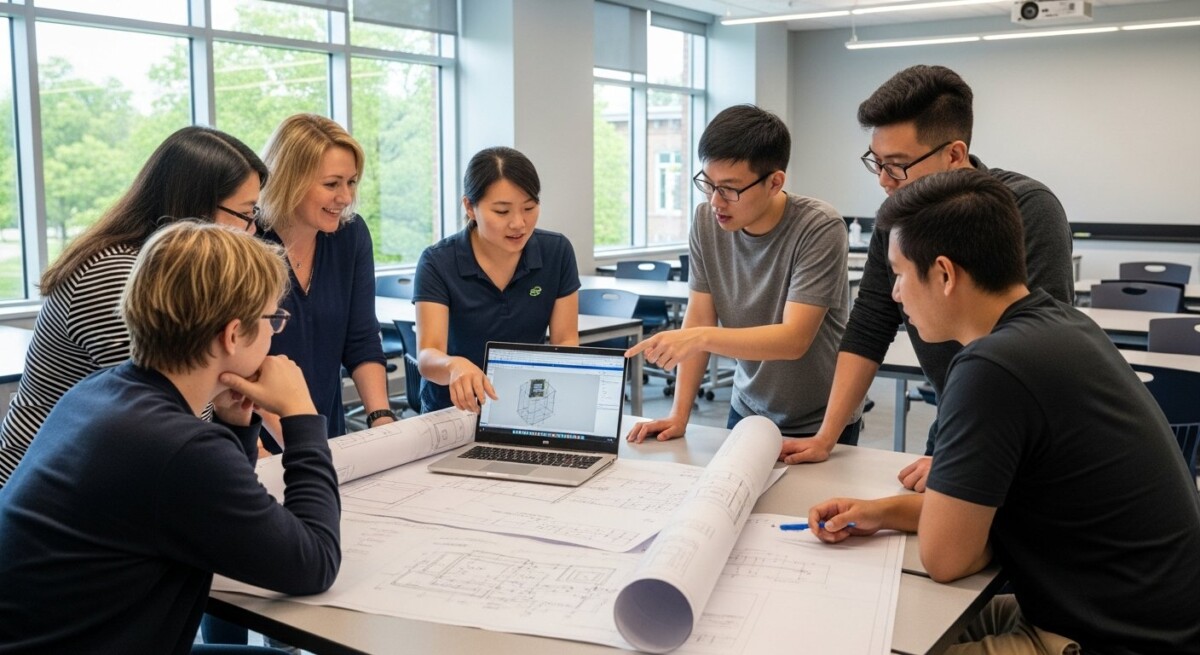
In today’s competitive job market, where specialized skills are paramount, many aspiring professionals seek a direct and efficient path into scientific fields. A science associate credential, often an Associate of Science (A.S.) degree, represents a powerful and strategic educational foundation. This two-year degree is far more than a simple stepping stone, it is a focused, career-oriented program designed to impart core scientific knowledge and technical skills. For individuals aiming to enter the workforce quickly, transition into a science-based career, or build a robust academic base for further study, this credential offers a compelling blend of efficiency, affordability, and relevance. It serves as a critical launchpad for roles in growing sectors like laboratory technology, healthcare support, environmental monitoring, and information technology.
Understanding the Science Associate Degree
A science associate credential is typically an Associate of Science degree conferred by community colleges, technical schools, and accredited online institutions. The curriculum is rigorously structured around mathematics and natural sciences (biology, chemistry, physics, geology) alongside general education requirements. Unlike an Associate of Arts (A.A.), which has a broader liberal arts focus, the A.S. is deliberately designed with a pre-professional or technical emphasis. This makes it an ideal choice for students with clear career objectives in STEM (Science, Technology, Engineering, and Mathematics) fields. The programs are often developed with input from industry advisors to ensure the coursework aligns with current workplace demands, providing graduates with immediately applicable skills.
The value of this credential lies in its dual-purpose design. Firstly, it prepares students for immediate entry-level employment. Secondly, it establishes a transferable academic record for those who plan to pursue a bachelor’s degree. Most A.S. programs are articulated with four-year institutions, meaning the credits are designed to transfer seamlessly into related bachelor’s programs, often allowing the student to enter as a junior. This creates a cost-effective pathway, as completing general education and introductory science courses at a community college is frequently more affordable than at a university.
Primary Career Paths and Opportunities
Holding a science associate credential opens doors to a variety of technical and support roles across multiple industries. These positions often serve as the essential backbone of research, healthcare, and technology operations. Graduates are not typically the lead researchers, but they are the skilled technicians who conduct the experiments, operate the sophisticated equipment, collect the data, and ensure processes run smoothly. This hands-on work is critical and in high demand.
Common job titles for A.S. holders include laboratory technician, chemical technician, environmental science technician, biological technician, veterinary technician, radiology technician, computer support specialist, and engineering technician. In healthcare, for example, an A.S. in a field like radiologic technology leads directly to licensure and employment. In environmental science, technicians monitor pollution, test water quality, and support conservation efforts. For those interested in the intersection of science and sustainability, an associate degree provides a direct entry point. Our guide on the Environmental Science Associate degree details how this specific credential can launch a career in this vital sector.
Beyond specific technical roles, the credential demonstrates to employers a foundational competency in scientific reasoning, quantitative analysis, and systematic problem-solving. These transferable skills are valuable in many contexts, from quality control in manufacturing to technical sales and support in pharmaceutical companies.
Benefits of Pursuing an Associate of Science Degree
Choosing to earn a science associate credential comes with a distinct set of advantages that align with modern educational and career goals. The benefits extend beyond the diploma itself, impacting financial planning, career trajectory, and personal flexibility.
- Time and Cost Efficiency: Completing a degree in approximately two years allows for a quicker entry into the workforce compared to a four-year program. This means incurring less student debt and beginning to earn a salary sooner. The per-credit cost at institutions offering A.S. degrees is often significantly lower than at four-year universities.
- Focused, Career-Relevant Curriculum: The program cuts directly to the core scientific and technical subjects needed for specific jobs. There is less emphasis on broad electives, allowing for deep skill development in a chosen area, from computer network management to clinical laboratory techniques.
- Flexibility and Accessibility: Countless community colleges and online schools offer A.S. programs, making this education accessible to a wide geographic and socioeconomic population. The rise of accredited online A.S. degrees has been a game-changer, enabling working adults and those with family obligations to pursue their education on a flexible schedule.
- A Low-Risk Pathway to a Bachelor’s Degree: For students unsure about committing to a four-year program or concerned about academic readiness, the A.S. provides a manageable first step. Successfully completing the associate degree builds confidence and a strong GPA, creating a solid portfolio for transfer applications. It also allows students to “test the waters” of a scientific discipline before dedicating more time and resources.
- Meeting Industry Demand: There is a persistent and growing need for skilled technical workers. Employers in STEM fields actively seek candidates with the practical, hands-on training that an A.S. degree provides, often filling middle-skill jobs that are crucial to innovation and operations.
These benefits collectively make the science associate credential a strategic investment. It reduces financial barriers, accelerates career launch, and provides multiple options for future advancement, whether directly into the job market or onward to higher education.
Choosing the Right Program and Specialization
Not all science associate degrees are identical. Selecting the right program requires careful consideration of your long-term goals, the program’s structure, and its reputation. The first decision point is specialization. Most A.S. degrees are offered in specific concentrations, which dictates the majority of your technical coursework.
Common specializations include:
- Biology / Life Sciences
- Chemistry
- Physics / Engineering Science
- Computer Science / Information Technology
- Mathematics
- Environmental Science
- Health Sciences (Pre-Nursing, Radiography, etc.)
Your choice should be guided by the career you envision. Research job postings for roles you find interesting and note the required or preferred degrees and skills. Next, investigate potential programs with a critical eye. The single most important factor is accreditation. Ensure the institution is accredited by a recognized regional or national accrediting agency. This is non-negotiable for credit transferability, federal financial aid eligibility, and employer recognition.
For students planning to transfer, the next crucial step is to verify articulation agreements. These are formal partnerships between the community college and specific four-year universities that guarantee the acceptance of your A.S. credits toward a particular bachelor’s degree. Meet with an academic advisor at both the community college and the target university to map out your course sequence. If you prioritize flexibility, investigate the quality and support services of online A.S. programs. Look for programs with interactive labs, strong instructor engagement, and career services tailored for online learners.
The Academic Journey and Key Components
Successfully navigating a science associate program demands dedication and a strategic approach to coursework. The typical 60-credit curriculum is divided into three main components: general education core, major prerequisite courses, and elective or specialization courses. The general education requirements usually include English composition, humanities, and social sciences, ensuring well-rounded communication and critical thinking skills. The core of the program, however, is the science and math sequence.
Students can expect to take college-level algebra, trigonometry, or calculus, along with a series of laboratory science courses. A biology major might take general biology, anatomy and physiology, and microbiology, each with a hands-on lab component. A chemistry-focused student will take general chemistry, organic chemistry, and quantitative analysis. These labs are where theoretical knowledge becomes practical skill, teaching students to use instruments, follow safety protocols, collect data, and write lab reports. Developing proficiency in these areas is essential for both workplace readiness and success in upper-division university courses.
Time management and seeking support are key to thriving. Utilize professors’ office hours, form study groups, and take advantage of campus tutoring centers, especially for challenging subjects like chemistry and physics. For online students, proactively engaging in discussion forums and virtual study sessions is vital. Treat your education like a professional commitment, setting a consistent schedule for studying and coursework completion.
Frequently Asked Questions
Is a science associate credential worth it for someone who already has a bachelor’s degree in a non-science field?
Absolutely. For career changers, an A.S. in a science field is an efficient way to gain the specific technical knowledge and credentials needed to pivot. It is often faster and more focused than pursuing a second bachelor’s degree.
Can I really get a good job with just an associate degree in science?
Yes. Many stable, well-paying technician roles specifically require an associate degree as the standard entry-level education. These jobs are critical in industries like healthcare, manufacturing, and research, and they offer a median salary that is competitive, especially when considering the lower educational debt burden.
How do online labs work for a science associate degree?
Accredited online programs have developed innovative solutions for lab requirements. These can include at-home lab kits with safe, curated materials and digital instruments, sophisticated virtual simulation software that replicates lab procedures, and short-term intensive residencies at a campus or partner location. These methods are designed to meet the same learning objectives as traditional labs.
What’s the difference between an A.S. and an A.A.S. (Associate of Applied Science)?
The A.S. is designed for transfer to a bachelor’s program, with a focus on academic theory. The A.A.S. is more narrowly focused on direct workforce training for a specific trade or technical job and its credits are often less transferable. Choose an A.A.S. if you are certain you will not pursue a bachelor’s degree.
What financial aid is available for an A.S. program?
Students in accredited programs are eligible for federal financial aid, including Pell Grants and student loans. Many states also offer grant programs for community college students. Always complete the Free Application for Federal Student Aid (FAFSA) and check with your school’s financial aid office for scholarships specific to STEM students.
The science associate credential stands as a testament to pragmatic and powerful career planning. It bridges the gap between ambition and action, providing a structured, respected, and efficient route into the scientific workforce or toward an advanced degree. By offering a blend of foundational theory, hands-on practice, and career-specific training, it equips graduates with the tools to contribute meaningfully from day one. In an era that values skilled technicians and logical problem-solvers, this two-year degree is not a compromise, it is a strategic and often optimal first step toward a fulfilling and sustainable career in the vast world of science.