Deciding where to get an online degree is one of the most significant educational and financial decisions you can make. It is not simply about picking a school from a list, it is about strategically aligning an institution’s offerings with your career goals, learning style, and life circumstances. The modern landscape of online education offers unprecedented choice, from large public universities to specialized private colleges and innovative competency-based programs. This guide moves beyond basic directories to provide a framework for evaluating your options, ensuring the degree you earn is not just convenient, but credible, valuable, and transformative for your future.
Understanding the Foundational Criteria for Selection
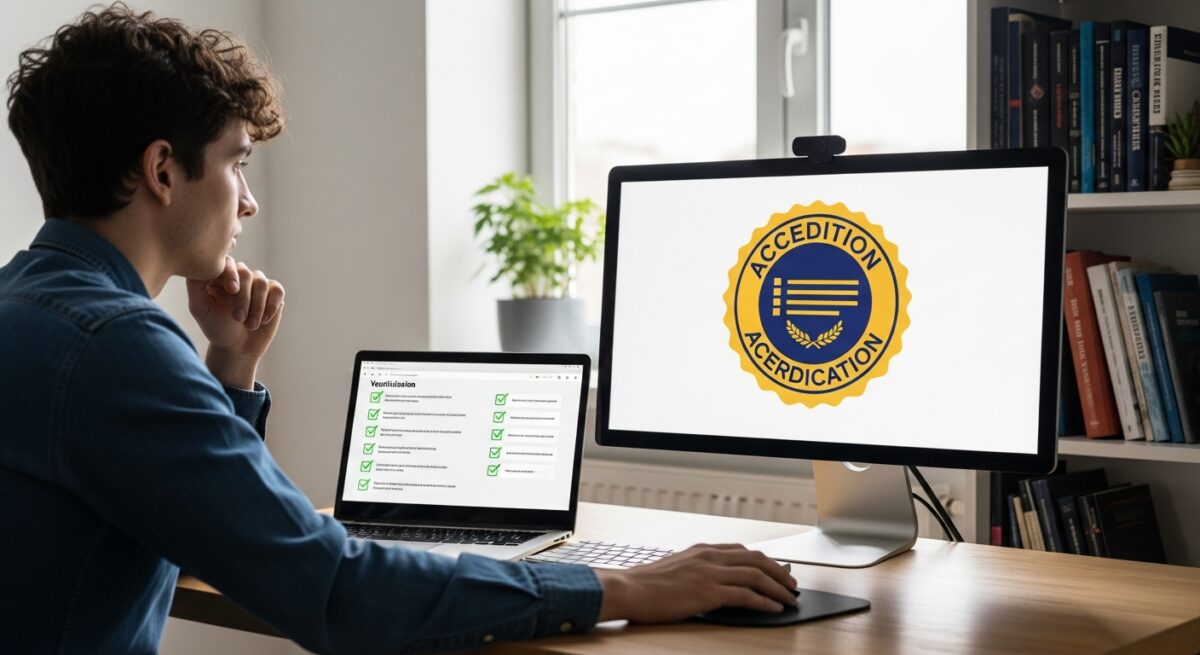
Before exploring specific types of institutions, you must establish non-negotiable criteria that will filter your options. The foremost of these is accreditation. This is the bedrock of educational quality and legitimacy. Regional accreditation is the gold standard in the United States, signifying that an institution meets rigorous standards for faculty, curriculum, and student support. Always verify accreditation status directly through the U.S. Department of Education’s database or the Council for Higher Education Accreditation (CHEA) website. A degree from a non-accredited institution may not be recognized by employers, other universities for transfer credits, or professional licensing boards.
Beyond accreditation, consider the program’s specific format and structure. Is it synchronous, requiring you to log in for live lectures at set times, or asynchronous, allowing you to complete coursework on your own schedule? Does it follow a traditional semester calendar or offer more frequent start dates? Furthermore, investigate the technology platform used. A user-friendly learning management system (LMS) like Canvas or Blackboard is crucial for a smooth experience. You should also assess the level of student support services offered virtually, including academic advising, tutoring, career counseling, and technical help. A strong online program replicates the support network of a physical campus.
Primary Sources: Where to Get Your Online Degree
The “where” encompasses several distinct types of providers, each with unique advantages. Your ideal choice depends heavily on your priorities, such as cost, name recognition, specialization, or speed.
Traditional Public and Private Non-Profit Universities
Many well-established public state universities and respected private non-profits now offer extensive online degree portfolios. These institutions often have a long history and strong regional or national reputations. The degree you earn is typically identical to the on-campus version, carrying the same weight on your resume. This path is excellent for those seeking the credibility of a known university name. However, it is important to note that out-of-state tuition can sometimes apply to online programs, though many schools now offer flat-rate online tuition. Examples include institutions like the University of Florida, Pennsylvania State University World Campus, and Arizona State University Online.
Online-First and For-Profit Universities
These institutions were built specifically for distance education. They often excel in flexibility, with multiple start dates per year, accelerated courses, and highly streamlined online student services. They can be particularly adept at serving working adults with tailored resources. The critical differentiator here is often the business model: non-profit versus for-profit. While there are reputable for-profit schools, it is essential to research their graduation rates, student loan default rates, and job placement statistics thoroughly. Always prioritize those with strong regional accreditation.
Competency-Based Education (CBE) Providers
For self-motivated learners, competency-based education represents a revolutionary approach to figuring out where to get an online degree. CBE programs, like those offered by Western Governors University (WGU) or Southern New Hampshire University’s College for America, allow you to progress by demonstrating mastery of skills and knowledge, not by time spent in a seat. If you have prior experience or can learn quickly, you can potentially complete a degree much faster and for less money. This model is highly efficient and career-focused, making it a powerful option for career-changers or professionals seeking advancement.
The Research and Evaluation Process
Knowing the types of schools is only the first step. You must now engage in active, critical research. Start by defining your goal with precision. Are you seeking a degree for a specific promotion, a career change into a licensed field like nursing or teaching, or broad intellectual growth? Your goal dictates the necessary accreditation, for instance, programmatic accreditation for fields like engineering, business (AACSB), or healthcare.
Next, create a comparison spreadsheet. For each program you consider, track the following key data points:
- Total estimated cost (tuition, fees, books) and financial aid availability.
- Admission requirements (GPA, test scores, prerequisites).
- Curriculum details and specializations or concentrations offered.
- Faculty credentials (look for instructors with both academic and real-world experience).
- Graduation rate and, if available, career outcomes data.
- Student-to-faculty ratio and descriptions of online student support.
Do not rely solely on the program’s marketing materials. Seek out third-party perspectives. Read student reviews on sites like GradReports or niche online learning forums. If possible, connect with current students or alumni on professional networks like LinkedIn to ask about their experiences. An often-overlooked step is to directly contact the program’s admissions or advisor office with your specific questions. Their responsiveness and depth of answers are a strong indicator of the support you will receive as a student. For those concerned about the potential isolation of online study, exploring programs with structured mentorship can be invaluable. In our guide on online degrees with mentorship, we explain how these supportive relationships are integrated into the learning experience.
Financial Considerations and Making Your Decision
The cost of an online degree varies wildly, from a few thousand dollars per year at some public institutions to premium prices at elite private schools. Your financial strategy should be a core part of your “where” decision. First, complete the Free Application for Federal Student Aid (FAFSA) to determine your eligibility for federal grants, loans, and work-study. Many employers offer tuition reimbursement or assistance programs, a benefit you should fully explore. Additionally, look for scholarships specifically for online or adult learners. Some programs offer payment plans or flat-rate tuition for full-time enrollment, which can aid in budgeting.
When comparing costs, look at the total program cost, not just the per-credit price. A slightly higher per-credit cost might be offset by a shorter time to completion or included resources like textbooks. Ultimately, your decision should balance several factors: total investment, return on investment (ROI) in terms of career advancement, the program’s alignment with your learning preferences, and the intangible feeling of confidence you have in the institution. Trust the thorough research you have conducted.
Frequently Asked Questions
Are online degrees respected by employers?
Yes, overwhelmingly so, provided the degree is from a regionally accredited institution. The stigma around online education has largely disappeared, especially after its widespread adoption in recent years. Employers primarily care about the accreditation and relevance of the skills you have gained.
Can I get financial aid for an online degree?
Absolutely. Accredited online degree programs qualify for the same federal financial aid (grants, loans) as on-campus programs. You must complete the FAFSA and ensure the school you choose participates in federal aid programs.
How long does it take to complete an online degree?
This varies. A traditional bachelor’s program typically takes four years of full-time study. However, many online programs offer accelerated tracks (5-8 week courses), year-round enrollment, or credit for prior learning (like CLEP exams or professional portfolios), which can significantly shorten the timeline.
What technology do I need for an online degree?
At a minimum, you will need a reliable computer (less than 5 years old is ideal), high-speed internet, a webcam, a microphone, and up-to-date software (like Microsoft Office). Specific programs, especially in graphic design or data science, may have more advanced hardware requirements.
How do I avoid diploma mills when searching where to get an online degree?
Stick to regionally accredited institutions. Be wary of schools that guarantee a degree with little work, charge tuition as a flat fee for the entire degree upfront, or have no admissions standards. Verify accreditation independently, not just through the school’s own website.
Identifying where to get an online degree is a personalized journey that blends practical research with your individual aspirations. By methodically evaluating accreditation, program structure, cost, and support services, you can move beyond the overwhelming array of choices to select an educational partner that will empower your professional future. The right program is not just a virtual classroom, it is a gateway to new opportunities, built on a foundation of quality and designed to fit the reality of your life. Your investment of time in this selection process is the first, and most crucial, step toward earning a credential that holds real value.