In today’s digitally driven economy, a foundational education in information technology (IT) is more than a career asset, it’s a passport to a resilient and growing professional field. For many aspiring tech professionals, the journey begins not with a four-year commitment, but with a strategic, focused two-year degree. An online associate degree in information technology offers a powerful, accessible entry point, blending core technical skills with the flexibility modern learners demand. This comprehensive guide is designed to demystify the online IT associate degree, providing you with the insights needed to evaluate programs, understand career outcomes, and make an informed decision that aligns with your goals. Whether you aim to enter the workforce quickly, build a foundation for further study, or pivot into a tech-centric role, this roadmap will help you navigate your options.
Understanding the Online IT Associate Degree
An Associate of Science (A.S.) or Associate of Applied Science (A.A.S.) in Information Technology is a postsecondary degree typically requiring 60 credit hours, which full-time students can often complete in about two years. The online delivery model replicates the curriculum of on-campus programs but delivers course materials, lectures, assignments, and interactions through digital platforms. This structure is ideal for working adults, caregivers, or those seeking to balance education with other responsibilities. The core objective of this degree is to equip students with practical, hands-on skills in key IT domains. You’ll move beyond basic computer literacy to gain competencies in networking fundamentals, system administration, cybersecurity principles, database management, and programming logic. This blend of theoretical knowledge and applied skill is what makes graduates immediately valuable in the job market.
The value proposition of an online IT associate degree is multifaceted. First, it provides a faster and often more affordable pathway into the IT field compared to a bachelor’s degree. It allows you to start earning a relevant salary and gaining experience years sooner. Second, it serves as a critical stepping stone. Credits from an accredited associate degree frequently transfer to four-year institutions, allowing for a seamless continuation toward a bachelor’s degree in IT, cybersecurity, or computer science. Finally, it offers a low-risk way to confirm your interest in the tech field. Diving into a focused two-year program helps you validate your passion and aptitude before committing to a longer, more expensive educational path.
Core Curriculum and Skills Development
The curriculum of a quality online IT associate degree is designed to build a versatile skill set. While specific courses vary by institution, you can expect a combination of general education requirements (like English, math, and communications) and a concentrated core of technical courses. This technical core forms the backbone of your professional readiness.
A typical program will immerse you in several key areas. Networking courses cover the architecture, operation, and security of local and wide area networks (LANs/WANs), often aligning with concepts tested by industry certifications like the CompTIA Network+. System administration classes teach you to install, configure, and maintain operating systems, such as Windows Server and Linux. Foundational programming or scripting courses introduce languages like Python, Java, or PowerShell, focusing on problem-solving logic and automation basics. Cybersecurity principles are now almost universally included, addressing threats, vulnerabilities, and basic defense strategies. Furthermore, database fundamentals and IT project management round out a comprehensive skill set, preparing you to support and manage the technology infrastructure of modern organizations.
The skills you develop are immediately applicable. You will learn to troubleshoot hardware and software issues, configure network devices, implement basic security measures, manage user accounts and permissions, and understand cloud service models. This practical competency is exactly what employers seek for entry-level and mid-level support roles. The best programs integrate hands-on labs and virtual simulations into the online environment, ensuring you gain experience with real-world tools and scenarios despite the remote format.
Choosing the Right Accredited Online Program
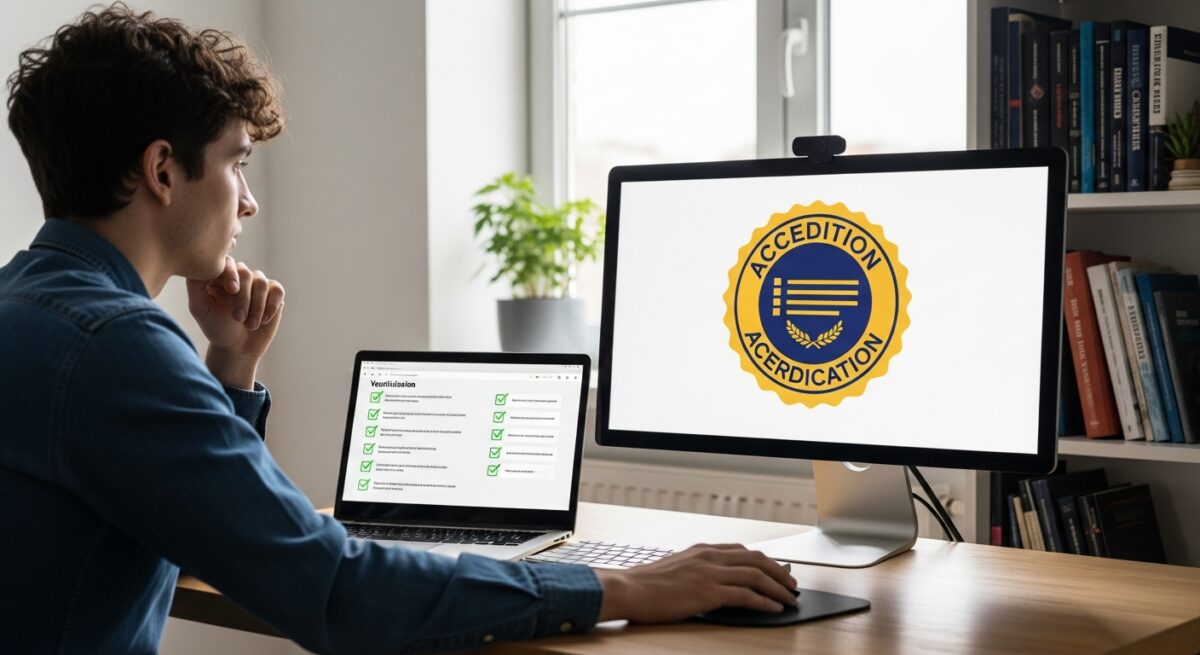
Selecting the right program is the most critical step in your educational journey. Not all online IT associate degrees are created equal, and due diligence is essential. The foremost factor to verify is accreditation. Regional accreditation is the gold standard for academic institutions in the United States and ensures that the school meets high-quality educational standards. Credits from a regionally accredited institution are far more likely to transfer to other colleges and universities. Additionally, look for programmatic accreditation from bodies like ABET (Accreditation Board for Engineering and Technology), which specifically evaluates computing and technology programs. Accreditation is your primary assurance of quality and legitimacy.
Beyond accreditation, evaluate the program’s structure and support services. Is the coursework asynchronous (learn on your own schedule) or synchronous (live online classes)? Which model fits your life? Investigate the technological requirements and the learning management system (e.g., Canvas, Blackboard) used. Robust student support is crucial for online success; look for dedicated online tutoring, career services, technical support, and access to online libraries and academic advisors. Furthermore, examine the faculty credentials. Instructors should possess both academic qualifications and relevant, current industry experience. When researching your options, you can explore a broader landscape of top associate degree programs for high-demand careers to see how IT stacks up against other fields in terms of opportunity and growth.
To make an informed comparison, consider the following key elements of a strong online IT associate program:
- Regional Accreditation: The non-negotiable foundation for quality and credit transfer.
- Industry-Aligned Curriculum: Coursework that reflects current technologies and employer needs, often incorporating certification prep.
- Hands-On Learning: Virtual labs, simulation software, and project-based assignments that build practical skills.
- Career Support Services: Resume assistance, virtual job fairs, internship coordination, and interview coaching for online students.
- Flexible and Predictable Scheduling: Clear course sequences and multiple start dates per year to facilitate timely completion.
Finally, don’t underestimate the importance of cost and financial aid. Tuition rates for online programs can vary widely. Calculate the total cost, including fees for technology or online resources. Complete the Free Application for Federal Student Aid (FAFSA) to determine your eligibility for grants, loans, and work-study. Many schools also offer scholarships specifically for online or technology students.
Career Paths and Advancement Opportunities
Graduating with an online associate degree in information technology opens doors to a variety of entry-level positions. This degree validates your technical proficiency to employers and provides the credential often required for job applications. Common job titles for graduates include Computer Support Specialist, Help Desk Technician, Network Support Specialist, IT Associate, Systems Administrator (Junior Level), and Cybersecurity Analyst (Tier 1). According to the U.S. Bureau of Labor Statistics, many of these roles offer median annual salaries that exceed the national average for all occupations, with strong growth projections driven by our ongoing reliance on technology.
The career trajectory from this starting point is promising. With a year or two of experience, professionals can advance to roles with greater responsibility, such as Network Administrator, Systems Analyst, or IT Project Coordinator. The associate degree also lays a perfect foundation for specialization. You might choose to pursue industry-recognized certifications in areas like cybersecurity (CompTIA Security+, CISSP), cloud computing (AWS Cloud Practitioner, Microsoft Azure Fundamentals), or networking (Cisco CCNA) to enhance your marketability and qualify for higher-paying positions. This degree is not a terminal point but a launchpad. For those interested in leadership, research, or specialized engineering roles, the associate degree provides a solid academic base for transferring to a bachelor’s completion program. Many professionals use their IT job to help fund the continuation of their education, creating a powerful cycle of earning and learning. When planning your long-term academic journey, it’s wise to research various degree programs online to understand how an associate degree fits into the broader hierarchy of postsecondary education and career advancement.
Frequently Asked Questions
Is an online IT associate degree respected by employers?
Yes, employers generally respect online degrees from accredited institutions. What matters most is the accreditation status of the school, not the delivery method. Employers are primarily interested in your skills, knowledge, and the reputation of the awarding institution.
Can I really get hands-on experience in an online program?
Absolutely. Reputable online IT programs use virtual lab environments, remote access to real software and servers, simulation tools, and project-based learning. These methods provide practical, hands-on experience that is directly applicable to the workplace.
How long does it take to complete an online IT associate degree?
Typically, it takes two years of full-time study. However, many online programs offer accelerated terms (e.g., 8-week courses), allowing motivated students to finish faster. Part-time options are also widely available, extending the timeline but offering greater flexibility.
Will my credits transfer to a bachelor’s degree program?
Credits from a regionally accredited associate degree are designed to transfer. It is crucial to work with an academic advisor early in the process, and sometimes to choose an associate program with explicit “transfer pathways” or articulation agreements with four-year schools.
What is the typical cost of an online IT associate degree?
Costs vary significantly, from under $10,000 at some community colleges to over $30,000 at certain private institutions. Public universities often offer lower tuition rates for in-state online students. Always calculate the total cost, including all fees.
Pursuing an online associate degree in information technology is a strategic investment in a future-proof career. This educational path offers a balanced combination of affordability, flexibility, and direct career relevance. By carefully selecting an accredited program that aligns with your learning style and professional aspirations, you can build a robust technical foundation, unlock immediate job opportunities, and position yourself for continuous growth in the dynamic world of technology. The journey begins with research and a clear plan, and this guide serves as your starting point for navigating the promising landscape of online IT education.