Animation is no longer a niche craft reserved for major studios. It powers blockbuster films, streaming series, video games, mobile apps, marketing campaigns, and even medical simulations. For working professionals, career changers, and adult learners, the appeal of animation is strong. The challenge has always been access. Traditional on-campus programs demand relocation, rigid schedules, and significant time away from work and family. Online animation degree programs have changed that equation. They offer the same core curriculum, industry-standard software training, and portfolio development as their on-campus counterparts, but with the flexibility to learn from anywhere. This guide walks through what these programs actually cover, how to evaluate them, how to pay for them, and what career outcomes you can realistically expect.
Before diving into specifics, it is important to understand the landscape. Online animation degrees range from associate and bachelor’s programs to master’s and specialized certificate tracks. Some are fully asynchronous, meaning you watch lectures and complete assignments on your own schedule. Others use a hybrid model with live virtual classes and collaborative critiques. The best choice depends on your learning style, your current job, and your career goals. This article helps you sort through those options with clear, practical advice.
What Do Online Animation Degree Programs Actually Teach?
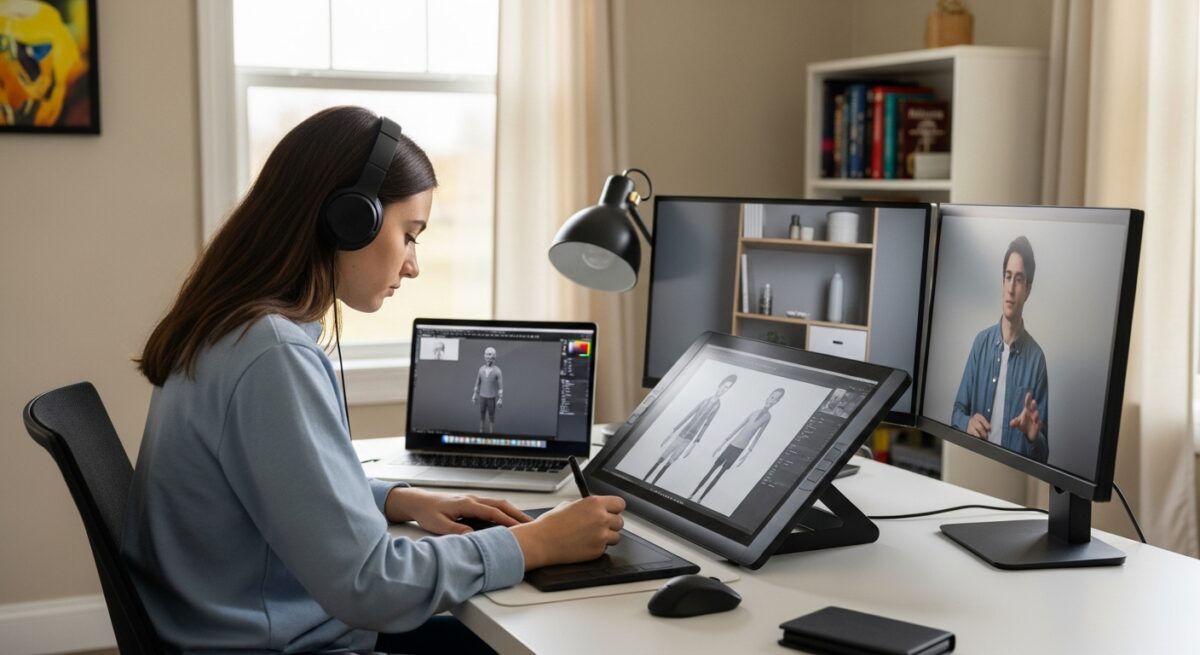
The curriculum in a quality online animation degree mirrors what you would find on campus. Core courses typically cover the fundamentals of 2D and 3D animation, storytelling, character design, storyboarding, visual development, and digital sculpting. You also learn the technical side: rendering, lighting, texturing, rigging, and compositing. Most programs require you to master industry-standard software like Autodesk Maya, Blender, Adobe After Effects, Toon Boom Harmony, and ZBrush. The goal is not just to learn the tools, but to understand the principles of motion, timing, and weight that make animation believable.
Beyond the technical skills, accredited programs emphasize the creative process. You develop a visual language, learn to critique and be critiqued, and build a professional reel. Many online programs also include courses in the business of animation, covering project management, client communication, and freelancing. This is crucial because a large portion of animation work is done on a contract or freelance basis. As you progress, you typically choose a specialization: character animation, environment design, visual effects, or game art. This focused track allows you to build a portfolio that speaks directly to your target employers.
Common Courses in Online Animation Curricula
While every program differs, you can expect to see a core set of courses repeated across accredited online animation degrees. These courses build sequentially, so you start with fundamentals and move toward advanced production. Here is a representative list:
- Principles of Animation: The classic 12 principles, including squash and stretch, anticipation, staging, and follow-through. This is the foundation of all good animation.
- Storyboarding and Previsualization: Turning a script into visual panels, understanding camera angles, and planning the flow of a scene.
- Character Design and Development: Creating original characters that are expressive, consistent, and appealing from every angle.
- 3D Modeling and Sculpting: Building characters, props, and environments using polygonal modeling and digital sculpting tools.
- Rigging and Skinning: Adding a digital skeleton to a model so it can move naturally, and weighting the mesh to deform correctly.
These courses are not just theoretical. You will be producing animation exercises, short films, and portfolio pieces throughout the program. Expect to spend significant hours in front of your computer, rendering frames and iterating on your work. The feedback loop with instructors and peers is a critical part of the learning process, so look for programs that offer regular critique sessions.
Accreditation and Quality: How to Judge an Online Animation Degree
The term “accredited” gets thrown around a lot, but it matters. Accreditation from a recognized agency means the program has met established standards for faculty, curriculum, and student support. For animation specifically, look for programmatic accreditation from the National Association of Schools of Art and Design (NASAD) or regional accreditation for the institution. These credentials ensure your degree will be respected by employers and transferable if you decide to pursue further education.
Beyond accreditation, examine the faculty. Who teaches the courses? Are they working professionals with credits on major films, shows, or games? Do they bring industry connections and current workflows into the classroom? A faculty of active practitioners is a huge advantage. You also want to look at the student work. Most programs showcase a graduating portfolio or demo reel page. If the work looks professional and polished, that is a strong sign the curriculum is effective. Conversely, if the student work looks dated or amateurish, that is a red flag. Finally, check the technology requirements. A quality online animation program will clearly list the hardware and software you need, and they often provide student discounts on software licenses or even include them in tuition.
Flexibility vs. Structure: Choosing the Right Online Format
One of the biggest advantages of an online animation degree is flexibility. You can often watch lectures at 2 a.m. or on your lunch break. However, that flexibility requires self-discipline. Animation is a time-intensive craft, and you must be prepared to manage your own schedule. If you thrive with external deadlines, look for programs with a cohort-based structure, where you progress through courses with the same group of students and have set due dates. If you prefer to work at your own pace, a self-paced program might be better, but be honest about your ability to stay motivated.
The format also affects your network. Some online programs host optional in-person residencies, industry mixers, or career fairs. Others are entirely virtual. Consider how important networking is to you. The animation industry is heavily relationship-driven, and a program that helps you build connections, even online, is valuable. Look for virtual guest lectures, alumni panels, and internship placements. These opportunities can make the difference between graduating with a portfolio and graduating with a portfolio plus a professional network.
Cost, Financial Aid, and the ROI of an Online Animation Degree
Tuition for online animation degree programs varies widely. Public universities often offer lower in-state rates, but online programs may charge a flat rate regardless of residency. Private art schools and specialized colleges tend to be more expensive. However, you save on commuting, housing, and campus fees. The key is to compare total program costs, not just per-credit prices. Look for hidden fees like technology fees, software charges, or online course fees. A detailed breakdown of tuition is essential before you commit.
Financial aid is available for accredited online programs. You can complete the Free Application for Federal Student Aid (FAFSA) to qualify for federal loans, grants, and work-study. Many schools also offer scholarships specifically for online learners. It is worth researching the financial aid office at each school you consider. They can help you understand your options and avoid taking on more debt than necessary. For more guidance on comparing costs and avoiding overpayment, check out our guide on finding affordable online degree programs, which outlines strategies that apply across disciplines.

The return on investment for an animation degree is generally strong. According to the U.S. Bureau of Labor Statistics, employment for special effects artists and animators is projected to grow faster than the average for all occupations. The median annual wage for these roles was over $99,000 in 2023. Of course, salaries vary by role, studio size, and location. Entry-level positions like junior animator or motion designer pay less, but they offer a foot in the door. Experienced animators and technical directors can earn six-figure salaries. The key to maximizing ROI is to graduate with a demo reel that showcases your best work. That reel is more important than your GPA.
Career Paths and Portfolio Development
An online animation degree opens doors to several distinct career tracks. You are not limited to film and television. Here are the most common paths graduates pursue:
- Character Animator: Bringing creatures, humans, and objects to life in films, TV shows, and video games. This requires a strong grasp of acting and timing.
- Motion Graphics Designer: Creating animated titles, transitions, and visual effects for commercials, websites, and user interfaces. This is a high-demand field in marketing and tech.
- 3D Modeler: Building the digital assets that animators use, including characters, props, and environments. Strong skills in sculpting and topology are essential.
- Visual Effects (VFX) Artist: Adding effects like fire, water, smoke, and explosions to live-action or animated footage. This role requires a blend of artistic and technical skills.
- Game Artist: Creating the visual elements of video games, including character models, textures, and environments, often within a game engine like Unreal or Unity.
Every one of these roles requires a strong portfolio. Your demo reel should be 1 to 2 minutes long, highlight your best work, and be tailored to the specific job you are applying for. Online programs typically dedicate entire courses to portfolio development. You will learn how to edit your reel, present your work on platforms like ArtStation or LinkedIn, and market yourself to studios. Some programs also offer career services, including resume reviews, mock interviews, and direct connections to industry recruiters.
Frequently Asked Questions About Online Animation Degrees
Can you really learn animation effectively online?
Yes. The core skills, principles, and software are the same whether you learn in a classroom or on your computer. The key is the quality of the program and your own dedication. Many top studios hire artists who learned entirely online, especially through accredited programs with strong portfolios.
Are online animation degrees respected by employers?
Employers care more about your demo reel and your ability to do the job than the delivery method of your degree. An accredited online degree from a reputable institution is treated the same as an on-campus degree. The exception is if the employer specifically prefers a certain program, but that is rare. What matters is that you can show professional-quality work.
How long does it take to complete an online animation degree?
A bachelor’s degree typically takes four years of full-time study. Many online programs offer accelerated tracks that allow you to finish in three years. Part-time students often take five or six years. Master’s degrees generally take two to three years. Your pace depends on your schedule and the program’s structure.
What software will I need to learn?
The industry standard is Autodesk Maya for 3D, Toon Boom Harmony for 2D, and Adobe After Effects for compositing and motion graphics. Blender is a powerful, free alternative that is increasingly accepted in the industry. Most programs teach you the tools you need, but you should expect to spend extra time practicing outside of class.
Making the Decision: Is an Online Animation Degree Right for You?
Choosing an online animation degree program is a personal decision. It requires a blend of creative passion, technical aptitude, and self-discipline. If you are someone who can manage your time well, learn independently, and thrive with feedback through video calls and written critiques, online learning can be an excellent fit. The flexibility allows you to continue working while you study, which is a huge advantage. You also avoid the disruption of relocating, which is a major benefit for adult learners with families.
Before you enroll, take advantage of free resources. Many programs offer sample lectures, open courseware, or introductory workshops. You can also explore YouTube tutorials to get a feel for the software and the learning curve. This will help you gauge your interest and readiness. The best online animation degree programs are rigorous, but they are designed to accommodate working adults. They offer asynchronous lectures, flexible deadlines, and supportive instructors who understand the challenges of balancing education with a career.
Ultimately, the right program is one that aligns with your goals, your budget, and your schedule. It should be accredited, taught by industry professionals, and focused on building your portfolio. With the right choice, you can gain the skills to launch or advance a rewarding career in animation.
As you evaluate schools, remember that the industry values talent over pedigree. Your demo reel is your ticket. A well-chosen online animation degree program will equip you with the technical skills, artistic sensibility, and professional network you need to create that reel. It is an investment in your future, and for many, it is the most practical path to a creative career. Take your time, do your research, and choose a program that feels like the right fit. The animation world is waiting for your unique voice. Learn more